Macquarie Island (Royal & King Penguins)
Part of our guide to the best places to see penguins in the wild — Macquarie ranks #6 on the list.
Overview
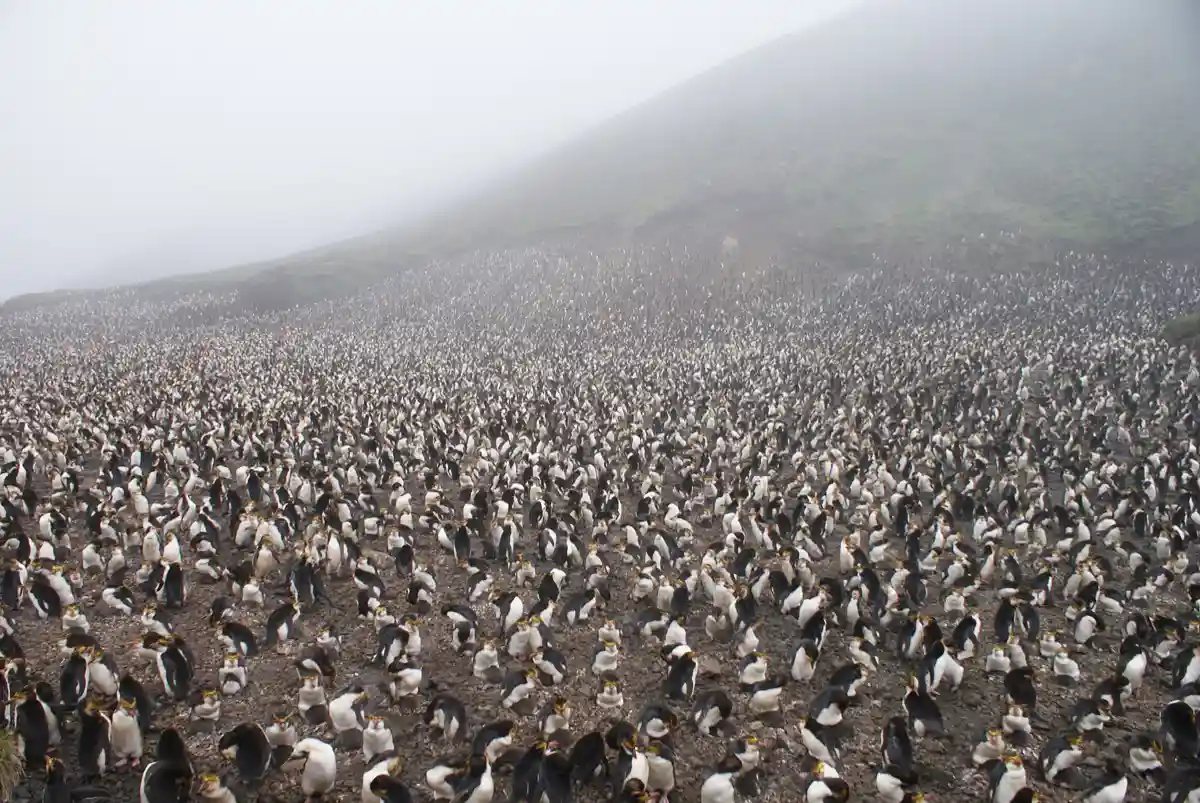
Macquarie Island — "Macca" — is the wildlife spectacle against which all other penguin destinations are measured. This Australian subantarctic island, 1,500 km southeast of Tasmania in the furious latitudes of the Southern Ocean, hosts around a million breeding penguin pairs, including the entire world population of the royal penguin, a species that breeds nowhere else. Kings, gentoos and eastern rockhoppers add to a scene rounded out by elephant seals, fur seals and four species of albatross. The catch: there is no airstrip, no harbour and no hotel. The only way in is an expedition cruise ship — typically a 2–4 day open-ocean crossing from Hobart (Tasmania) or Bluff/Invercargill (New Zealand), almost always bundled with New Zealand's subantarctic islands on 8–14 day voyages costing from roughly AUD $14,000–20,000 per person. Landings are Zodiac-based, weather-dependent, ranger-escorted, and confined to a handful of sites in the November–March season. It is also a place with a dark past and a hopeful present: penguins were once boiled down here by the thousand for oil, and the island has since staged one of the world's great conservation comebacks.
Location
- Where: Southern Ocean at 54°30'S, 158°57'E — about 1,500 km south-southeast of Tasmania, roughly halfway between Tasmania and Antarctica. Politically part of the Australian state of Tasmania.
- The island: A narrow, steep-sided ridge of uplifted ocean floor, ~34 km long and up to 5.5 km wide (about 128 km²), rising to a plateau just over 400 m high. It is the only place on Earth where rocks from the Earth's mantle are actively exposed above sea level — the core reason for its World Heritage listing.
- Status: A Tasmanian nature reserve and UNESCO World Heritage Area (listed 1997; added to Australia's National Heritage List in 2007), managed by the Tasmania Parks and Wildlife Service (PWS), and ringed by the huge Macquarie Island Marine Park.
- Population: No permanent residents. The only inhabitants are the 14–40 scientists, rangers and support staff of the Australian Antarctic Division's research station at Buckles Bay on the Isthmus, occupied continuously since 1948.
- Key visitor sites: Sandy Bay on the east coast (royal and king penguin colonies, boardwalk and viewing platform), the Isthmus (research station, historic sites, elephant seals), and Lusitania Bay (the island's biggest king penguin colony, usually seen on a Zodiac cruise rather than a landing).
The island's human history is short and brutal, and it still marks the landscape. Discovered by sealer Frederick Hasselborough in 1810, Macquarie lost an estimated 250,000 fur seals to the skin trade in under five years, then saw its elephant seals boiled down for lamp oil. When seal numbers collapsed, entrepreneur Joseph Hatch secured a Tasmanian lease (1902–1920) and turned to penguins: steam digesters at the Nuggets, Lusitania Bay, the Isthmus, Sandy Bay and Hurd Point processed thousands of birds a day — by 1909 the Nuggets plant alone was consuming an estimated 3,500 royal penguins daily, each yielding about a pint of oil. An estimated three million penguins were rendered in total, and king penguins were driven to the brink on the island. The turning point came with science: Douglas Mawson's Australasian Antarctic Expedition based itself here from 1911 to 1914, establishing the first radio link between Australia and Antarctica, and the expedition's meticulous records — and its members' public disgust at the slaughter — helped end the industry. Hatch's licence was revoked in 1919, the island became a wildlife sanctuary in 1933, and the rusting digesters still standing in the penguin colonies are its memorial.
Penguin Species
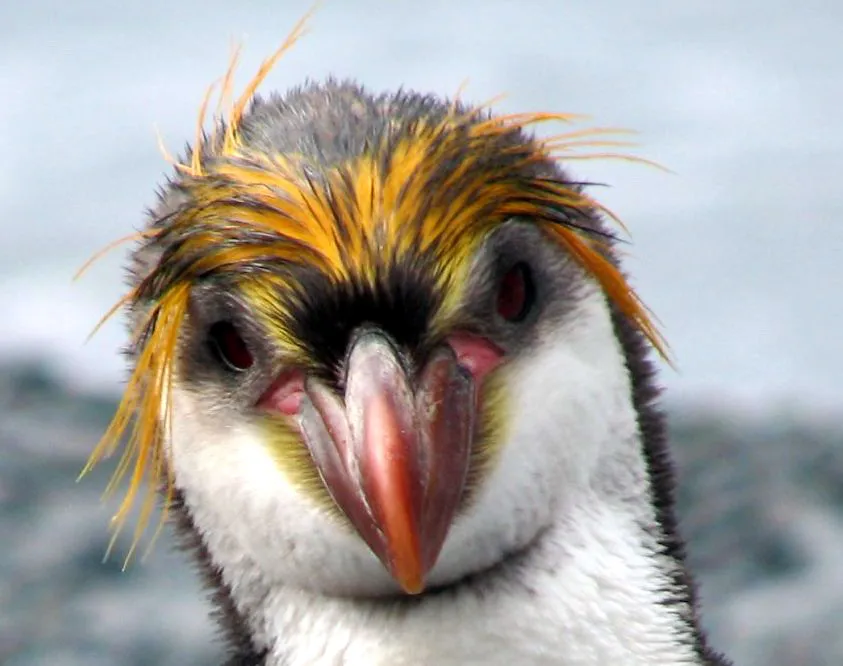
Royal penguin (Eudyptes schlegeli) — the island's signature bird and one of the great endemic species of the Southern Ocean. It breeds only on Macquarie Island and the neighbouring Bishop and Clerk Islets — literally nowhere else on Earth. The global breeding population is estimated at roughly 750,000–850,000 pairs (macquarieisland.org cites ~750,000 pairs; the UNESCO/Australian Government listing text cites over 850,000 pairs), making it one of the greatest concentrations of seabirds in the world. The biggest single colony, at Hurd Point in the south, holds several hundred thousand pairs; colonies can sit 1–2 km inland and up to 150 m above sea level, with birds commuting up creeks and hillsides. Royals are migratory, wintering at sea; they return in October, lay two eggs (usually only one is incubated), and chicks fledge after 10–11 weeks.
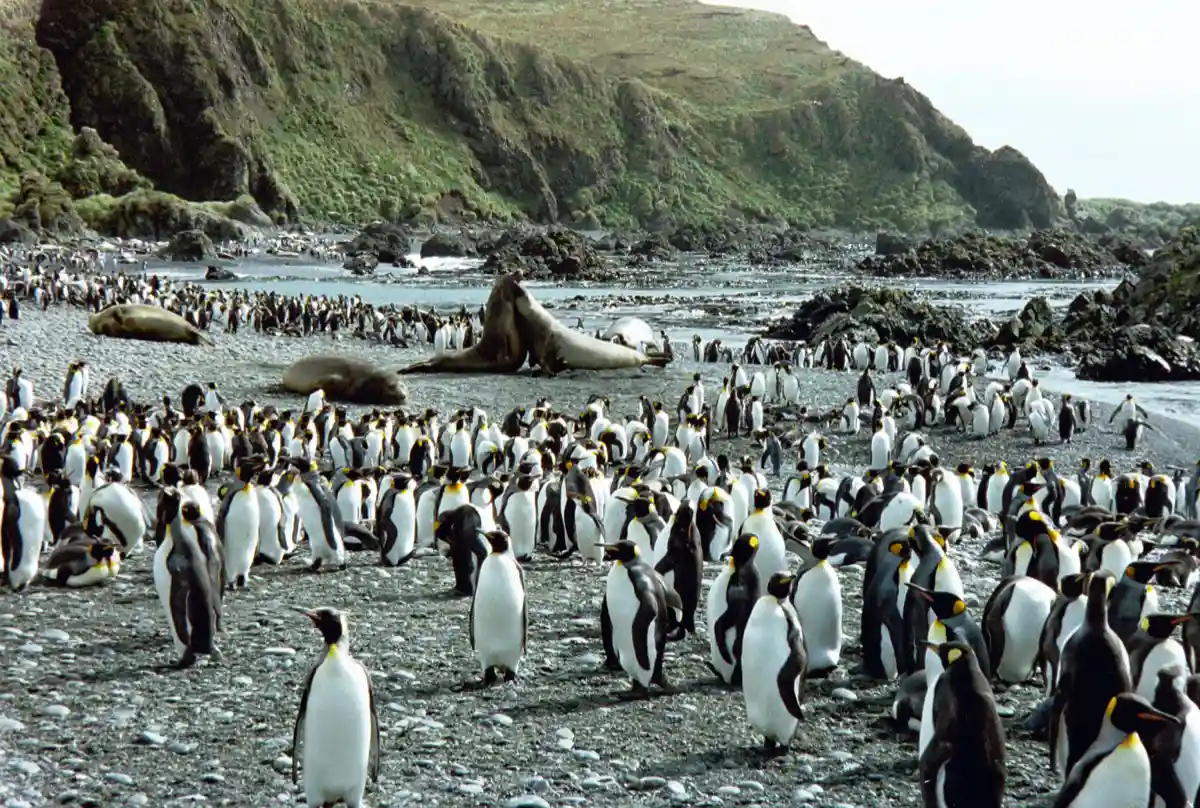
King penguin (Aptenodytes patagonicus) — the second-largest penguin in the world and the largest on the island. macquarieisland.org puts the Macquarie population at around 120,000 pairs; the UNESCO listing text cited 150,000–170,000 breeding pairs in 2000 and still expanding — a remarkable recovery from near-eradication by the 19th–early-20th-century oil industry. Kings breed in colonies along the east coast, with the largest at Lusitania Bay and an easily viewed colony at Sandy Bay. Their breeding cycle takes over a year, so brown fluffy chicks and courting adults are present simultaneously through summer.
Gentoo penguin (Pygoscelis papua): Resident year-round in small tussock colonies; only about 2,500 breeding pairs on the island. Listed Vulnerable under Australia's EPBC Act.
Eastern rockhopper penguin (Eudyptes chrysocome filholi): Smaller crested penguin nesting among boulders and tussock slopes; the Macquarie population is poorly known, estimated at 40,000–100,000 pairs.
Also here: Southern elephant seals (bulls to 3.5 tonnes), New Zealand fur seals, four albatross species (wandering, black-browed, grey-headed, light-mantled), giant petrels, and the endemic Macquarie Island shag.
Getting There & Difficulty
- Expedition cruise only. There is no airstrip and no harbour; every visitor arrives by ship and goes ashore by Zodiac (expect wet landings). Ships anchor in exposed roadsteads, and swell and shore break regularly make landings difficult or impossible — itinerary flexibility is essential.
- Departure ports and crossing time: Voyages leave from Hobart (Tasmania) or from Bluff/Invercargill (often via Queenstown) in New Zealand. The open-ocean crossing through the "Furious Fifties" takes about 2–4 days each way, and seasickness is common.
- Typical itineraries: Macquarie is usually combined with New Zealand's subantarctic islands (Snares, Auckland, Campbell) on 8–14 day voyages, or with the Ross Sea/Antarctica on 21–33 day expeditions. Only three operators held Tasmania Parks & Wildlife approval for the November 2026–March 2027 season: Heritage Expeditions, Aurora Expeditions and Compagnie du Ponant.
- Indicative prices (verify at booking): Heritage Expeditions' 12-day "Galapagos of the Southern Ocean" (Auckland, Campbell and Macquarie Islands) starts from about NZ$20,480 per person twin share; its Macquarie-focused voyages have listed from about AUD $14,350. Ponant's 14-night subantarctic expeditions start around AUD $20,600–23,000. Aurora Expeditions' 24–25-night Ross Sea voyages that include Macquarie start around AUD $41,500–49,000.
- Visitor cap: Tourism is limited by an annual Educational Tourist Visits quota. For the 2025–26 season PWS allows up to 12 ships carrying no more than 2,000 visitors in total (individual ships capped at 200 visitors), plus up to two private yachts. The older cap of 500 tourists per year, set in 1990–91, was only ever reached once — actual landings have historically been far below the ceiling.
- Difficulty: Extreme for access, moderate ashore. Getting there demands days of rough Southern Ocean sailing and a flexible mindset; on land, walking is short and easy on ranger-managed boardwalks at Sandy Bay and the Isthmus, but Zodiac transfers in swell require reasonable agility.
- Booking: Essential and well in advance (12–18 months is commonly advised) — with only a handful of approved departures per season, voyages sell out.
Best Time to Visit
- November–March only: The approved tourist season matches the austral summer — the only window when PWS licenses commercial visits and sea conditions permit landings.
- December–February (peak): Maximum wildlife activity — royal penguin chicks in their crèches, king penguin chicks and courting adults, elephant seal pups and bulls on the beaches, albatross on the nest. Long daylight hours.
- October–November and March–April (shoulder): Very few departures. Early season offers elephant seal beach battles and arriving penguins; late season brings fledging chicks — with higher risk of weather disruption.
- April–October: No tourist access at all; only the station's wintering expeditioners remain.
- Weather — plan for "The Sponge": Macquarie is notoriously wet, windy and cloudy, with rain on over 300 days a year and near-constant strong westerlies. Average temperatures range only from about 3°C in winter to 7°C in summer — cool rather than deep-cold, but the wind chill and horizontal rain are the real challenge.
Tips
- Accept that landings are a lottery. There are no harbours and all anchorages are exposed; swell and shore break frequently cancel Zodiac operations. Even in a good season, roughly a fifth of expected passenger landings have historically been lost to weather. Treat a Sandy Bay landing as a privilege, not a guarantee.
- Biosecurity is taken extremely seriously — and it matters. The island has been pest-free since 2014 and authorities are determined to keep it that way. All boots and outer gear must be scrupulously cleaned and inspected before going ashore (check velcro, pockets and seams for seeds); ships undergo biosecurity screening, and passengers are screened before departure from Hobart. Only unopened, pre-packed food approved by PWS may be taken ashore, and all rubbish returns to the ship.
- You will be escorted. The reserve is a restricted area under Tasmanian law; every visitor needs an Access Authority (arranged by your operator) and all shore parties are accompanied by PWS rangers and guides in groups of no more than about ten. Shore visits run only between 07:00 and 19:00, and you stay on designated boardwalks and viewing platforms.
- Respect wildlife distances and never block a penguin's path. Follow ranger instructions at all times, keep noise down near colonies, never feed wildlife, and remember that a penguin deterred from coming ashore may mean a hungry chick at the nest.
- Pack for cold, wet and wind, not just cold. Waterproof outer layers, knee-high waterproof boots for wet landings (usually provided or specified by the operator), warm mid-layers, hat and gloves — in midsummer. Bring seasickness medication for the crossing; the Furious Fifties earn their name.
- Look for the rusting digesters. The remains of Joseph Hatch's penguin-oil digesters still stand within active colonies at the Isthmus and elsewhere — a sobering monument to the estimated three million penguins rendered into oil between the 1890s and 1919, and to how far the island has come since.
- Learn the comeback story before you go. The Macquarie Island Pest Eradication Project (declared successful in April 2014) removed rabbits, rats and mice from the 12,785-hectare island — at the time the largest eradication of these pests ever attempted anywhere in the world. Tussock grass and megaherbs have reclaimed slopes that rabbits had stripped bare, and burrowing seabirds such as blue petrels are recolonising the main island. Knowing this transforms what you see ashore.
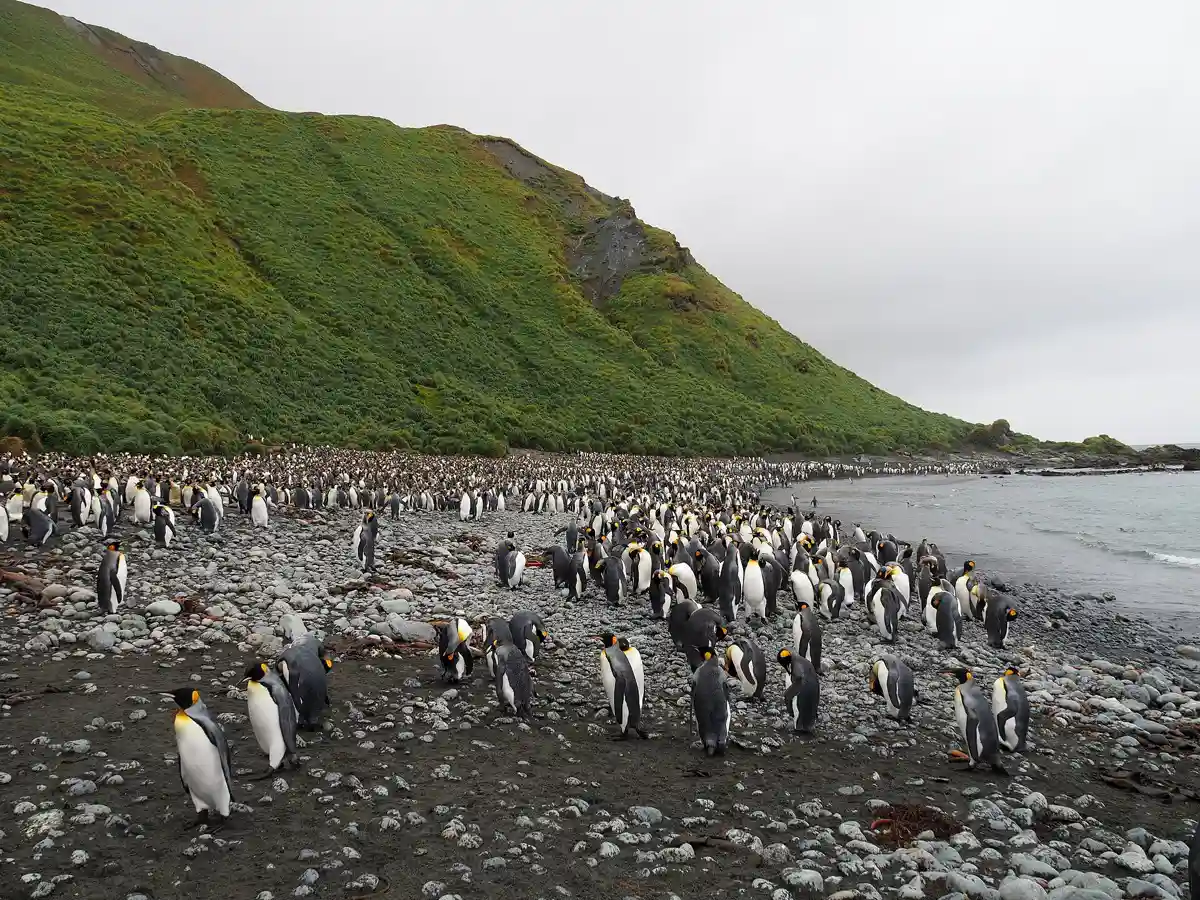
Image Credits
All photos are real, freely licensed images from Wikimedia Commons — authors and licenses are credited in the captions. All images were photographed on Macquarie Island itself.
Sources
- Australian Government, Department of Climate Change, Energy, the Environment and Water — Macquarie Island World Heritage listing (1,500 km southeast of Tasmania, 34 km × 5.5 km, listed 1997, royal penguins over 850,000 pairs, mantle-rock geology): www.environment.gov.au
- UNESCO World Heritage Centre listing text via World Heritage Explorer (royal penguin endemism and population, king penguins 150,000–170,000 pairs in 2000 and expanding, Furious Fifties climate): www.worldheritageexplorer.org
- macquarieisland.org — Penguins (royal ~750,000 pairs and endemic breeding range, king ~120,000 pairs, gentoo ~2,500 pairs, rockhopper 40,000–100,000 pairs, Hurd Point colony, breeding biology): macquarieisland.org
- macquarieisland.org — People (discovery 1810, ~250,000 fur seals, Hatch lease 1902–1920, Mawson 1911–1914, sanctuary 1933, ANARE station 1948, ranger-escorted tourist visits): macquarieisland.org
- Australian Antarctic Division — This week at Macquarie Island: 25 November 2016 (Hatch's penguin-oil industry, ~3,500 royals/day at the Nuggets in 1909, ~1 pint of oil per bird, ~3 million penguins rendered, licence revoked 1919): www.antarctica.gov.au
- Australian Antarctic Division — Cultural heritage on Macquarie Island (300+ rainy days a year, "The Sponge", Buckles Bay station, Mawson's radio relay, MIPEP completion April 2014): www.antarctica.gov.au
- Tasmania Parks and Wildlife Service — Macquarie Island thrives 10 years after successful pest eradication (declared pest-free April 2014, $24 million project, planning began 2007, vegetation recovery within a year, Hobart biosecurity screening): parks.tas.gov.au
- Parks and Wildlife Service Tasmania — Evaluation Report: Macquarie Island Pest Eradication Project (largest rabbit/rat/mouse eradication ever attempted anywhere in the world): parks.tas.gov.au
- Premier of Tasmania — Celebrating 10 years of pest eradication at Macquarie Island (rabbits >125,000 by mid-2000s, calicivirus February 2011 killed 80–90%, weka eradicated 1989, cats by 2000, World Heritage 1997): www.premier.tas.gov.au
- Tasmania Parks and Wildlife Service — Macquarie Island World Heritage Area visitor page (restricted area, permits required, approved operators Heritage Expeditions / Ponant / Aurora Expeditions, November–March seasons): www.parks.tas.gov.au
- Tasmania Parks and Wildlife Service — Request for EOI for commercial educational tourism visits, 2025–26 season (quota: up to 12 ships and 2,000 visitors per financial year, ships max 200 visitors, up to 2 yachts, no harbours and exposed anchorages): parks.tas.gov.au
- Australian Antarctic Division — This week at Macquarie Island: 24 March 2023 (typical tourist landings at Sandy Bay and the Isthmus, Zodiac cruise at Lusitania Bay, clean-gear rules, landing-group limits, Sandy Bay boardwalk): www.antarctica.gov.au
- DCCEEW — Macquarie Island's Picture (historical visitor numbers, 500/year cap set 1990–91 and reached once, ~20% of expected landings lost to weather, shore visits 07:00–19:00, groups of ten, pre-packed food rule): www.dcceew.gov.au
- Heritage Expeditions via ANZCRO (12-day Galapagos of the Southern Ocean from NZ$20,480; Auckland, Campbell and Macquarie Islands) and Heritage voyage listings (Macquarie voyages from ~AUD $14,350): anzcro.co.nz and onwaterexpeditions.com
- Clean Cruising — Macquarie Island cruise calendar (Ponant 14-night subantarctic from ~AUD $20,640–22,980; Aurora 24–25-night Ross Sea voyages from ~AUD $41,545–49,074): cleancruising.com.au
- Wikivoyage — Macquarie Island (3–4 day crossings from Bluff or Hobart, Zodiac landings, average temperatures ~3°C winter / ~7°C summer, station population 20–40): en.wikivoyage.org
Related destinations
- Falkland Islands — the other multi-species subantarctic archipelago, with far easier access.
- South Georgia — the other great southern colony spectacle.