Otago Peninsula / Dunedin (Hoiho)
Part of our guide to the best places to see penguins in the wild — the Otago Peninsula ranks #19 on the list.
Overview
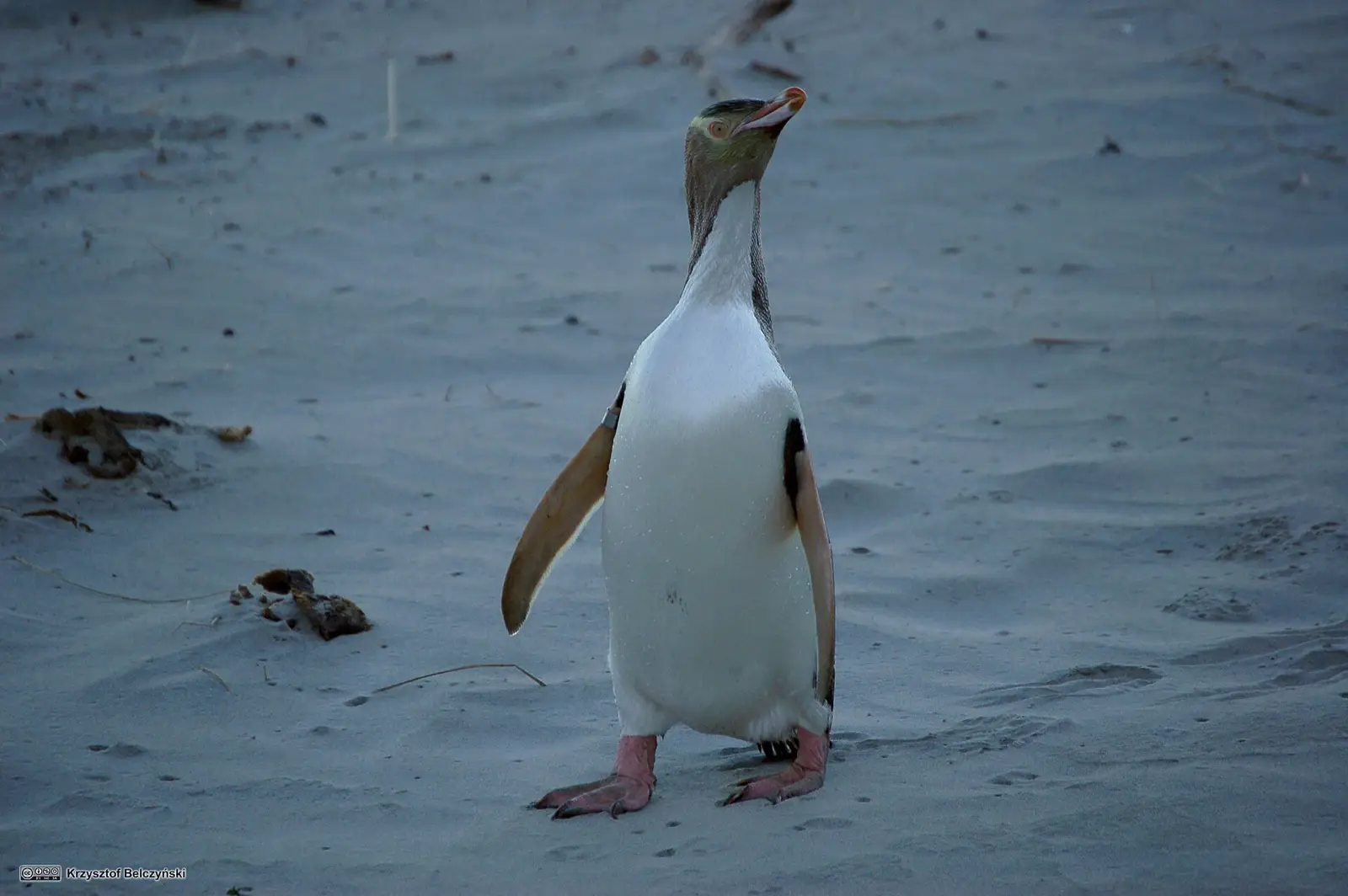
The Otago Peninsula, on Dunedin's doorstep in the South Island, is the easiest place in the world to look for the yellow-eyed penguin — hoiho — one of the world's rarest penguins, found only in New Zealand. But "easiest" is relative: this is not a guaranteed spectacle like a penguin parade. The mainland hoiho population has crashed by about 80% since 2008/09, and the birds are shy, solitary nesters that hide from people. Your best odds come from guided tours into private reserves — The OPERA (the former Penguin Place), Elm Wildlife Tours, or Natures Wonders — where networks of hides and covered trenches let you watch without disturbing the birds. Free do-it-yourself viewing is possible at Sandfly Bay and Allans Beach at dusk, but requires luck, patience, and strict distance rules. The peninsula is an easy 20–45 minute drive from Dunedin city centre; most guided tours include Dunedin pickup.
Location
- Where: Otago Peninsula, a ~20 km long volcanic finger extending east from Dunedin, Otago, South Island, New Zealand — approx. 45.8°S, 170.6°E (Taiaroa Head, the tip).
- Distance: 15–32 km from central Dunedin depending on the site — Sandfly Bay is about 15 km (20–30 minutes) from the city; Taiaroa Head at the tip is a 32 km, roughly 50-minute scenic drive.
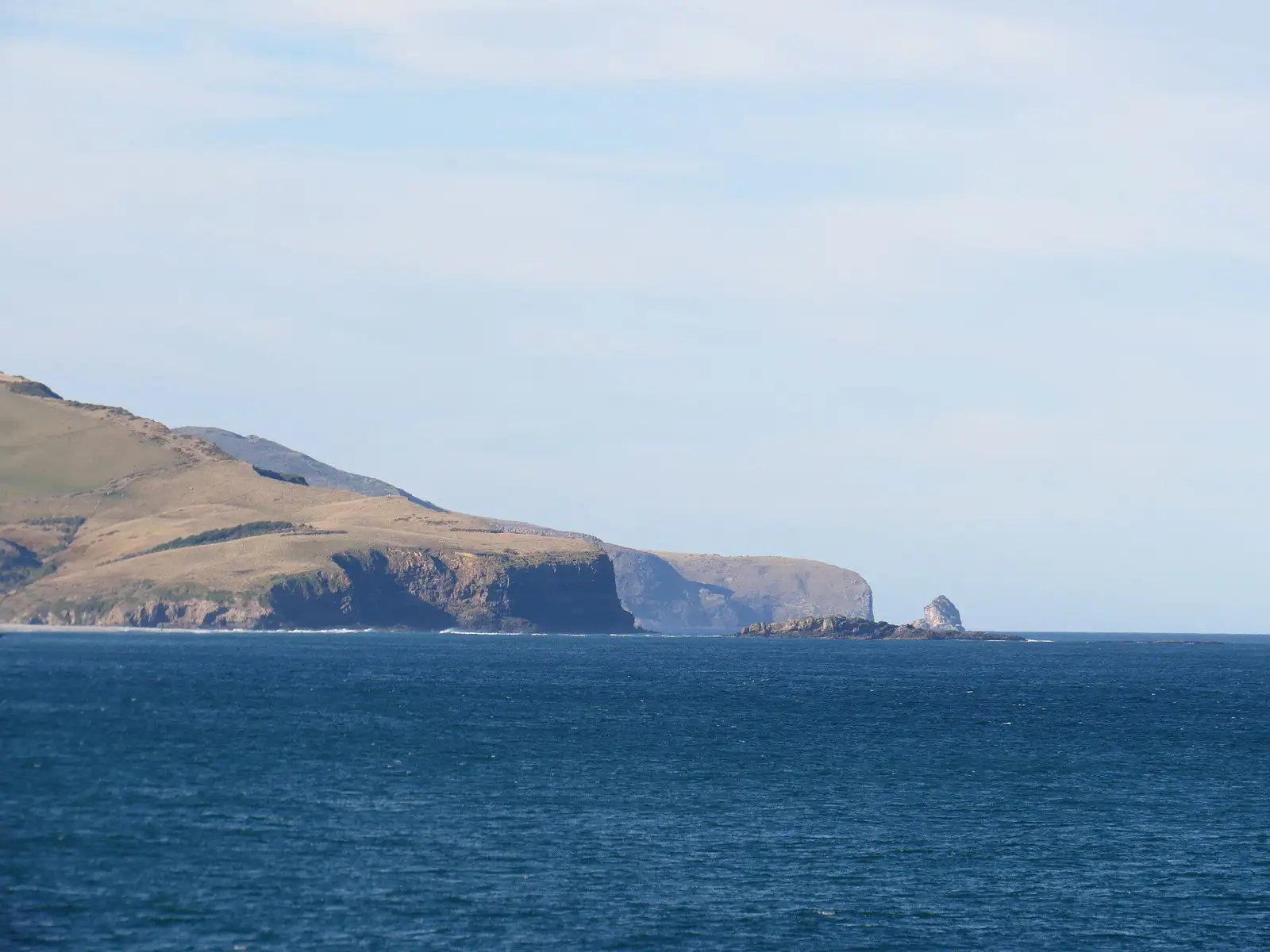
- The peninsula: A rugged hill spine (Highcliff Road) above Otago Harbour on one side and open Southern Ocean coast on the other, dotted with sheep farms, inlets, and wildlife beaches. Dunedin bills itself as the "Wildlife Capital of New Zealand."
- Key sites: The OPERA reserve at 45 Pakihau Road, Harington Point; Natures Wonders and the Royal Albatross Centre / Blue Penguins Pukekura at Taiaroa Head; Sandfly Bay and Allans Beach on the ocean coast.
- Status: Hoiho habitat is a patchwork of private eco-reserves (tour-only access) and free public DOC reserves such as the Sandfly Bay Wildlife Refuge.
Penguin Species
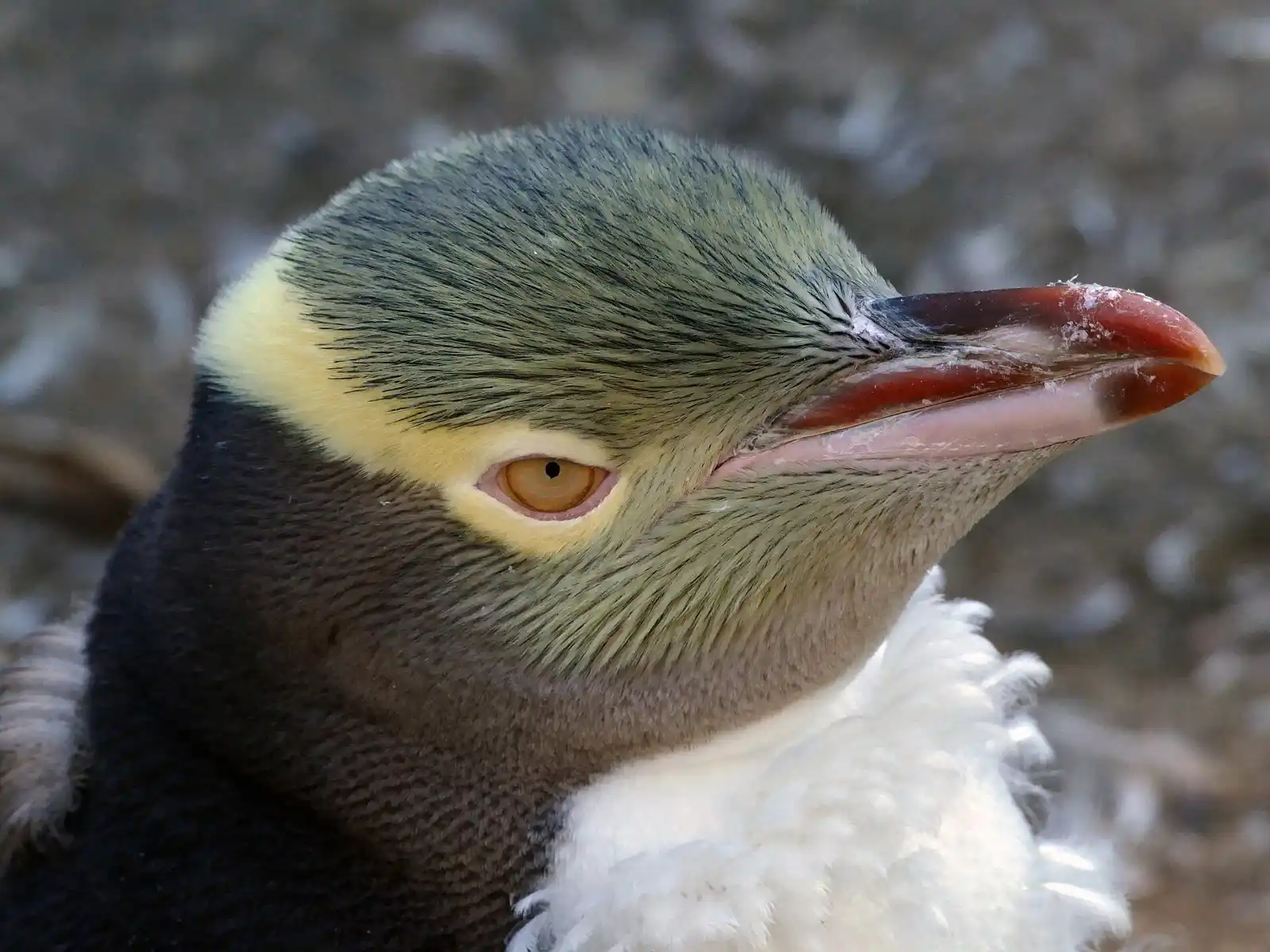
Yellow-eyed penguin / hoiho (Megadyptes antipodes) — the star of the peninsula, and one of the rarest penguins in the world. Endemic to New Zealand, it is the only surviving member of the genus Megadyptes and the world's fourth-largest penguin. It sports a pale-yellow band around the back of the head, yellow eyes, and a loud shrill call — hoiho means "noise shouter" in te reo Māori. Unlike colonial penguins, hoiho are solitary nesters that breed out of sight of their neighbours, sometimes up to a kilometre inland in coastal forest and scrub.
- Conservation status: Endangered on the IUCN Red List; classified Threatened–Nationally Endangered in New Zealand's own threat ranking.
- Population — the honest picture: The 'northern' population (mainland South Island plus Stewart Island/Rakiura) has collapsed from 739 nests in 2008/09 to just 143 known nests in the 2024/25 season — a decline of about 80%. Fewer than 100 chicks were counted in 2024/25, and fewer than 20% of fledglings are expected to survive to adulthood. Without a turnaround, scientists predict hoiho could be locally extinct on the New Zealand mainland within two decades. Most of the remaining birds live far away in the subantarctic Auckland and Campbell Islands (roughly 1,000 breeding pairs).
- Threats: Disease outbreaks, predation by introduced mammals (stoats, ferrets, dogs), human disturbance, shifts in diet and food supply, fisheries bycatch, and marine predation. Commercial set-net bycatch risk is particularly high around the Otago Peninsula.
- Behaviour: Adults spend the day fishing 2–25 km offshore and return to land in the late afternoon and evening — that return window is when visitors can see them. Breeding runs roughly September to February: two eggs are laid in September–October and hatch about six weeks later, with chicks on the nests through summer.
- Also here: Little penguins / kororā (Eudyptula minor) — about 100 nest within The OPERA reserve alone, and a larger colony at Pilots Beach (Taiaroa Head) is viewed on Blue Penguins Pukekura evening tours. Fiordland crested penguins occasionally haul out on peninsula beaches to moult.
Getting There & Difficulty
- Self-drive: The peninsula is a straightforward 20–50 minute drive from Dunedin via Portobello Road (harbour side) or Highcliff Road (hill spine). All tour operators have on-site parking; roads are sealed but narrow and winding in places.
- Elm Wildlife Tours / Monarch — Peninsula Encounters: The classic half-day peninsula tour, ending with a 90-minute guided walk through a yellow-eyed penguin conservation reserve using purpose-built viewing hides. Adult NZ$175, child (5–14) NZ$110; combos adding the Royal Albatross Centre or a Monarch wildlife cruise from NZ$230. Departs 20 Fryatt Street, Dunedin — 2:00 pm–8:30 pm in summer (Oct–Mar), 11:00 am–6:00 pm in winter (Apr–Sep). Free pickups from central Dunedin accommodation and the i-SITE on request.
- The OPERA (Otago Peninsula Eco Restoration Alliance, formerly Penguin Place): Founded in 1985 as Penguin Place — New Zealand's oldest private ecotourism operation — and now running tours again under its new name. The 90-minute Wildlife & Penguin Tour (from NZ$78.91 adult) combines a theatre introduction, the on-site penguin rehabilitation centre, and a ~2 km guided reserve walk with nearly 700 m of covered trenches opening into eye-level hides. A sunset version, Twilight at The OPERA, times the walk for the evening penguin return (from NZ$78.91). Combos with Monarch cruises and the Royal Albatross Centre available. Self-drive to 45 Pakihau Road, Harington Point.
- Natures Wonders (Taiaroa Head): Cross a working family farm to private penguin and fur-seal habitat either on an 8-wheel-drive Argo (1 hour; adult NZ$120, child 5–15 NZ$50, family passes from NZ$320) or on the Penguin Express coach departing daily at 4 pm (1 hour; adult NZ$75, child NZ$35). Minimal walking; bookings essential (phone 03 478 1150).
- Blue Penguins Pukekura (Taiaroa Head): A different species, same peninsula — guided evening viewing of little blue penguins returning to the Takiharuru/Pilots Beach reserve, from about NZ$34 per adult. Sightings are guaranteed; up to ~200 birds on good spring/summer nights, typically 20–50 between March and August.
- Free / DIY: Sandfly Bay (DOC track) and Allans Beach both have public access and viewing hides. Realistic expectations: you are relying on a wild, critically depleted population choosing to cross the beach while you watch — some evenings deliver, many don't. See Tips for the strict rules.
- Difficulty: Easy to moderate. Reserve tours involve 1–2 km of walking on uneven ground with 100+ steps (The OPERA) or almost none (Natures Wonders Argo). Sandfly Bay's descent to the beach is down a steep, soft sandhill — fine going down, a workout coming back.
- Booking: Essential for all guided tours in summer; hoiho are wild, so no operator can guarantee a sighting — Elm Wildlife Tours states this explicitly on its tour page.
Best Time to Visit
- Year-round: Hoiho are present on the peninsula all year; they do not migrate.
- Best time of day — late afternoon to dusk: Penguins return from foraging at sea roughly 3:00 pm onwards until dark; guided tours (Twilight at The OPERA, evening Peninsula Encounters, the 4 pm Penguin Express) are timed for this window. Dawn departures are the other option, but require a very early, cold start.
- September–February (breeding season): The busiest period on land — eggs from September–October, chicks on nests from about November to February. More adult traffic to and from the sea means better viewing odds, but also the greatest sensitivity to disturbance (part of the Sandfly Bay Wildlife Refuge is closed 1 November–28 February).
- March–August: Fewer birds ashore and lower odds, but smaller crowds; moulting birds in late summer/autumn must stay on land for weeks and are sometimes seen standing in the dunes.
- Weather: The peninsula is windy and exposed in any season — bring warm, windproof layers even in summer, especially for dusk viewing.
Tips
- Do not expect a guaranteed hoiho sighting. With only 143 known nests left on the entire mainland plus Stewart Island, these are genuinely rare encounters. Treat any sighting as a privilege, and value the conservation story and the rest of the wildlife (sea lions, fur seals, albatross) regardless.
- Take a guided reserve tour for your best odds. The trench-and-hide systems at The OPERA and the Elm/Monarch reserve get you close at eye level without disturbing the birds — impossible to replicate on a public beach.
- Follow the distance rules — hoiho are extremely shy. The Dunedin Wildlife Care Code (DOC) requires staying at least 50 m from penguins: never approach, never block their path between the sea and their nest (a bird that won't come ashore means hungry chicks), crouch down or use a hide if one is nearby, and no flash photography anywhere. Keep at least 20 m from sea lions, which share these beaches and can be dangerous.
- Sandfly Bay specifics: Free; carpark at the end of Seal Point Road; 15-minute walk to a viewing platform, then a steep sandhill to the beach; wooden hides at the eastern end of the beach; dogs prohibited; part of the refuge closes November–February. Go late in the day and be prepared to wait quietly.
- Allans Beach: About 30 minutes from central Dunedin via Portobello; short walk from the carpark; dusk is the time, and sea lions are almost guaranteed even if penguins aren't.
- Photography: Allowed on the reserve tours but no flash — hoiho eyes are light-sensitive. Bring a zoom lens; on public beaches you will be 50+ m away.
- Bundle the peninsula: The Royal Albatross Centre at Taiaroa Head (world's only mainland royal albatross breeding colony) offers 60–90 minute guided observatory tours (Albatross Classic adult NZ$68.39; Unique Taiaroa adult NZ$78.91), and its visitor centre and cafe are free to enter. The "Triple Crown" combo links The OPERA, a Monarch cruise, and the Albatross Centre at a discount.
- Consider Blue Penguins Pukekura as your evening finale: if the hoiho eluded you, the guaranteed little-blue-penguin return at Pilots Beach ensures you still see wild penguins that day.
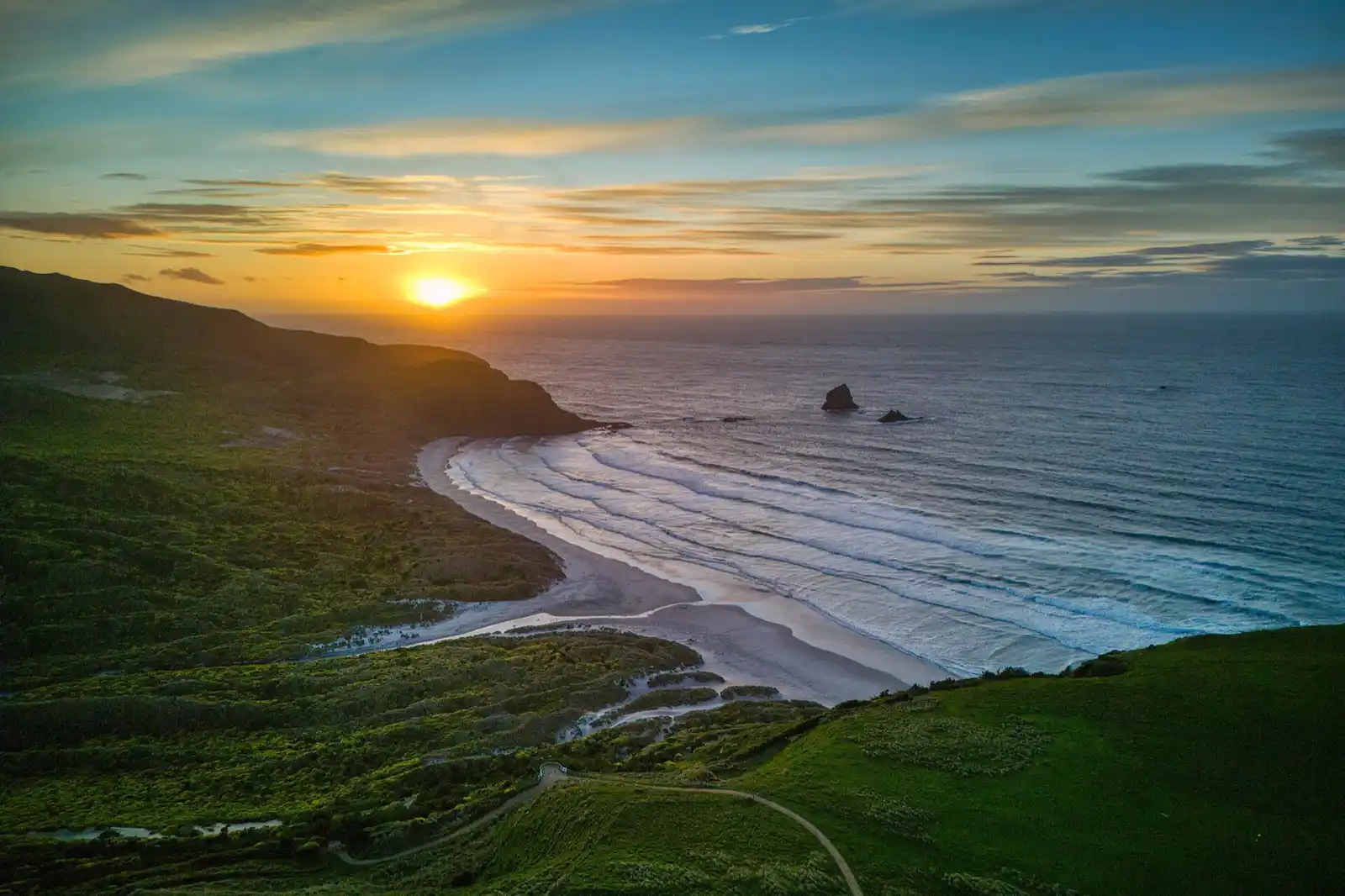
Image Credits
All photos are real, freely licensed images from Wikimedia Commons — authors and licenses are credited in the captions. Note: the species portraits show wild hoiho photographed in New Zealand but not necessarily on the Otago Peninsula itself — the same species found there.
Sources
- Department of Conservation / Te Rūnanga o Ngāi Tahu — Hoiho nest numbers down (143 nests 2024/25, 80% decline since 2008/09, fewer than 100 chicks, two-decade mainland extinction warning, subantarctic estimates): www.doc.govt.nz
- Fisheries New Zealand (MPI) — Further measures to reduce fisheries bycatch of hoiho (Threatened–Nationally Endangered status, ~1,000 southern breeding pairs, set-net risk highest around Otago Peninsula): www.mpi.govt.nz
- The OPERA — official site and booking page (history as Penguin Place since 1985, tour structure, trench/hide system, tour prices): theopera.co.nz and fareharbor.com
- Elm Wildlife Tours / Monarch Wildlife Cruises — Peninsula Encounters (prices NZ$175/110, times, pickup points, 90-minute reserve walk, no-guarantee note): www.elmwildlifetours.co.nz
- Natures Wonders (official) — Argo Wildlife & Penguin Tour and Penguin Express (prices, 4 pm departure, Taiaroa Head location): www.natureswonders.co.nz
- Department of Conservation — Sandfly Bay Track (access, seasonal closure, Dunedin Wildlife Care Code: 50 m penguin / 20 m sea lion distances, no flash): www.doc.govt.nz
- Royal Albatross Centre (official) — tour prices and Taiaroa Head logistics: albatross.org.nz and albatross.org.nz
- Blue Penguins Pukekura via TripAdvisor listing (guaranteed evening viewing, ~NZ$34 adult, seasonal bird numbers): www.tripadvisor.com
- Our Way of Life / Yellow-eyed Penguin Trust — Hope for the Hoiho (fourth-largest penguin, only surviving Megadyptes, solitary nesting, foraging range, breeding timeline): ourwayoflife.co.nz
- IUCN Red List — Megadyptes antipodes (Endangered): www.iucnredlist.org
Related destinations
- Oamaru — guaranteed little blue penguins, 1.5 hours north.
- Monro Beach — forest-nesting Fiordland crested penguins on the West Coast.