Phillip Island (Penguin Parade)
Part of our guide to the best places to see penguins in the wild — Phillip Island ranks #15 on the list.
Overview
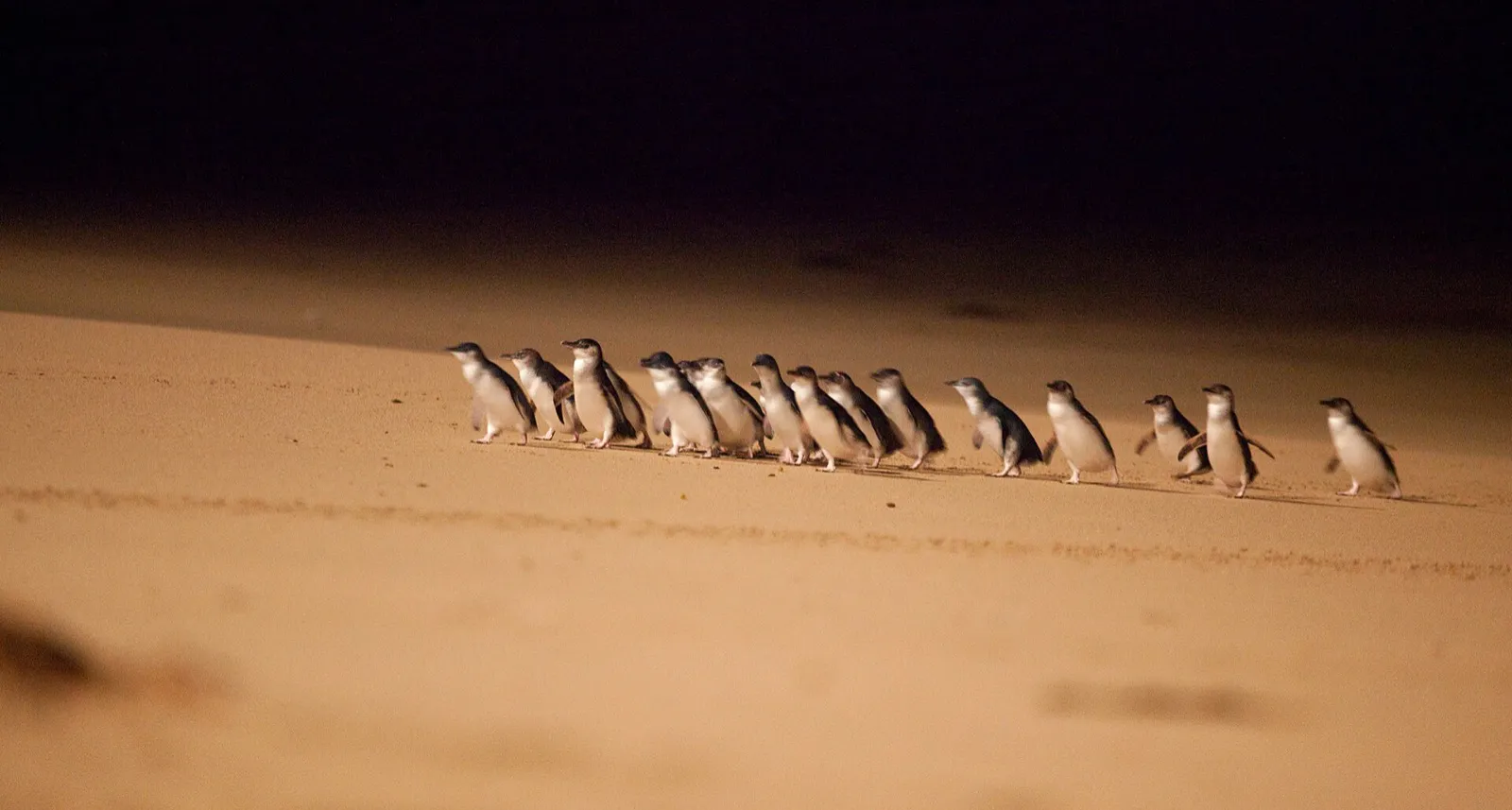
Phillip Island hosts the world's largest little penguin colony, and its "Penguin Parade" is the most famous — and easiest — organized penguin experience on Earth. Every evening of the year, at sunset, hundreds of the world's smallest penguins surf ashore at Summerland Beach and waddle past tiered grandstands to their burrows in the dunes. The site is just 90 minutes' drive from Melbourne, fully ticketed, and run by the not-for-profit Phillip Island Nature Parks, with all revenue funding conservation. No hiking, no boat, no expedition: arrive by car or day tour, take a seat, and wait for dark.
Location
- Where: Summerland Beach (Summerlands), western tip of Phillip Island, Victoria, Australia — approx. 38.5°S, 145.2°E.
- Distance: ~140 km southeast of Melbourne; about 90 minutes' drive to the San Remo bridge, plus 20 minutes across the island to the Penguin Parade visitor centre.
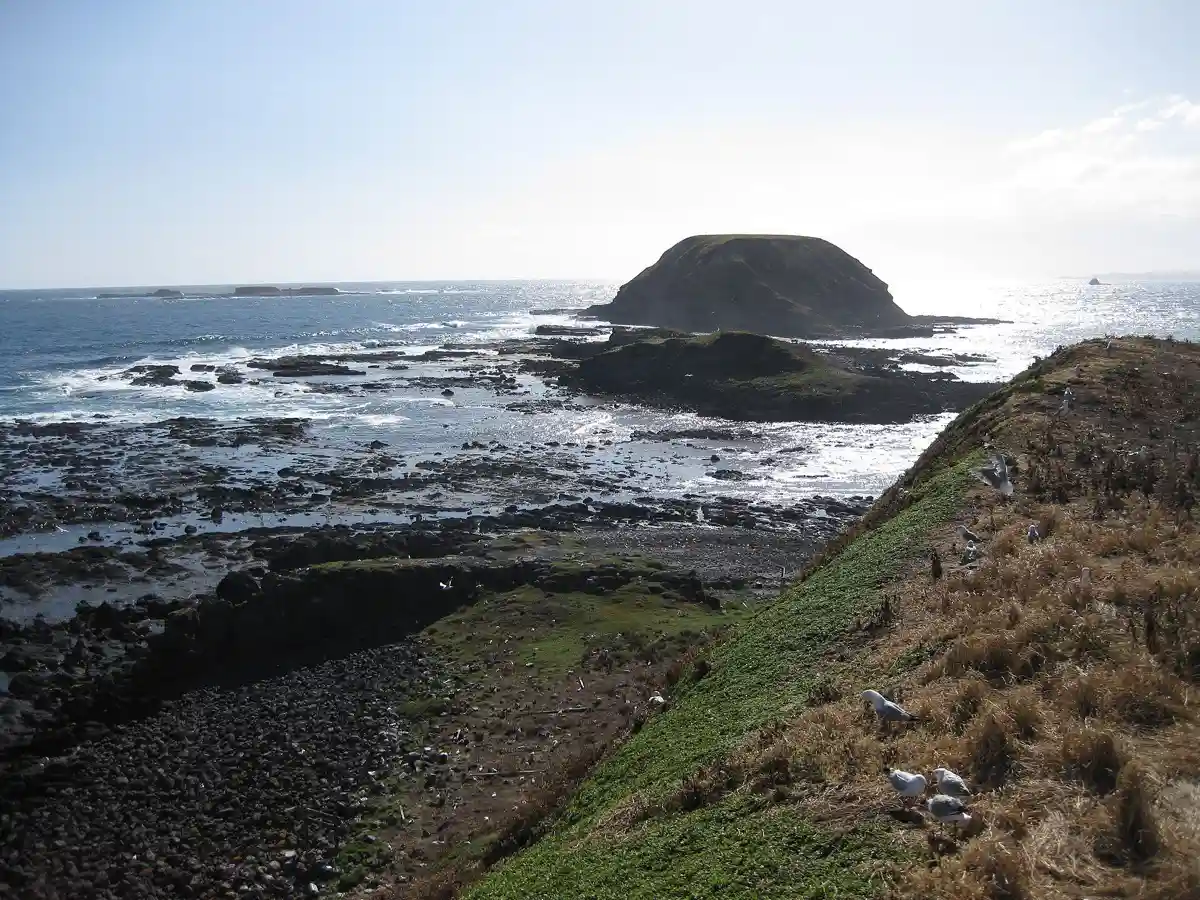
- The island: Roughly 26 km long, connected to the mainland by a road bridge; main town is Cowes. Also home to the Nobbies headland, Koala Conservation Reserve, Churchill Island, and the MotoGP circuit.
- The site: Visitor centre with cafe and exhibits, outdoor grandstands facing the beach, elevated boardwalks through the dune colony, and an indoor underground viewing room.
- Status: The colony sits within Phillip Island Nature Parks, a conservation reserve; all penguin viewing requires a ticket.
Penguin Species
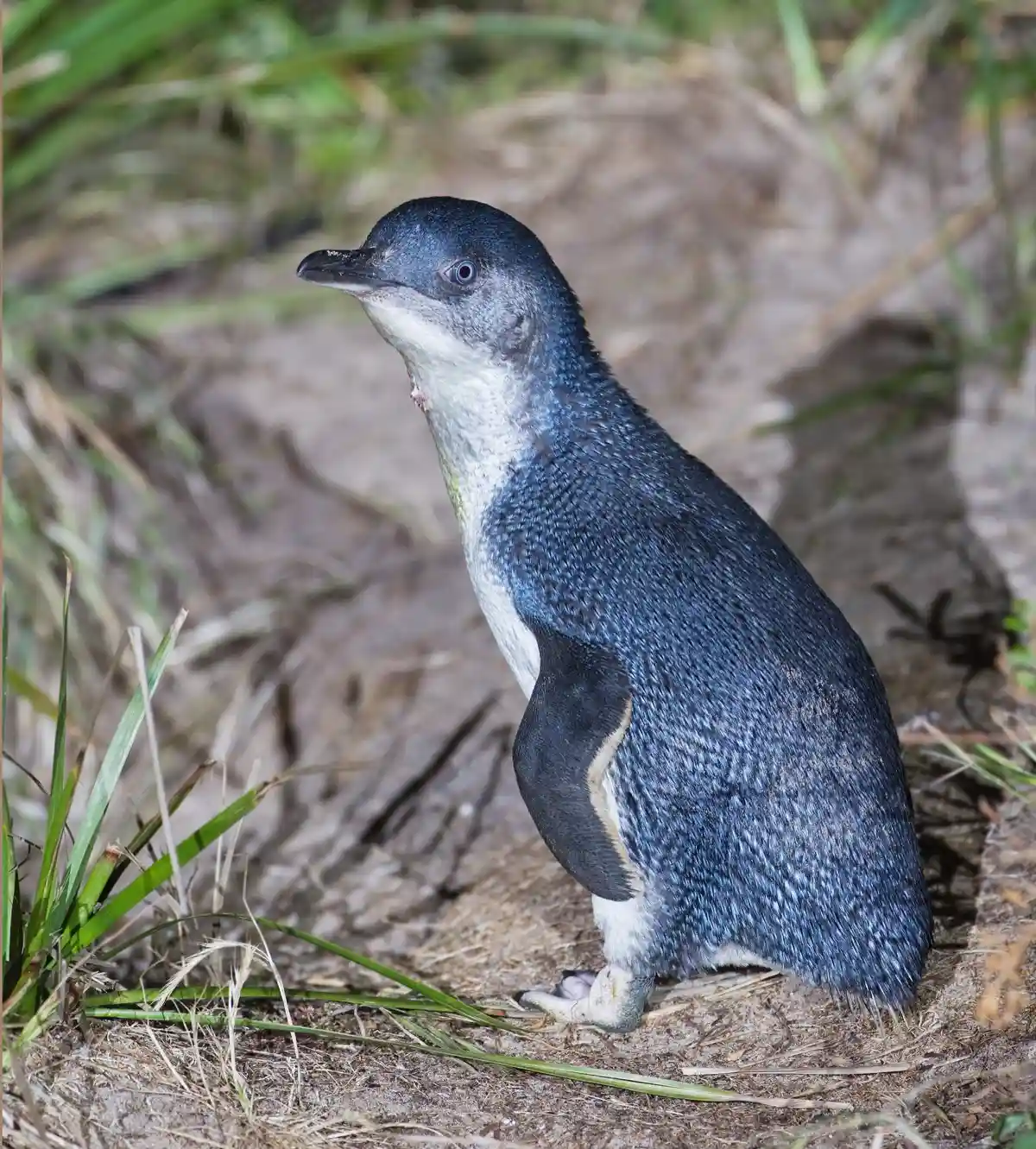
Little penguin (Eudyptula minor) — the only species here. The smallest penguin in the world: about 33 cm tall and 1 kg, slate-blue above and white below (hence the old name "fairy penguin"). Taxonomic note: Australian little penguins are sometimes split as a separate species, Eudyptula novaehollandiae; the Nature Parks and most field guides still use E. minor.
- Colony size: Around 32,000 breeding birds — the largest little penguin colony in the world.
- Comeback story: In the 1980s the colony fell to about 12,000 birds after the 1960s Summerland housing estate was built on the breeding grounds. The Victorian Government and Nature Parks bought back and demolished hundreds of houses and replanted the dunes — one of the world's great penguin conservation successes.
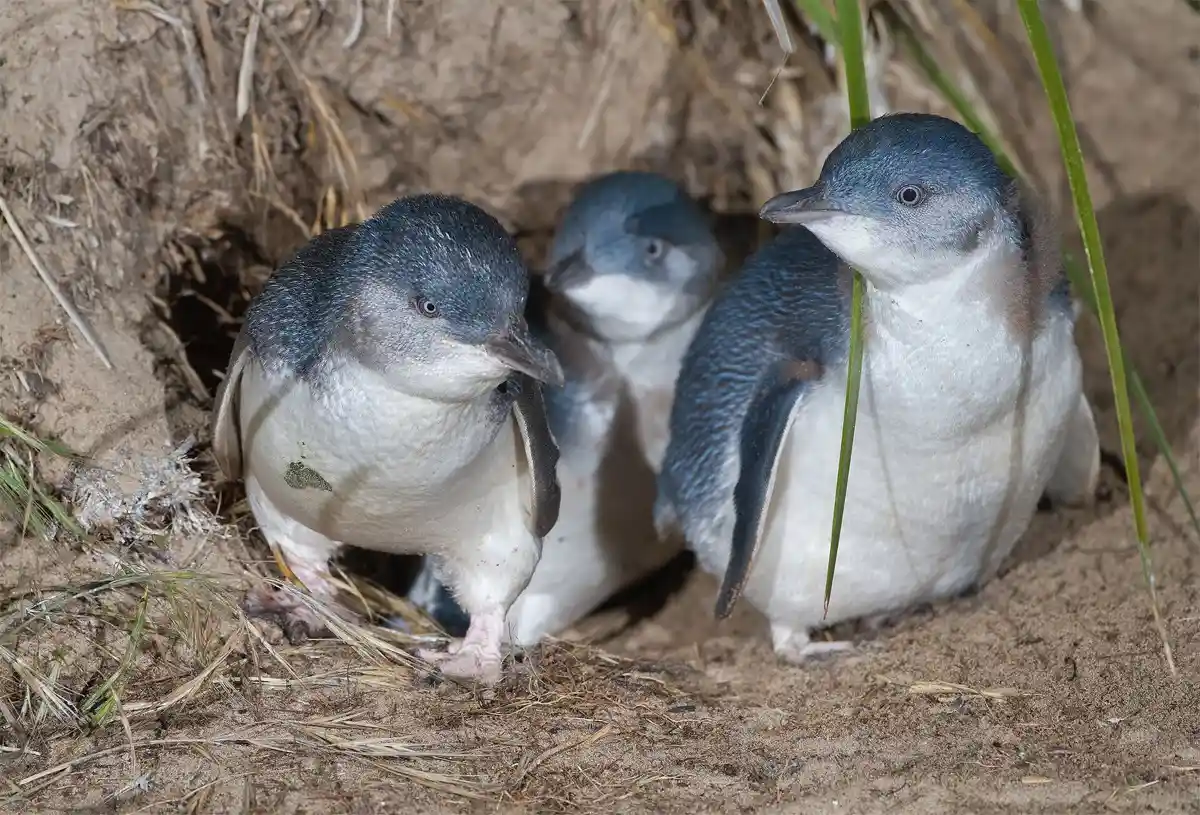
- Behaviour: Penguins spend the day (or weeks) fishing at sea and return after dark in small groups called "rafts", crossing the beach to the same burrow each night. Expect a few hundred birds on a typical night and well over a thousand on peak nights.
- Breeding: Mainly September to March; chicks and moulting adults keep the colony busy through summer. Lifespan 6–10 years in the wild, sometimes 20+.
Getting There & Difficulty
- Self-drive (best option): ~2 hours total from central Melbourne via the Monash Freeway and South Gippsland Highway; free parking at the visitor centre.
- Day tours: Dozens of operators run afternoon/evening coach tours from Melbourne (typically A$150–250 including admission), often bundled with the Nobbies or a wildlife park.
- Public transport: not viable for the parade. V/Line buses run from Southern Cross Station to Cowes, but do not serve the Penguin Parade and stop running before it ends.
- Difficulty: Minimal. Grandstand seating, step-free boardwalks, wheelchair access, indoor viewing option — suitable for all ages and fitness levels. The only "hard" part is sitting still in cold wind for 1–2 hours.
- Cost (official 2026 list, general viewing): Adult A$33, child (4–15) A$16.50, family A$82.50. Upgrades: Penguins Plus A$90, Underground Viewing A$100, Penguins Premium A$85, Guided Tour A$105, Ultimate Adventure A$125. A 3-Park Pass (Parade + Koala Reserve + Churchill Island) is A$54. Prices are reviewed periodically — check penguins.org.au.
- Booking: essential. Everyone including infants needs a ticket. General admission sells out days ahead on weekends and weeks ahead in school holidays; premium options can sell out a month or more in advance.
Best Time to Visit
- Year-round, every single evening — the penguins come ashore 365 days a year at sunset.
- Arrival time shifts with sunset: roughly 5:15 pm in mid-winter (June) to about 8:30–8:45 pm in mid-summer (December–January). Your ticket shows the estimated arrival time; doors open about an hour before.
- September–March (breeding season): The most penguins ashore — often 1,000+ per night — plus chicks in burrows; but later start times and the biggest crowds (book well ahead; arrive early for general-stand seats in Dec–Jan).
- April–August: Fewer birds (some nights only a few hundred) but earlier starts, smaller crowds, and cheaper accommodation; bring serious warm clothing.
- Weather note: The parade runs in all weather short of extreme storms; rain doesn't stop the penguins.
Tips
- Photography is strictly banned — no cameras, no video, no phones out during the parade. Penguin eyes are extremely light-sensitive and staff actively enforce the rule; offenders are asked to leave. Free professional photos can be downloaded from the Phillip Island Nature Parks website afterwards.
- Arrive 60–90 minutes before the estimated arrival time. Watch the beach from the grandstand at first arrival, then move to the boardwalks.
- Don't leave after the beach rush — the boardwalks are the best part. Penguins waddle along the dune paths at arm's length from the railings for another 30–60 minutes.
- Penguins have right of way. If one is crossing the boardwalk, stop, step aside, and wait.
- Dress for cold wind off Bass Strait even in summer: windproof jacket, warm layers, beanie in winter. The general stand is uncovered — in rain, the Underground Viewing (indoor, eye-level glass) is worth the upgrade.
- Is it worth upgrading? General viewing is fine for most people; Penguins Plus puts you on the main penguin route with far fewer people; Underground is best for young kids and bad weather.
- Make a day of it: the Nobbies boardwalk (free, dramatic coast, offshore fur seals in Oct–Dec) is 5 minutes away; the Koala Conservation Reserve and Churchill Island are covered by the 3-Park Pass.
- Stay overnight on the island if self-driving — the drive back to Melbourne after a summer parade means arriving near midnight.
Image Credits
All photos are real, freely licensed images from Wikimedia Commons — authors and licenses are credited in the captions. Note: because photography is prohibited at the parade itself, the two species portraits were taken elsewhere in Australia (same species).
Sources
- Phillip Island Nature Parks (official) — Penguin Parade tickets, prices, transport, arrival calendar: www.penguins.org.au
- Independent Penguin Parade Visitor Guide (timing, camera policy, booking lead times): penguinparadeguide.com.au
- NRMA Parks — Phillip Island Penguin Parade Guide (seasonal arrival times, photography rule, free photo downloads, largest-colony claim): www.nrmaparksandresorts.com.au
- Melbourne Tourism — Penguin Parade Complete Visitor Guide (conservation history 12,000 → 32,000 birds, ticket types, park passes): www.melbournetourism.org
- Carnival Australia — Penguin Parade: When to Go and What to Expect (weather, boardwalk etiquette): www.carnival.com.au
Related destinations
- St Kilda Pier — a free, urban little penguin colony in central Melbourne.
- Oamaru (NZ) — the same species, grandstand viewing.