St Kilda Pier (Little Penguin Breakwater)
Part of our guide to the best places to see penguins in the wild — St Kilda Pier ranks #17 on the list.
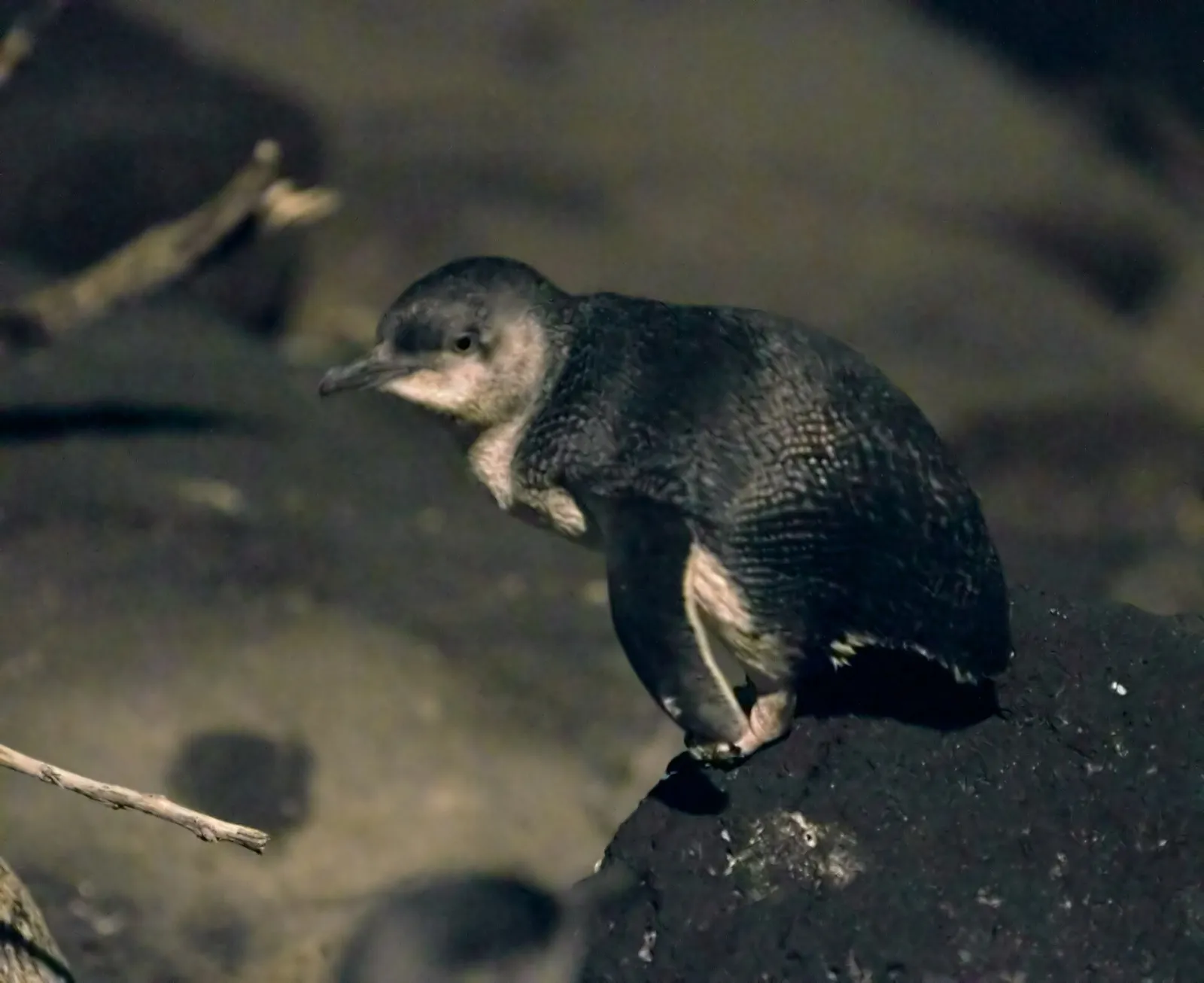
Overview
Melbourne's only little penguin colony lives in the rocks of the St Kilda Pier breakwater, just 6 km and a 15-minute tram ride from the city centre. (To be clear: little penguins are found all along southern Australian coasts — this is the only colony within metropolitan Melbourne; the world's largest colony is at nearby Phillip Island.) Every evening of the year, the world's smallest penguins return from a day of fishing in Port Phillip Bay to nest in the rubble of the breakwater. The viewing is free, the pier is flat and wheelchair-accessible, and the experience is the world's most urban penguin encounter. A volunteer group (Earthcare St Kilda) has been studying and protecting the colony since 1986; since October 2025 Parks Victoria has operated new free ticketed Penguin Viewing Experience sessions, with a 150-metre elevated boardwalk to keep visitors and penguins safely apart.
Location
- Where: St Kilda Pier & Breakwater, western end of Jacka Boulevard, St Kilda, Melbourne — approx. 37°52'S, 144°58'E.
- Distance: About 6 km south of Melbourne CBD; 15–20 minutes by tram.
- The site: St Kilda Pier is a public pier running into Port Phillip Bay. The heritage Kiosk (Parer's Pavilion, 1904 design, rebuilt after 2003 fire) sits midway. The breakwater — the large rock arm at the pier's end — is where the penguins nest. A new 150-metre elevated viewing boardwalk was opened in October 2025, with wildlife-friendly red-spectrum lighting.
- Status: Public parkland managed by Parks Victoria; penguins are protected under the Wildlife Act 1975. Viewing is free but requires advance booking for the Penguin Viewing Experience sessions.
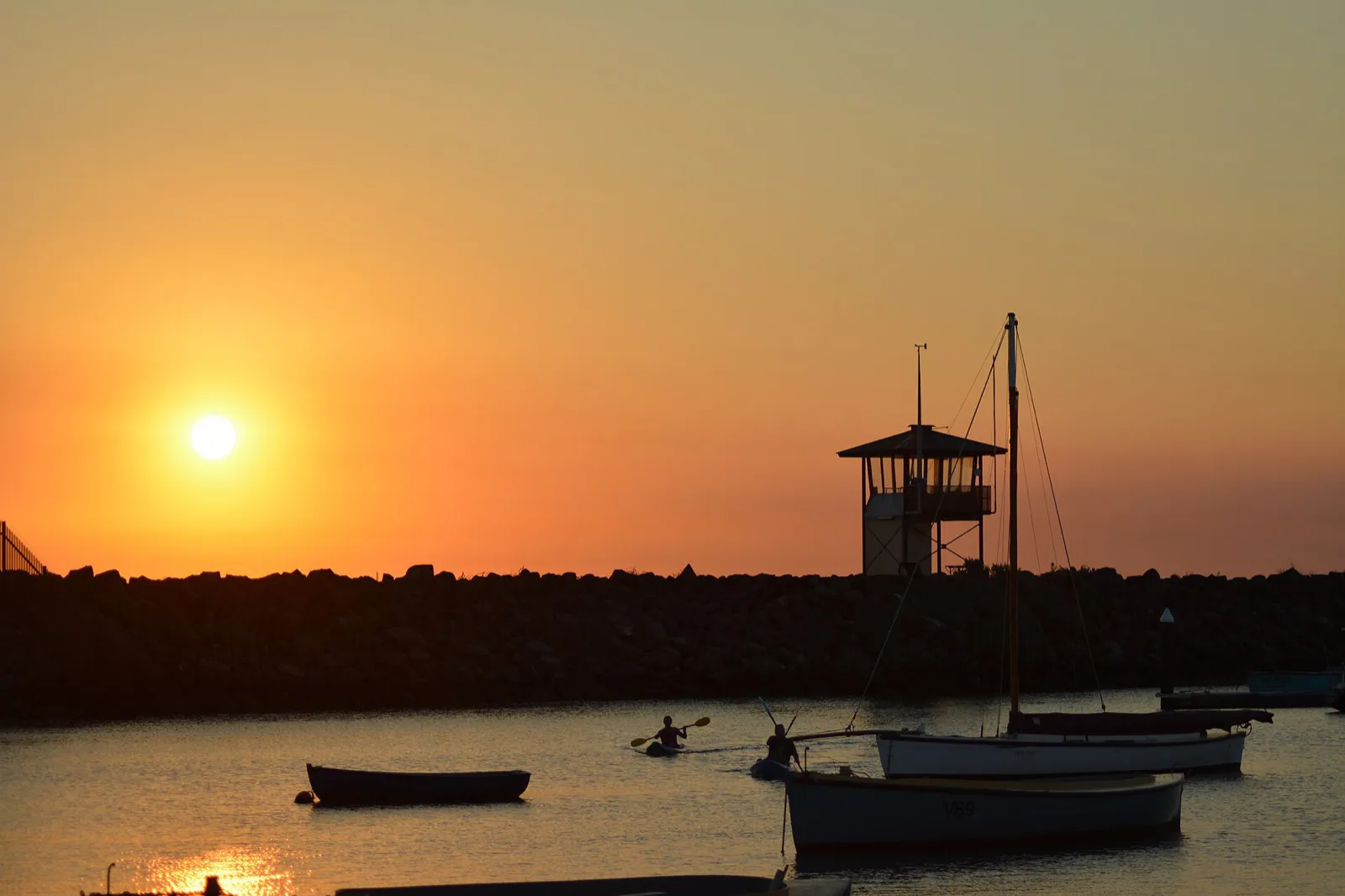
Penguin Species
Little penguin (Eudyptula minor) — same species as at Phillip Island, the world's smallest penguin (~33 cm tall, ~1 kg). The St Kilda colony has about 1,400 little penguins (Parks Victoria 2025 figures). Little penguins are common along the southern Australian coast (Victoria, South Australia, Western Australia, Tasmania, New South Wales) and in New Zealand; St Kilda is notable as the only colony in metropolitan Melbourne and one of the most urban penguin populations in the world. For comparison: the world's largest little penguin colony, ~32,000 birds, is 90 minutes away at Phillip Island.
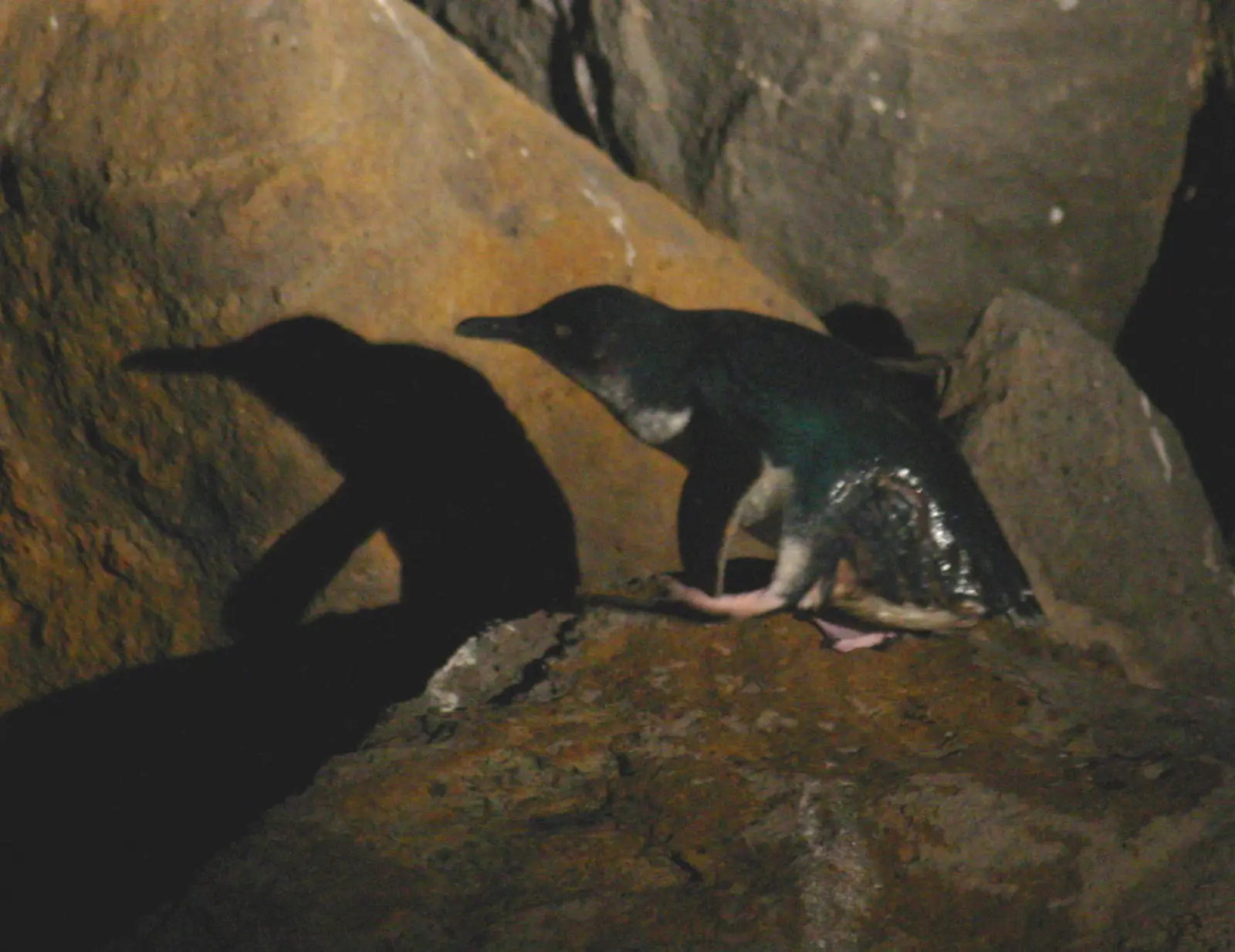
- Habitat: The penguins nest in rock crevices in the rubble of the breakwater, well above the waterline. Active nest cavities are in the gaps between the large stones — never reach into these.
- Daily rhythm: Out at sea feeding through the day; come ashore in small groups (rafts of 2–5) from around sunset, pause briefly on the rocks, then walk quickly up into the rubble to their burrows. The whole viewing window from first arrival to last bird is typically 30–90 minutes.
- Conservation: Earthcare St Kilda has monitored the colony since 1986. Threats include dog attacks, plastic pollution, gull and rat predation of chicks, and human disturbance from flashing lights. Wildlife emergencies are handled by the Zoos Victoria Marine Response Unit (1300 245 678).
Getting There & Difficulty
- Public transport (easiest): Trams 12, 16 and 96 from Melbourne CBD; tram 96 terminates at Acland Street / The Esplanade, a 5–10 minute walk from the pier. The 606 bus also stops at St Kilda Pier. By train, go to Balaclava station and transfer to tram 16.
- Driving: Possible but parking is limited and paid — fill up fast on summer Saturday evenings around Jacka Boulevard and the Sea Baths.
- Cost: free, but since October 2025 the Penguin Viewing Experience sessions are bookable in advance (two per evening, capped at 150 people per session). Reserve via the Parks Victoria website. Guided evening tours, when the volunteer penguin-guide program is running, are also free; donations to Earthcare St Kilda are welcome.
- Difficulty: trivial. The new pier is flat and sealed from the foreshore to the boardwalk platform, fully wheelchair- and pram-accessible, with bench seating and accessible toilets at the foreshore end. The walk out is about 10–15 minutes; the viewing area itself has seating and handrails. Suitable for all ages and fitness levels.
Best Time to Visit
- Year-round, every evening — penguins come ashore 365 days a year.
- Arrival timing: First birds typically arrive ~15 minutes after sunset for Melbourne (so ~30 minutes after sunset is a reliable target). Summer (December–January): first arrivals around 9:00–9:30 pm, sometimes later. Winter (June–July): as early as 5:30 pm.
- October–January (chick-rearing): The most penguins ashore — often dozens per night — as adults shuttle food back to chicks in the rocks. Best window overall.
- February–April (moult): Moulting adults cannot leave the water and many non-moulting adults are feeding offshore; far fewer birds visible on the rocks.
- May–August (winter): Lowest numbers, but the colony is quieter and easier to see with fewer visitors. Wrap up well — the exposed end of the pier is cold.
- Important: Book the free evening session in advance for summer weekends and school holidays — they cap at 150 people per session.
Tips
- No flash anything — no camera flash, no phone flash, no focus-assist lamps, no video lights, no white torchlight. A penguin in a flash will abandon its nest/chicks for the night; repeated disturbance causes permanent nest abandonment. Use a red-filtered torch to walk back if you need one.
- Stay on the boardwalk and stay 3 m back. If a penguin walks nearer to you, that's its choice — do not move toward it, touch it, or block its path.
- Never reach into the rock gaps. They are active nests with eggs, chicks or incubating adults.
- No dogs anywhere on the pier or at the breakwater — including service dogs in the viewing area. Strictly enforced; a single unleashed dog can wipe out a section of the colony.
- No food or drink at the viewing area — smells attract gulls and rats, both of which predate chicks. Take all rubbish with you.
- Talk quietly. A loud voice will cause nearby penguins to turn and move away, delaying their return to the nest.
- Give your eyes 5–10 minutes to adjust when you reach the viewing area — the red-spectrum lighting is dim, and you'll miss the first birds if you stare at a phone.
- Dress for the end of the pier. Even on warm summer evenings, the temperature can drop ten degrees once the sun sets and the bay breeze picks up. In winter, beanie and gloves are not overkill.
- The pier is safe in rain. The penguins come ashore in almost any weather; bring a waterproof and expect slippery boards.
- Combine with the rest of St Kilda: sunset stroll along the promenade, Acland Street cake shops, Luna Park, drinks at the Sea Baths — all 5 minutes' walk.
- Donate to Earthcare St Kilda if you can — the volunteer guide program is the backbone of the colony's protection.
Image Credits
All photos are real, freely licensed images from Wikimedia Commons — authors and licenses are credited in the captions. The two penguin photos were taken in 2009–2010 at the same breakwater; the pier was redeveloped in 2024 and the new viewing boardwalk opened in October 2025.
Sources
- Parks Victoria — Little Penguin viewing platform (official, 2025 boardwalk, colony size, booking model): www.parks.vic.gov.au
- St Kilda Penguins (official visitor site, run by Earthcare St Kilda) — Rules & Best Times: stkildapenguins.com.au ; Penguin Viewing at St Kilda Breakwater: stkildapenguins.com.au
- Earthcare St Kilda — Penguin Guide Handbook (volunteer program, distance rules, dog ban): earthcarestkilda.org.au
- St Kilda Melbourne tourism — St Kilda Penguins (visitor overview, best time): stkildamelbourne.com.au
Related destinations
- Phillip Island — the world's largest little penguin colony, 90 minutes away.
- Oamaru (NZ) — grandstand viewing of the same species.