Antarctic Peninsula (Gentoo, Chinstrap & Adélie Penguins)
Part of our guide to the best places to see penguins in the wild — the Antarctic Peninsula ranks #2 on the list.
Overview
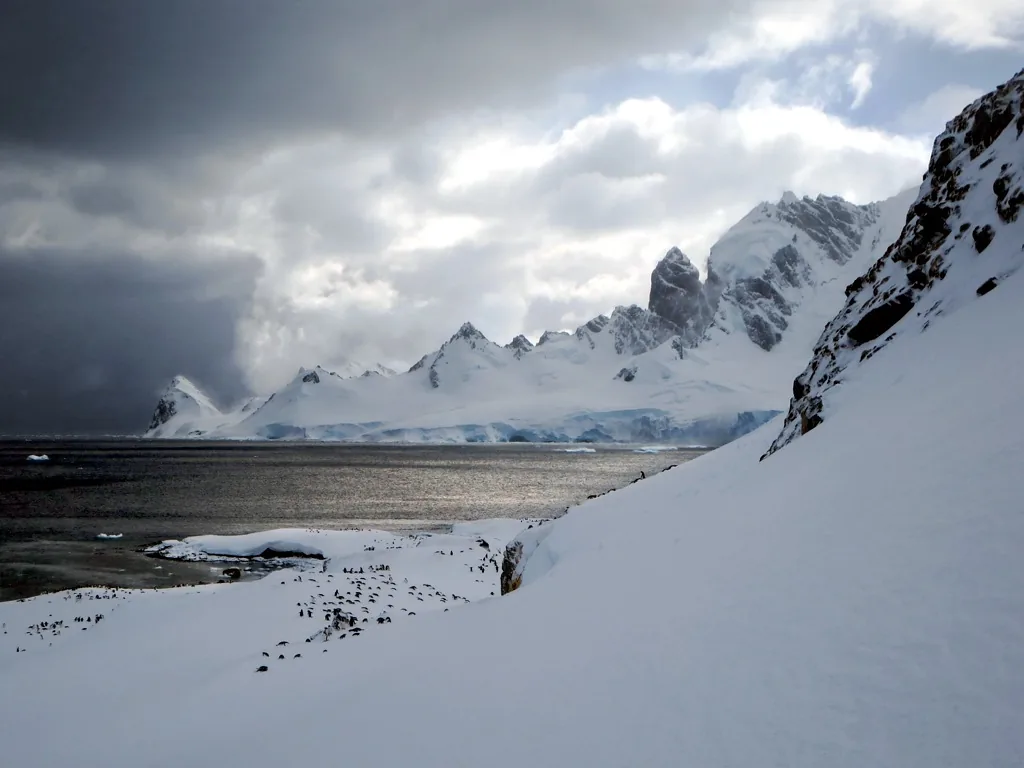
The Antarctic Peninsula is the single most bookable slice of Antarctica — and the place nearly every first-time visitor to the continent actually sees. This narrow finger of land, the "thumb" of the map of Antarctica, stretches about 1,300 km north from the main continent toward South America, with its tip at around 63°S only ~1,000 km from Cape Horn. Three of the world's penguin species breed here in staggering numbers: gentoo penguins on the ice-free beaches of the northwestern islands, chinstrap penguins in noisy colonies on the volcanic slopes of the South Shetlands, and Adélie penguins further south around the Antarctic Sound. In between, visitors step onto the actual continent at places like Neko Harbour, weave through the postcard-perfect Lemaire Channel, and Zodiac between icebergs the size of city blocks. There are no roads, no hotels and no airstrips on the continent: every visitor arrives by expedition cruise ship, almost always on a 10–12 day voyage from Ushuaia (Argentina), and is governed by IAATO rules that limit landings to 100 people per site at any time. The trade-off is the most accessible Antarctic experience on Earth — your odds of a calm "Drake Lake" crossing are roughly 50/50, but if you can stomach two days of open ocean you will likely stand on the white continent at least once, photograph penguins in the tens of thousands, and probably share a Zodiac ride with a humpback whale.
Location
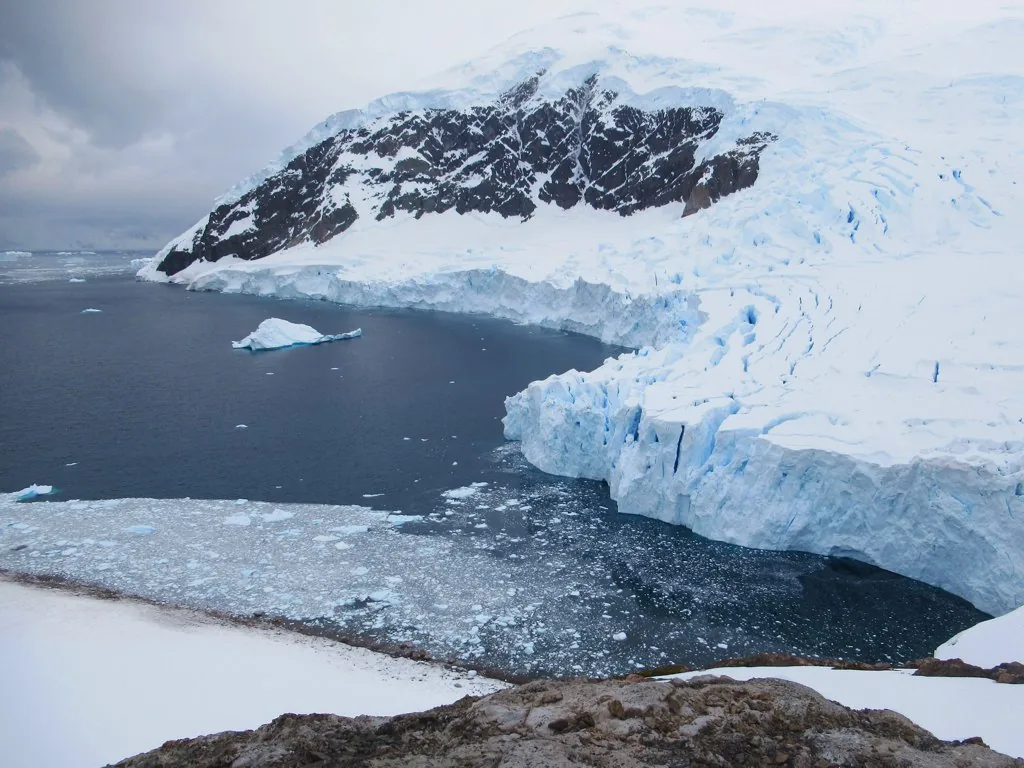
- Where: The northwestern arm of the Antarctic continent, reaching north toward South America. The tip of the Peninsula sits at about 63°S, 60°W; the northern tip of the Antarctic Peninsula is widely treated as the dividing line between the Atlantic and Pacific Oceans. The Peninsula is separated from South America by the ~800-km-wide Drake Passage.
- Length & shape: Roughly 1,300 km long and increasingly mountainous. The northern section is the Trinity Peninsula, the central spine is Graham Land, and the southern portion is Palmer Land; the long string of islands to the northwest — the South Shetlands and South Sandwich Islands — is treated separately.
- Status: No country owns any part of Antarctica. The Antarctic Treaty System (signed 1959, now 56 signatory nations) sets the continent aside as a scientific preserve, bans mining and military activity, and obliges all visitors to protect the environment. Tourism is self-regulated by the International Association of Antarctica Tour Operators (IAATO). The closest permanent research stations to a Peninsula cruise — Vernadsky (Ukraine), Port Lockroy (UK), Almirante Brown (Argentina), Esperanza (Argentina), Frei / Bellingshausen (Chile) — are part of the landscape at many landings.
- Climate: The Peninsula is one of the most rapidly warming places on Earth. The western coast has warmed by roughly 3 °C over the past half-century — several times the Antarctic average — and the change is rewriting which penguin species breed where. Summer temperatures on the Peninsula are typically around -2 °C to +6 °C, with regular katabatic winds, snow flurries even in January, and long daylight hours that stretch to nearly 24 hours around the solstice.
- Key landing sites:
- Cuverville Island — large gentoo colony in a steep-sided island in the Errera Channel, often the first big penguin encounter.
- Danco Island / Neko Harbour — gentoo colonies and, at Neko, one of the few chances to step on the Antarctic mainland itself.
- Paradise Bay — protected harbour ringed by glaciers and icebergs; frequently visited by Zodiac cruises between bergs.
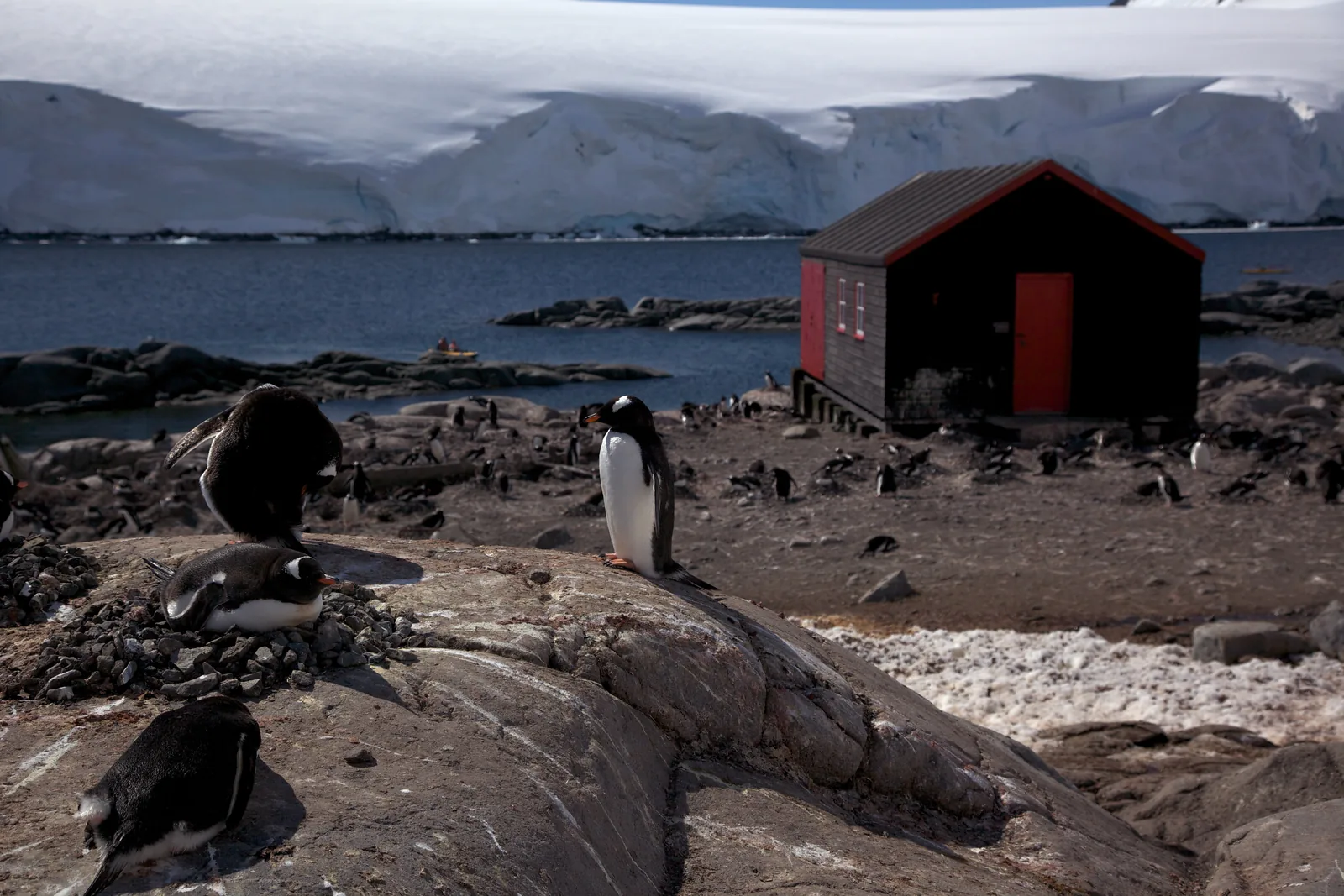
- Port Lockroy (Goudier Island) — restored British "Base A" research station, museum and the southernmost working post office; gentoo penguins nest between the buildings.
- Jougla Point, Wiencke Island — gentoo colony right next to Port Lockroy, with blue-eyed shags.
- Lemaire Channel & Petermann Island — the "Kodak Gap" passage, with the southernmost regular gentoo colonies.
- Pléneau Island — a known haul-out for Antarctic fur seals alongside gentoo colonies.
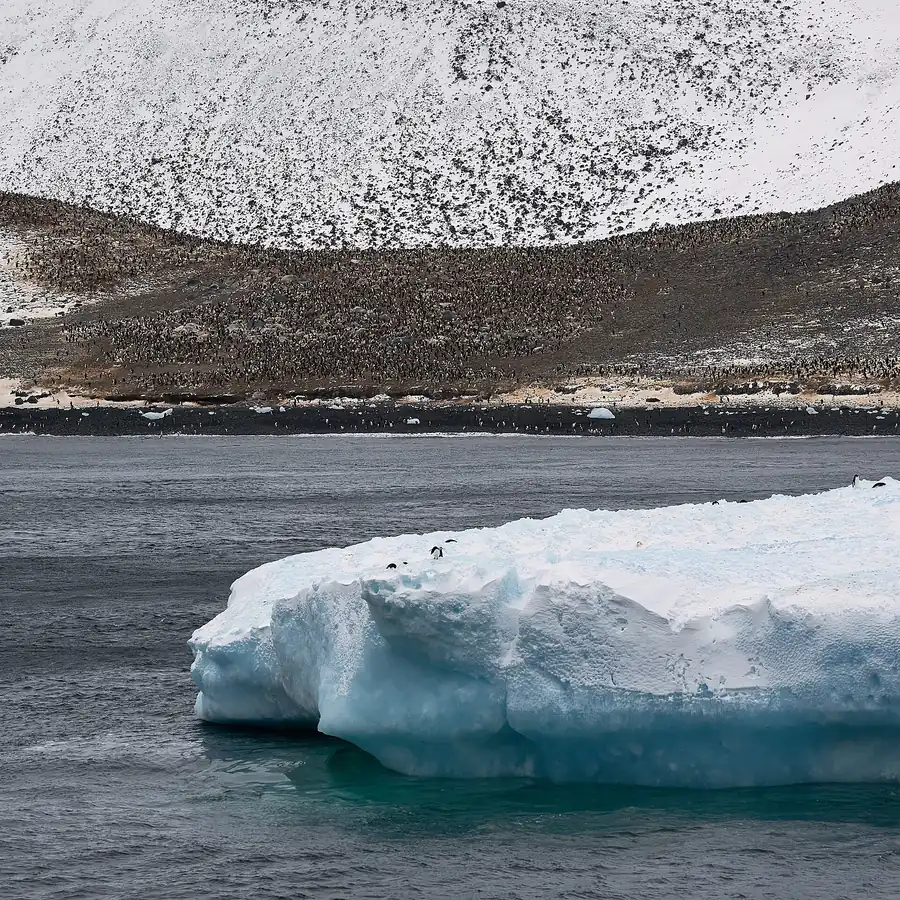
- Paulet Island (Antarctic Sound) — ~100,000 pairs of Adélie penguins around a crater lake, one of the biggest Adélie colonies on Earth.
- Deception Island / Baily Head — sail into the flooded caldera of an active volcano; Baily Head holds one of the largest chinstrap colonies in the world.
- Half Moon Island — chinstrap colonies and elephant seals, a popular first or last landing of a cruise.
- South Shetland Islands (King George, Livingston) — gentoo and chinstrap colonies around the research bases.
Penguin Species
Three species breed on or near the Antarctic Peninsula. The Peninsula is also one of the few places on Earth where the local penguin community is in visible, measurable flux: populations are responding to a warming climate in real time, and a competent expedition naturalist will talk about it on board.
Gentoo penguin (Pygoscelis papua) — the bird most visitors see most often. White "headphones", bright orange bill and feet, and the fastest underwater swimmer of any penguin (recorded up to ~36 km/h). They build messy pebble nests on low hilltops and beaches, and tolerate ice-free ground far better than their cousins. Globally listed as Least Concern, with a worldwide population of roughly 774,000 individuals concentrated on the Falklands, South Georgia, the South Shetlands and the Antarctic Peninsula. The Peninsula is the gentoo's biggest recent success story: gentoo colonies here have more than tripled at many sites over the past three decades, and roughly 17% of the Peninsula's gentoo population now breeds at the southernmost colonies — a rapid range expansion few scientists expected from a famously site-faithful species.
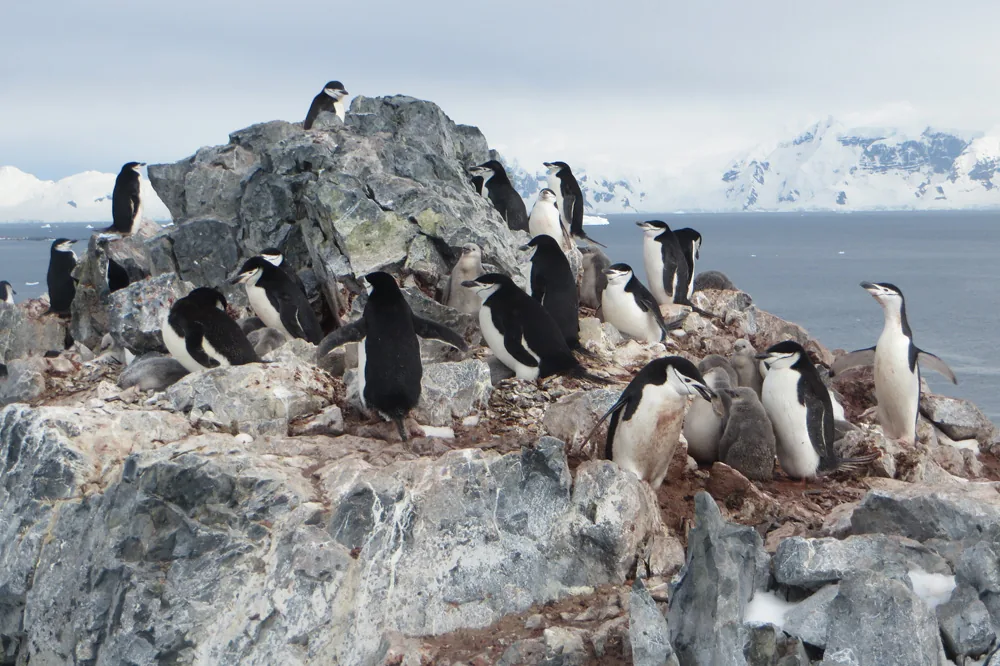
Chinstrap penguin (Pygoscelis antarcticus) — named for the thin black line under the chin. They nest on steep, rocky, often volcanic slopes in enormous noisy colonies; one of the largest single penguin colonies on Earth is the chinstrap rookery at Baily Head on Deception Island, estimated at up to about 200,000 pairs. Globally, the chinstrap is one of the most numerous penguins — roughly 8 million pairs — but the population on the Antarctic Peninsula has fallen sharply at many colonies over the past few decades, with some studies documenting declines of up to around 75% at the same sites where gentoo numbers have tripled. Cause: warming has reduced the krill the chinstraps depend on; gentoos, with a more flexible diet, do better.
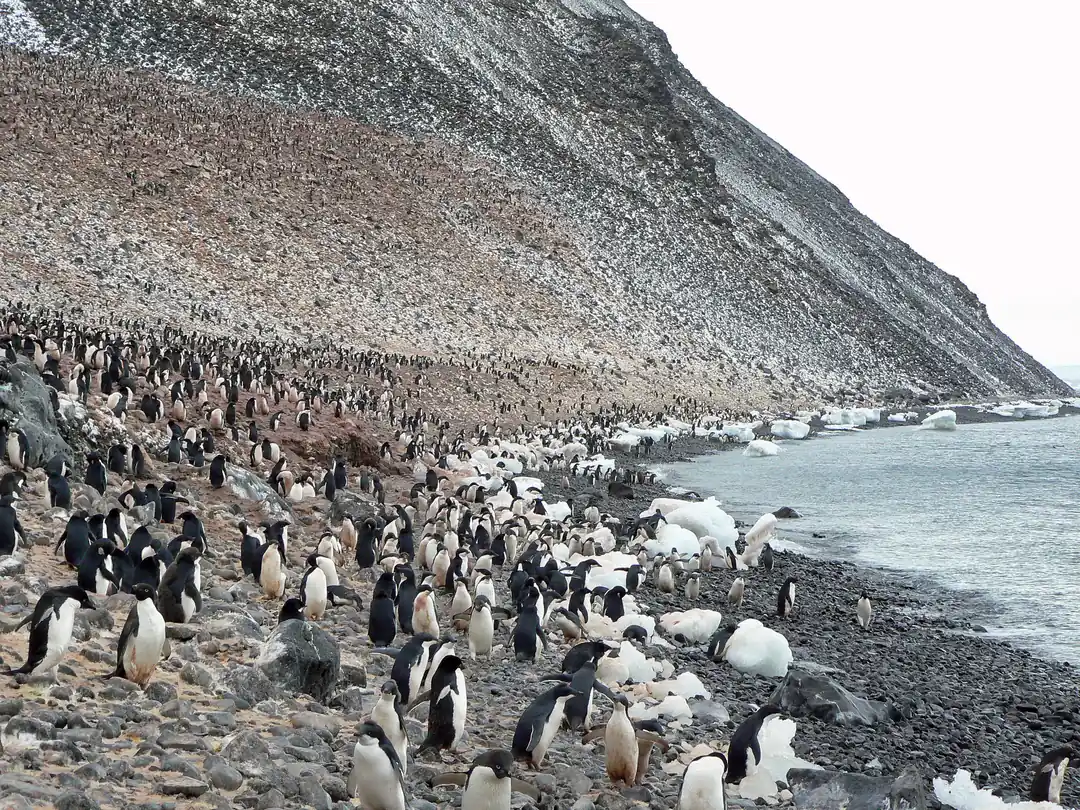
Adélie penguin (Pygoscelis adeliae) — the classic "tuxedo" Antarctic penguin: small, all black-and-white, with a white eye-ring. The most ice-dependent of the three species, Adélies follow the pack ice and so have been pushed south as the Peninsula has warmed. Global population roughly 3.8 million breeding pairs (IUCN Least Concern, but locally decreasing); the single biggest concentration on a Peninsula cruise is at Paulet Island, where some 100,000 pairs breed around the volcanic crater lake. Adélies are notoriously feisty — they will chase skuas and have been known to bite researchers.
- Rare sightings / non-breeders: Emperor, king and macaroni penguins are very rarely seen on the Peninsula proper (king penguins occasionally wander to the South Shetlands; macaronis are a sub-Antarctic bird). If your aim is to see those, head to Snow Hill Island (emperor, specialist expedition), South Georgia (king, macaroni) or the Falklands.
Getting There & Difficulty
- Only practical access: Expedition cruise ship from Ushuaia (Argentina) or, more rarely, Punta Arenas (Chile). There is no airport on the Antarctic Peninsula and no roads between settlements.
- Classic voyage: 10–12 days, depart Ushuaia. Two days crossing the Drake Passage each way, four days on the Peninsula and South Shetlands. Itineraries usually include Cuverville, Danco, Neko Harbour, Paradise Bay, Port Lockroy, Petermann or Pléneau, and at least one South Shetlands stop.
- Fly-the-Drake option: Charter flights from Punta Arenas (Chile) to King George Island (South Shetlands) skip the open-ocean crossing and add a couple of days on the continent. About US$2,000–4,000 extra per person on top of a shorter (5–8 day) voyage.
- Indicative prices 2026/27 season: A standard 10–12 day Peninsula cruise on a 100–200 passenger IAATO expedition ship typically runs about US$10,000–18,000 per person in a twin cabin, with Swoop Antarctica's full 2026/27 range quoted at US$8,700–28,700 depending on ship, cabin class and add-ons (kayaking, camping, photography). Fly-cruise and luxury small-ship products run US$22,000–35,000+; 500+ passenger "Antarctica" sailings that cannot make landings are cheaper but a very different experience.
- IAATO rules that govern every landing:
- At most 100 passengers ashore at any one site at any time.
- One guide per 20 passengers.
- Vessels carrying more than 500 passengers may not make landings at all — they can only cruise past.
- No closer than 5 m to wildlife; do not block penguin "highways" between sea and colony; no food ashore; full boot and outer-gear biosecurity.
- The Antarctic Treaty also caps the total visitor footprint: IAATO recorded around 122,000 ship-borne Antarctic visitors in 2023–24 and roughly 118,000 the following season, spread across an area the size of Europe and Australia combined.
- Physical difficulty: Low to moderate. No technical skill required — but every landing is by Zodiac (small inflatable boat) from ship to shore, often as a wet landing in surf. You need enough mobility to step into a pitching Zodiac with a steadying hand, and to walk on uneven snow, scree, rocks and penguin-trampled mud. Most reasonably fit travellers in their seventies and eighties manage comfortably.
- Comfort difficulty: Moderate. The Drake Passage crossing is the main unknown: some trips get the calm "Drake Lake", others get the "Drake Shake" with 6–8 m swells. Ships are stabilised and doctors are on board, but pack seasickness medication. Onshore the weather is cold, changeable and windy even in midsummer (typical highs -2 °C to +6 °C on the Peninsula).
- Booking: Reserve 12–18 months ahead for the peak December–January departures and the best cabins. Mandatory travel insurance with at least US$250,000 of medical evacuation cover; many operators will refuse boarding without it.
- Not for you if: Strict schedule (every landing is weather-dependent), or very tight budget — consider the Falklands, Boulders Beach or Otago Peninsula instead.
Best Time to Visit
- Season: Late October to late March only. Outside this window the sea ice locks the Peninsula in and ships cannot get through.
- November: Early season. Pristine snow scenery, ice still close to the coast, penguins returning and building nests. Cheaper fares; riskier weather and more cancelled landings.
- December–January (peak): Penguin eggs hatching, maximum colony activity, longest days (almost 24-hour daylight around the solstice), steadiest weather and best odds of a calm Drake. The priciest weeks.
- February–March: Chicks have fledged and adults are moulting; whale numbers build up (humpbacks especially), golden late-summer light, thinning crowds. A favourite with photographers.
- Year-round is impossible — the Antarctic Treaty and IAATO tourist season coincide with the austral summer.
- Tip on month choice: Want cute chicks? December–January. Want the best whale watching and softer light? February–March. Want low fares and don't mind a gamble on weather? November.
Tips
- Pick the right ship size — it decides your day. Aim for an IAATO-compliant expedition ship under ~200 passengers. Ships under 100 can usually land everyone in one rotation; 100–200 ships run rotations (you wait your turn at each landing); 500+ passenger vessels can't land at all. Brochure cabin photos won't tell you this.
- Decide in advance whether you need to fly the Drake. If the open-ocean crossing worries you, or your schedule is tight, fly it and spend the savings on a better cabin. If the journey is part of the romance, sail.
- Treat every landing as a privilege. Even in a good season a significant fraction of planned landings is lost to weather, swell or ice. Build slack into your schedule and stay flexible on board.
- Keep 5 m from wildlife (IAATO rule). If a curious penguin — especially a gentoo — walks up to you, that's fine: stay still, breathe, let it move on. Do not touch, feed or use flash.
- Never block a penguin "highway". The well-worn grooves between sea and colony are working commuter routes; staying on marked paths and never walking between penguins and the sea is the single biggest rule.
- Biosecurity is strict and matters. Scrub and disinfect boots, vacuum outer clothing, and check velcro and seams for seeds before every landing. The Peninsula has never had a continent-wide pest species established; it is the rules that keep it that way.
- Pack for four seasons in one day. Waterproof jacket and trousers, insulated mid-layers, hat and gloves, sunscreen (the high-latitude sun burns fast), spare camera batteries (cold drains them), and seasickness medication for the crossing. Rubber boots for wet Zodiac landings are usually supplied by the ship.
- Bring a zoom lens. You will not get close to wildlife on foot; 200–400 mm is the practical sweet spot for penguins and seals on the beach.
- Don't miss Port Lockroy. The restored British "Base A" hut is the southernmost working post office on Earth — sending a postcard from here is a small but memorable ritual, and gentoo penguins are nesting between the buildings.
- Take a guide-led zodiac cruise, not just landings. Many of the Peninsula's best moments — humpbacks feeding so close you can smell krill on their breath, leopard seals on ice floes, icebergs the size of cathedrals — happen on a Zodiac in open water.
- Learn the gentoo / chinstrap / Adélie story before you go. The Antarctic Peninsula is the clearest place on Earth to watch a climate experiment unfold in real time: gentoo colonies expanding, chinstrap and Adélie colonies shrinking. Your naturalist on board will tell the story; knowing it makes the trip far richer.
- Don't forget the Sun. The Peninsula sun is bright and bounces off snow and water even at near-freezing temperatures. Sunglasses with UV protection and high-SPF sunscreen are not optional.
Image Credits
All photos are real, freely licensed images from Wikimedia Commons — authors and licenses are credited in the captions. All photographs were taken on the Antarctic Peninsula or in its offshore islands (Cuverville, Neko Harbour, Port Lockroy on Goudier Island, Wiencke / Orne Harbour, Paulet Island).
Sources
- Smithsonian Magazine — The Penguins That Thrive—and the Ones Left Behind—as Antarctica Warms (Adélie / chinstrap average breeding 10 days earlier; gentoo 13 days earlier — fastest breeding-season shift ever recorded in a bird; gentoo colonies on the Peninsula more than tripled in 30 years; chinstrap / Adélie down up to ~75% at the same sites; ~17% of Peninsula gentoos now at the southernmost colonies; Peninsula ~3 °C warmer over past 50 years): www.smithsonianmag.com
- British Antarctic Survey — Spatially integrated assessment reveals widespread changes in penguin populations on the Antarctic Peninsula (Lynch et al., Ecology 93: 1367–1377, 2012) (regional integrated analysis across 70 sites × 31 years confirms Adélie and chinstrap declining, gentoo expanding south): www.bas.ac.uk
- Clucas et al. — Reversal in fortunes? (Scientific Reports 4, 5024, 2014) (Pygoscelis penguins expanded after the last ice age; gentoo still expanding, Adélie and chinstrap reversing on the Antarctic Peninsula because of krill loss): www.nature.com
- IAATO — Antarctic tourism statistics (visitor numbers; landing rules; vessel-size thresholds; the 100-passenger and 500-passenger limits): iaato.org
- Antarctic Treaty Secretariat — Antarctic Treaty, 1959 (text and 56 signatory nations): www.ats.aq
- Terra Nova Expeditions — Penguin Diaries: a Guide to the Species of the Antarctic Peninsula (gentoo population ~770,000 breeding pairs in Antarctica; chinstrap ~8 million pairs; Adélie ~3.8 million pairs): www.terranova-expeditions.com
- Antarctic Cruises — The 7 Penguin Species of Antarctica & the Sub-Antarctic (gentoo global population ~774,000; chinstrap global population ~8 million, decreasing; Baily Head colony "up to 200,000 pairs"; 36 km/h swimming speed; IUCN Least Concern for gentoo and Adélie): www.antarcticacruises.com
- Swoop Antarctica — A guide to the penguins of Antarctica (Cuverville gentoo colony; gentoo ~300,000 Antarctic breeding pairs + ~100,000 South Georgia + ~70,000 Falklands; chinstrap ~1.5 million pairs South Sandwich; Adélie ~2.5 million pairs continent-wide; "southernmost gentoo colony" at Petermann Island): www.swoop-antarctica.com
- Adventure Life — Antarctic Peninsula example 10-day cruise aboard the Ortelius (Ushuaia embark/disembark; 2 days Drake each way; Cuverville gentoo colony; Danco chinstrap; Neko Harbour mainland landing; Paradise Bay; Lemaire Channel to Pléneau / Petermann for Adélie; Port Lockroy on Goudier Island; Jougla Point): www.adventure-life.com
- Adventure Life — Antarctic Peninsula with South Shetland Islands 10-day itinerary (Half Moon Island chinstrap colony; Deception Island flooded caldera and chinstrap rookery): www.adventure-life.com
- Wildfoot Travel — Classic Antarctica & South Shetland Islands 10 days aboard MV Ushuaia (Paulet Island Adélie colony; "southernmost colony of Gentoo Penguins" at Petermann): www.wildfoottravel.com
- iExpedition — Antarctica — Discovery and learning voyage 10-day itinerary: www.iexpedition.com
- Civitatis — Antarctica 10-day cruise from Ushuaia (site list — Paradise Bay, Neko Harbour, Paulet Island, Pléneau, Petermann, Melchior, Cuverville, Portal Point, Deception Island): www.civitatis.com
- Palapa Vibez — Antarctica: The Seventh Continent (Antarctic Treaty System overview; 56 signatory nations; ~80,000+ visitors per season Oct–March; 100-visitor landing cap; Ushuaia gateway; fly-cruise +$2–4k premium): palapavibez.com
- GoCruise Travel — Antarctica by Sea: What a 2026 Expedition Cruise Actually Costs (Lindblad industry average ~US$10,000; Swoop 2026/27 range $8,700–$28,700; ~US$1,000/day industry average): www.gocruisetravel.com
- PolarTourist — How Much Does an Antarctica Cruise Cost in 2026? (cheapest workable expedition US$10,500–13,000; mainstream 10–12 day $15,000–20,000; fly-cruise $22,000–35,000; IAATO vessel-size and 100/500 rules): polartourist.com
- Small Ship Travel — Antarctica Expedition Cruise Guide (season late October–late March; $12,000–18,000 for most 10–12 day Peninsula voyages; 122,000 ship-borne visitors in 2023–24 and ~118,000 the following year; mandatory US$250k evacuation insurance): www.smallshiptravel.com
- Antarctica Tourism — Antarctica Cruises: The Complete Guide for 2026 (US$6,000 entry-level to $60,000+ icebreaker / Ross Sea / luxury; December–January peak; fly-cruise $4,000–7,000 premium over sail-the-Drake): www.antarcticatourism.org
- Swoop Antarctica — Antarctic Wildlife Guide (Antarctic fur seals at Pléneau; whale species): www.swoop-antarctica.com
Related destinations
- South Georgia — the greatest penguin spectacle on Earth, usually combined with the Peninsula on the same voyage.
- Falkland Islands — five penguin species and far easier access, on the same expedition route.
- Macquarie Island — the other giant subantarctic colony, home of the royal penguin.