Ross Sea / Cape Adare (Adélie & Emperor Penguins)
Part of our guide to the best places to see penguins in the wild — Ross Sea / Cape Adare ranks #7 on the list.
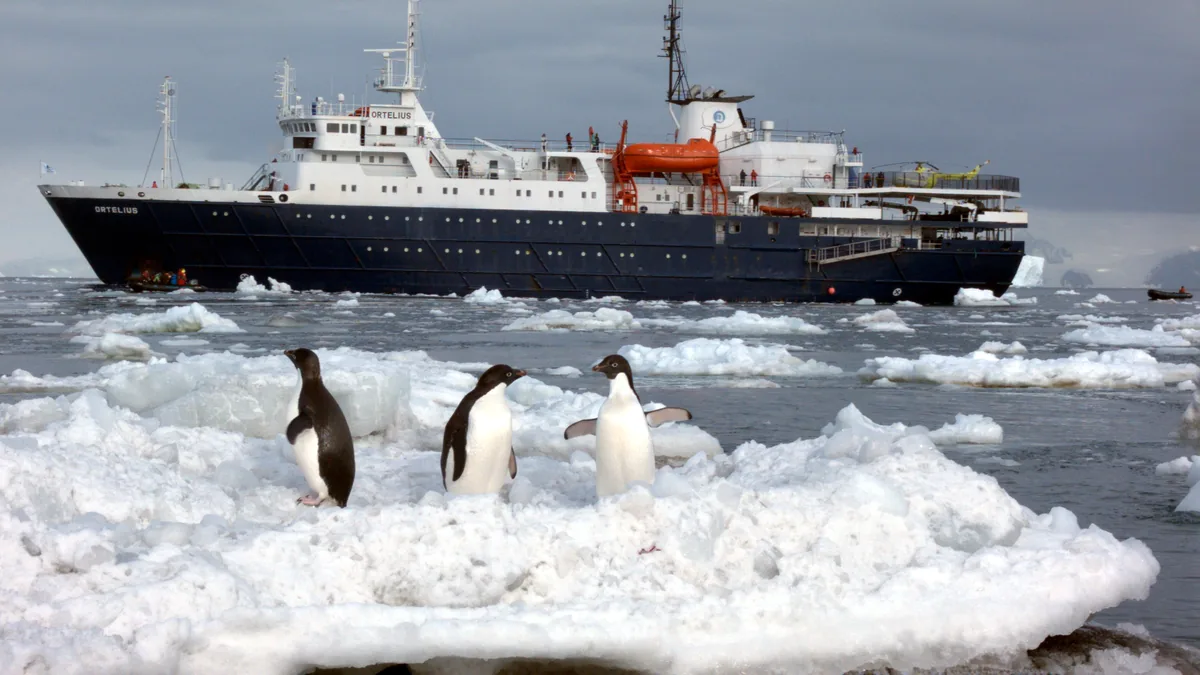
Overview
The Ross Sea is the last ocean — the most remote, the most intact, and the hardest to reach of the Southern Ocean's seas. Together with the adjoining Victoria Land coast, it holds what is, in a single package, the greatest concentration of Antarctic history on Earth: the spot where humans first set foot on the Antarctic continent (Cape Adare, 1895), the first buildings ever built there (Borchgrevink's huts, 1899), and the launching point of every assault on the South Geographic Pole — Scott's, Shackleton's, Amundsen's. The same coast supports roughly 30% of the world's Adélie penguins at Cape Adare (more than 250,000 breeding pairs — the largest Adélie rookery anywhere) and around a quarter of all emperor penguins, in two of the biggest colonies on the planet at Coulman Island and Cape Washington. The reward for a 25–30 day deep-south voyage is not just wildlife, but the rare experience of standing on the ice under the largest floating ice shelf in the world (the Ross Ice Shelf, ~500,000 km²) within a Marine Protected Area larger than any national park on land.
The catch is access. The season is a six-week window in mid-summer, almost everything is weather- and ice-dependent, and departures are limited to a handful of ships each year. Voyages are typically bundled with the New Zealand subantarctic islands (Snares, Auckland, Campbell, and sometimes Macquarie) to fill the time it takes to cross the Southern Ocean in both directions.
Location
- Where: The Ross Sea is the southernmost embayment of the Pacific Ocean, cut off from the rest of the world by the Ross Ice Shelf to the south. Cape Adare sits at 71°17'S, 170°09'E on the Borchgrevink Coast of northern Victoria Land — the western gateway to the sea, about 100 km north of Cape Hallett. McMurdo Sound and the US/New Zealand research bases on Ross Island lie at the southern end of the sea.
- Status: The whole Ross Sea region sits inside the Ross Sea Region Marine Protected Area, agreed unanimously by the 25 members of the Commission for the Conservation of Antarctic Marine Living Resources (CCAMLR) in October 2016 and entered into force on 1 December 2017. It covers 1.55 million km² (around 1.5 times the largest national park on land), of which 1.12 million km² is a fully protected no-take General Protection Zone. Set for 35 years, this is the largest marine protected area on the planet. Cape Adare's Borchgrevink huts are separately protected as Antarctic Specially Protected Area No. 159 under the Antarctic Treaty System.
- Climate: Polar maritime. Austral summer temperatures on the Victoria Land coast hover around 0°C to –5°C in January, dropping to –15°C to –30°C in winter. The sea is navigable for expedition ships only from late December to late February, and even then pack ice and storms can close the coast for days. Wind chill is the real hazard — katabatic winds pouring off the ice sheet can exceed 100 km/h.
- Key visitor sites: Cape Adare (Adélie colony, Borchgrevink and Scott's huts); Cape Hallett (Adélie colony, decommissioned scientific base); Terra Nova Bay / Cape Washington (one of the largest emperor colonies in Antarctica); Coulman Island (the world's largest emperor penguin colony, viewed from a distance); McMurdo Sound and Ross Island (Scott's Hut at Cape Evans, Shackleton's Hut at Cape Royds, Discovery Hut at Hut Point); the Ross Ice Shelf front.
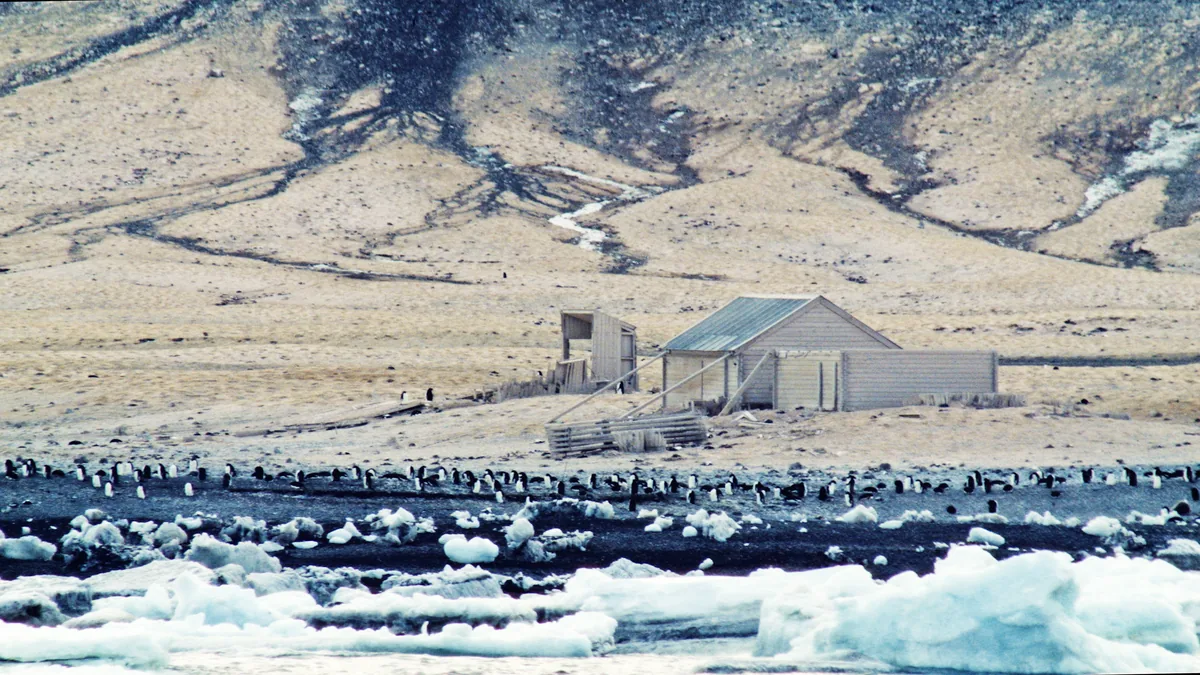
The first humans to stand on the Antarctic continent did so here. The Norwegian-British explorer Carsten Borchgrevink, accompanied by Henrik Bull, landed at Cape Adare on 24 January 1895 — the first documented landing on the mainland of Antarctica. He returned in 1898 as leader of the British Antarctic (Southern Cross) Expedition, 1898–1900, and on the flat cobble spit at Ridley Beach erected the first buildings constructed anywhere on the continent. His party of ten was also the first to over-winter on the Antarctic mainland. A century later, the Ross Sea still echoes with the Heroic Age: Scott's Discovery expedition charted the ice shelf in 1901–04; Scott and Shackleton both based themselves at McMurdo Sound for the Terra Nova and Nimrod expeditions; Amundsen launched from the Bay of Whales.
Penguin Species
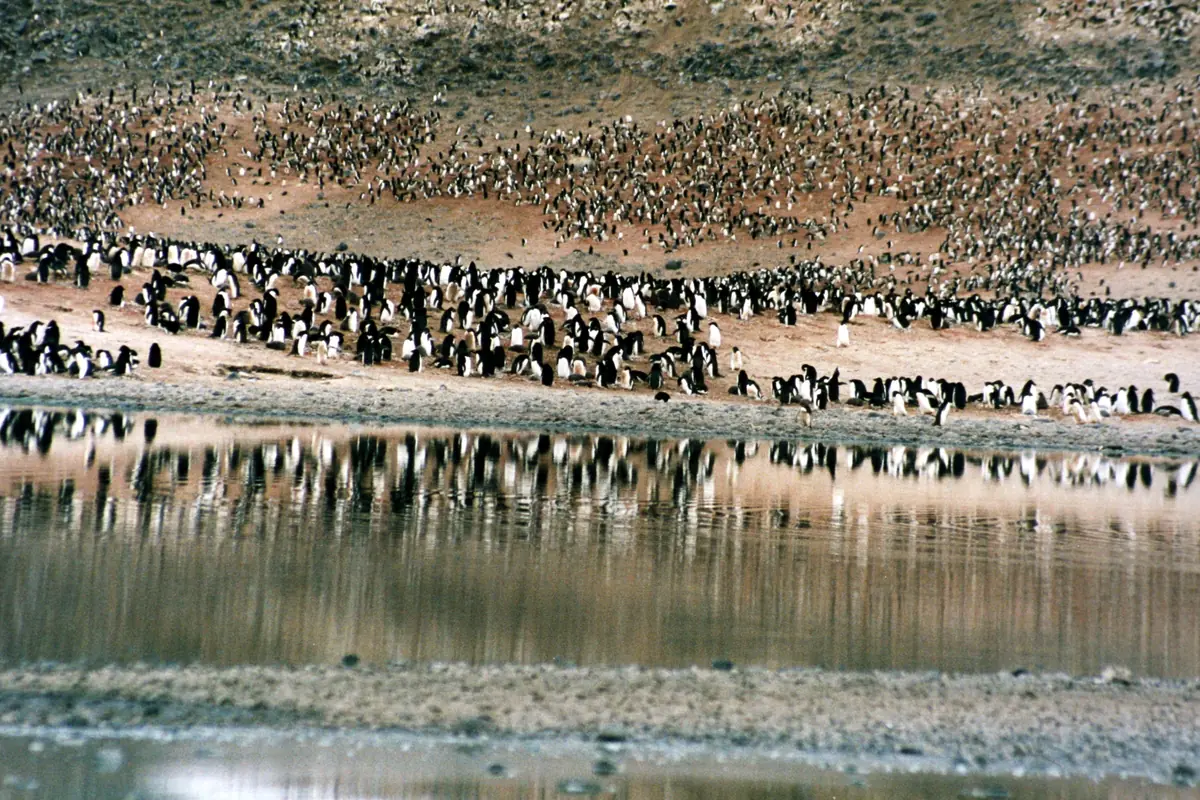
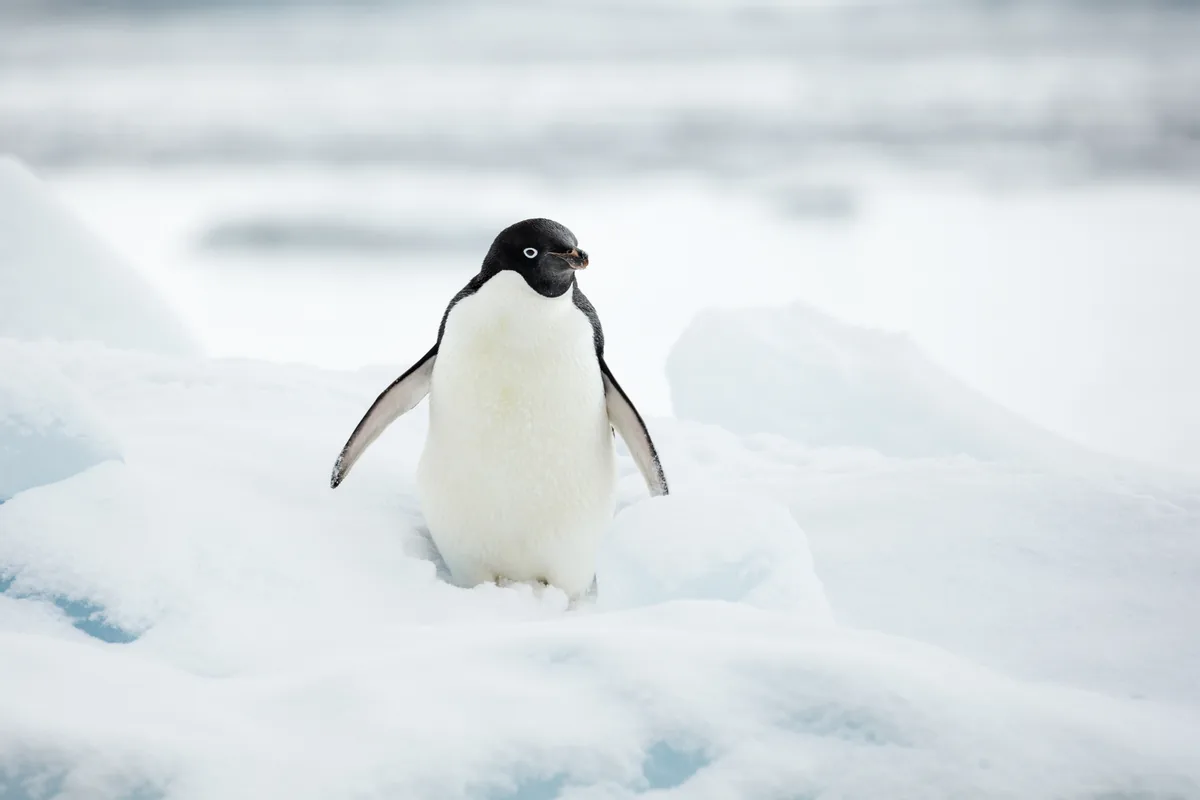
Adélie penguin (Pygoscelis adeliae) — the signature bird of the Ross Sea coast, and the species that defines the scale of the place. The single colony at Cape Adare, on Ridley Beach and the western slopes of the Adare Peninsula, holds more than 250,000 breeding pairs (BirdLife International's 1981–2012 surveys averaged 227,000 pairs across four seasons) — making it the largest Adélie penguin rookery in the world. Cape Hallett, about 100 km to the south, adds a further roughly 50,000 pairs. The Ross Sea region as a whole supports more than 30% of the global Adélie population, more than a million breeding pairs in total. Adélies are mid-sized Antarctic penguins (about 70 cm, 4–6 kg) with the classic black head, white eye-ring and tuxedo plumage; they nest in crowded open colonies of small stone nests, and the noise and smell of a half-million-bird rookery on a bright January day is one of the great sensory experiences of the Antarctic.
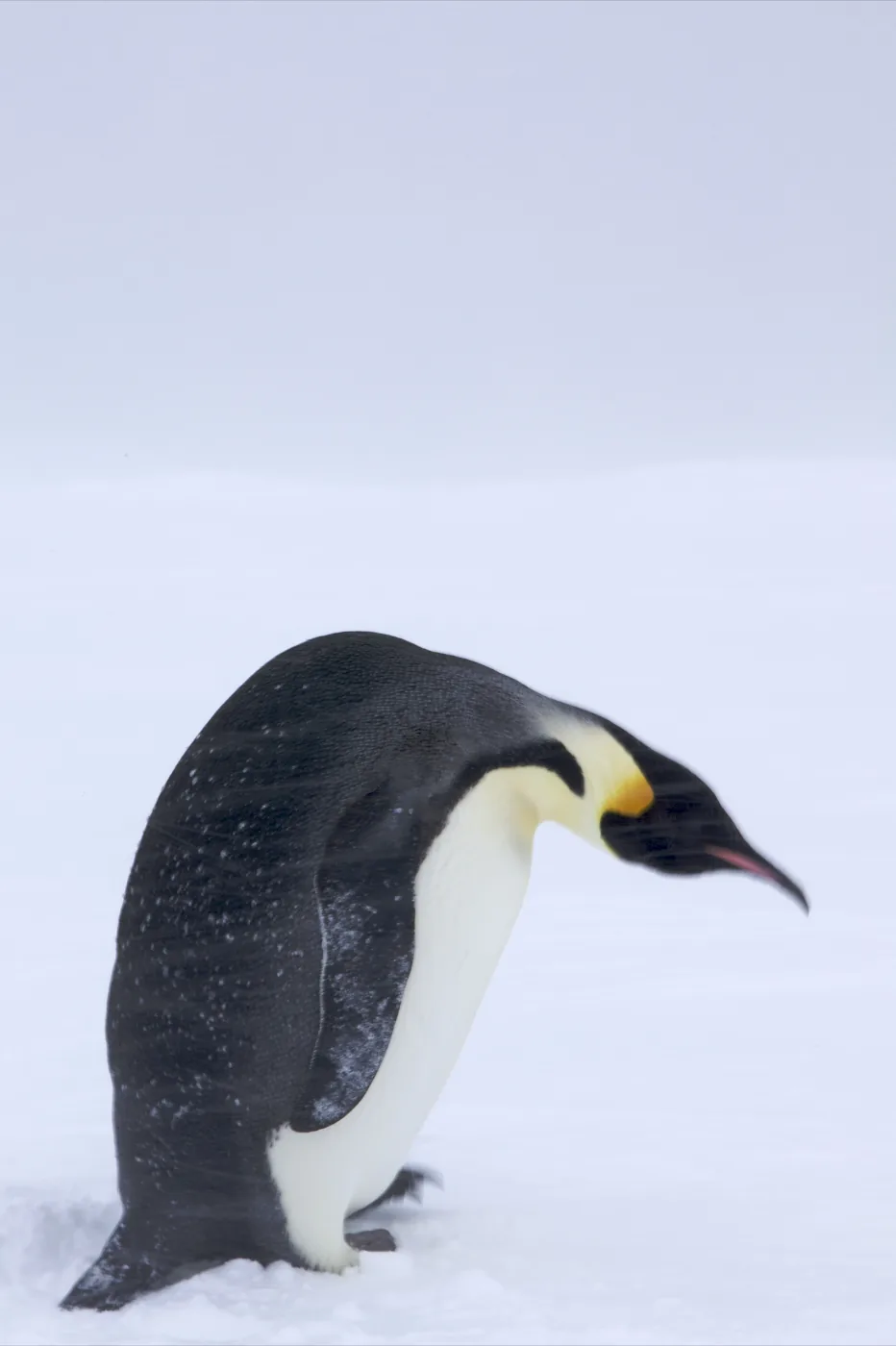
Emperor penguin (Aptenodytes forsteri) — the largest penguin on Earth and the only species that breeds through the Antarctic winter. Two of the world's largest known emperor colonies sit on the Victoria Land coast, in the part of the Ross Sea that expedition cruises visit. Coulman Island, off the coast of northern Victoria Land, holds around 28,000 pairs and is currently considered the largest emperor penguin colony in the world. Cape Washington, in Terra Nova Bay, holds around 20,000–24,000 pairs. Cape Crozier on Ross Island — famous from Apsley Cherry-Garrard's The Worst Journey in the World — was the first emperor colony ever described (1902), and today holds only a few hundred adults. Emperors are massive birds (up to 130 cm and 40 kg) with a yellow ear-patch and the most extreme breeding biology of any bird: they incubate a single egg through the polar night on the sea ice, huddling in groups to survive –60°C wind chill, with the males fasting for up to four months. In January and February, when expedition ships visit, the adults are feeding large grey-brown chicks in their creches. Encounters depend on fast-ice conditions, and the southernmost colonies are usually seen only from the ship or from a helicopter fly-over.
Also here: Weddell seals (the southernmost-breeding mammal, common along the Victoria Land coast and at McMurdo Sound), leopard seals, crabeater seals, minke whales, humpback whales, killer whales (the Ross Sea holds roughly half of the local killer whale population), south polar skuas, snow petrels, Antarctic petrels, and Wilson's storm petrels.
Getting There & Difficulty
- Expedition cruise only. The Ross Sea is hundreds of kilometres inside the Antarctic Circle and a long way south of any airstrip. The only realistic way in is by ice-strengthened expedition ship. The two main embarkation ports are Dunedin (New Zealand) — for Heritage Expeditions and Aurora Expeditions, and most voyages that combine the Ross Sea with the New Zealand subantarctic islands — and Hobart (Tasmania) — historically the Australian gateway and still used by some Aurora and Ponant departures. Ponant's luxury icebreaker Le Commandant Charcot also runs a 30-night Hobart-to-Ushuaia route.
- Duration: 25–30 days is the standard for a Ross Sea voyage; some are as short as 22 days and as long as 34. Of that, about five days each way is spent crossing the Southern Ocean — through the Furious Fifties and the Screaming Sixties — between the port of departure and the Antarctic ice edge. Seasickness is the norm, not the exception.
- Typical itineraries: Most voyages include the New Zealand subantarctic islands — the Snares, Auckland Islands and Campbell Island — for wildlife on the way south, and many continue via Macquarie Island. The Ross Sea days themselves typically visit Cape Adare, Cape Hallett, Terra Nova Bay and Cape Washington, then the Ross Ice Shelf and McMurdo Sound, with landings at Scott's Hut (Cape Evans), Shackleton's Hut (Cape Royds) and Discovery Hut (Hut Point) if ice permits.
- Indicative prices (verify at booking): Aurora Expeditions' 25-day Ross Sea Odyssey (Dunedin round-trip) starts from around US$29,000–34,000 per person twin share. Heritage Expeditions' equivalent 30-day voyages from New Zealand typically start from about US$31,000. Ponant's Le Commandant Charcot Hobart-to-Ushuaia voyages start around US$83,000 for a balcony stateroom. All cruises are full board and include Zodiac excursions, guided shore landings, lectures and transfers from the port hotel.
- Visitor cap and regulation: Antarctic tourism is regulated by the International Association of Antarctica Tour Operators (IAATO). Ross Sea permits are tightly controlled; only a handful of ships with ice-strengthened hulls and low passenger numbers are approved each season. All landings and fly-overs are subject to permit, weather and ice conditions.
- Difficulty: Extreme for access, easy ashore. Crossing the Southern Ocean in winter storm conditions is the most demanding part of any Antarctic trip. Ashore, walks are short, ranger-led, and on flat ground. Cape Adare is often a Zodiac cruise rather than a landing because pack ice blocks the spit; landings are far from guaranteed.
- Booking: Essential 12–18 months in advance. With only a handful of ships and a six-week operating window, every berth on a Ross Sea voyage is contested — and once a season is sold out, there is no second departure.
Best Time to Visit
- January–February (peak): This is the only reliable window. The Antarctic summer is at its height, sea ice is at its annual minimum, daylight is 24 hours, penguin chicks are at their largest, and historical hut sites are most accessible. The first two weeks of January are the classic slot for Cape Adare and McMurdo Sound landings.
- Late December (early season): Some voyages depart around Christmas; ice is heavier and landings further south are less certain, but it is a good time for emperor penguin chicks that are not yet fledged.
- Late February–early March (late season): Penguin chicks are beginning to fledge, the light softens, and there is more whale activity. Ice is starting to re-form, so the southernmost landings become less likely.
- March–December: No tourist operations at all. Mid-winter temperatures on the Victoria Land coast fall below –30°C and pack ice locks the entire coast.
- Crossing conditions: Plan for the worst and you'll be pleasantly surprised. The Southern Ocean crossing is the single biggest determinant of how a Ross Sea voyage feels. Voyages that depart from Hobart face a slightly shorter but rougher crossing than those from Bluff or Dunedin. A small but real number of people leave the ship at the first port of call rather than continue.
Tips
- Treat landings as a privilege, not a guarantee. Pack ice and katabatic winds can shut down access to Cape Adare, McMurdo Sound or the Ross Ice Shelf front for days at a stretch. A successful Ross Sea voyage is one in which the expedition team finds alternatives; flexibility is the most useful travel attribute.
- Cape Adare is a Zodiac cruise, not a landing, more often than not. Ridley Beach is a low cobble spit that pack-ice piles against; even in a "good" ice year only a minority of voyages make a landing here. The hut is visible from the ship and from the Zodiacs; the value of the moment is in standing offshore, not in walking on the spit.
- Borchgrevink's hut is closed to visitors. The two huts are protected under ASPA-159 and, after a 2016–2019 restoration that removed everything to New Zealand for conservation and then reinstalled it, are now roped off. Look in through the windows and the open doors — and remember that the man who built this hut, and the ten who wintered here, were the first.
- Scott's Hut at Cape Evans is the one historical site that almost every Ross Sea voyage lands at. It is also the one that takes the most time — give yourself the full guided tour, and read Cherry-Garrard's The Worst Journey in the World before you go. The hut feels exactly as Scott's party left it in January 1912, down to the seal blubber on the stove.
- Pack for every season in a single day. The Victoria Land coast can drop from +2°C in bright sunshine to –20°C with windchill in an hour. Layers, a serious waterproof outer shell, waterproof gloves, hat, neck gaiter and UV-rated sunglasses are all non-negotiable. The ships lend Muck Boots and a parka — bring your own base layers.
- Bring a really good camera, but manage your expectations. The Ross Sea produces the most spectacular Antarctic photography in the world, but also the most disappointing — flat light, blowing snow and grey skies are common. A wide lens (24–70 mm equivalent) and a long zoom (100–400 mm or longer) cover most needs.
- Take seasickness medication from day one. Modern non-drowsy options (meclizine or cinnarizine) work for most people. The Drake-equivalent Furious Fifties crossing is the single most common reason people say they won't do a Ross Sea trip twice.
- Biosecurity is serious and enforced. All clothing, boots and gear are vacuumed and inspected before any landing. Don't bring fresh food, seeds, soil or untreated wood products. Antarctic fines are real.
- Choose your departure port carefully. Dunedin departures are the most common and pair naturally with the New Zealand subantarctic islands. Hobart departures are slightly more remote and usually include the Tasmanian gateway cities. Ponant's Hobart-to-Ushuaia trip is the only way to combine the Ross Sea with the Antarctic Peninsula in a single voyage.
- Consider the helicopter option. Some operators (notably Heritage) offer optional helicopter time over the ice shelf or to the Coulman Island emperor colony. It is expensive, weather-dependent, and not for everyone — but for those who do it, it is the single most extraordinary wildlife experience in Antarctica.
- Read the right books first. Cherry-Garrard's The Worst Journey in the World (Cape Crozier and the Terra Nova expedition), Anne-Flore Laloë's Adélie Penguin monograph (for the species), and the relevant chapters of H.W. Tilman's Two Voyages (for the modern sailing-expedition feel). Standing in Borchgrevink's hut after reading Cherry-Garrard is a different experience from standing in it before.
- Respect the protection status. The Ross Sea Region MPA, the Antarctic Specially Protected Areas around the huts, and the Antarctic Treaty's general environmental rules are not optional. Walk only on marked paths, take nothing but photographs, and never get closer than 5 m to wildlife — penguins and seals included.
Image Credits
All photos are real, freely licensed images from Wikimedia Commons — authors and licenses are credited in the captions. The hero, Adélie rookery and Borchgrevink hut shots were taken at or offshore from Cape Adare; the emperor penguin and Adélie close-up are species portraits taken elsewhere in Antarctica; the Ross Ice Shelf image is from the Ross Sea region itself.
Sources
- BirdLife International — Important Bird Areas factsheet: Cape Adare (294 ha IBA, Adélie colony 1981–2012 mean of 227,000 breeding pairs, south polar skua ~300 pairs): datazone.birdlife.org
- Wikipedia, "Cape Adare" (Borchgrevink 1895 landing, 1899 Southern Cross expedition, ASPA-159, Levick 1911–12 study, Ridley Beach colony, James Clark Ross 1841): en.m.wikipedia.com
- Antarctica New Zealand — Cape Adare (Borchgrevink and Scott's Northern Party huts, 2016–2019 restoration programme, ASPA-159 status): antarcticanz.govt.nz
- Wikipedia, "Emperor penguin" (Coulman Island ~28,000 pairs as the world's largest, Cape Washington ~24,000 pairs, Cape Crozier historical decline, Snow Hill as northernmost colony, IUCN Near Threatened): en.wiki2.org
- Fretwell & Trathan, "Emperors in Hiding" PLOS ONE (2014) — Coulman Island and Cape Washington colony size estimates, global emperor population of ~260,000 pairs across 52 colonies: dx.doi.org
- Royal Society Publishing — Advances in remote sensing of emperor penguins (multi-year time series 2009–2018, Coulman Island 2018 confirmation as largest colony): royalsocietypublishing.org
- ASOC — Ross Sea Region MPA (CCAMLR 2016 approval, 1.55 million km², 72% no-take, 35-year duration, December 2017 entry into force): asoc.org
- New Zealand Ministry of Foreign Affairs and Trade — Ross Sea region Marine Protected Area (joint NZ/US proposal 2012, unanimous CCAMLR support October 2016, entered into force 1 December 2017, 1.55 million km² with 1.12 million km² fully protected, 30% of world's Adélie penguins and a quarter of emperor penguins): mfat.govt.nz
- IUCN — Ross Sea to become world's largest marine protection area (1.55 million km², 35-year protection period): iucn.org
- Aurora Expeditions — Ross Sea Odyssey (25-day Dunedin round-trip, from US$29,065): auroraexpeditions.com.au
- Discover Travel NZ — Aurora Expeditions Ross Sea Odyssey (full itinerary, Greg Mortimer): discovertravel.co.nz
- Polar Guidebook — Heritage Expeditions Antarctica from New Zealand (30-day voyages, Snares/Auckland/Campbell/Macquarie/Ross Sea): polarguidebook.com
- finaax — Antarctica cruise from Hobart: 2026 Ross Sea guide (Ponant Charcot 30-night from US$83,130; Heritage/Aurora pricing): finaax.com
- Oceanwide Expeditions — Cape Adare (largest Adélie colony in Antarctica, >250,000 breeding pairs, super-colony evidence, ASPA status): oceanwide-expeditions.com
- Art Photo Travel — Cape Adare and the Ross Ice Shelf (>250,000 Adélie pairs, 30 m ice cliff, 600 km ice shelf): artphototravel.net
- Aboard The World — Cape Adare, the Entrance to the Ross Sea (280,000 Adélie pairs, pack-ice challenges, Borchgrevink hut restoration): aboardtheworld.com
Related destinations
- Macquarie Island — usually bundled into Ross Sea voyages; the only place to see royal penguins.
- South Georgia — the other great southern colony spectacle, on much shorter and cheaper voyages.
- Snow Hill Island — the most accessible way to see emperor penguin chicks up close on land.