South Shetland Islands (Chinstrap Stronghold & the Volcanic Caldera)
Part of our guide to the best places to see penguins in the wild — South Shetland Islands ranks #5 on the list.
Overview
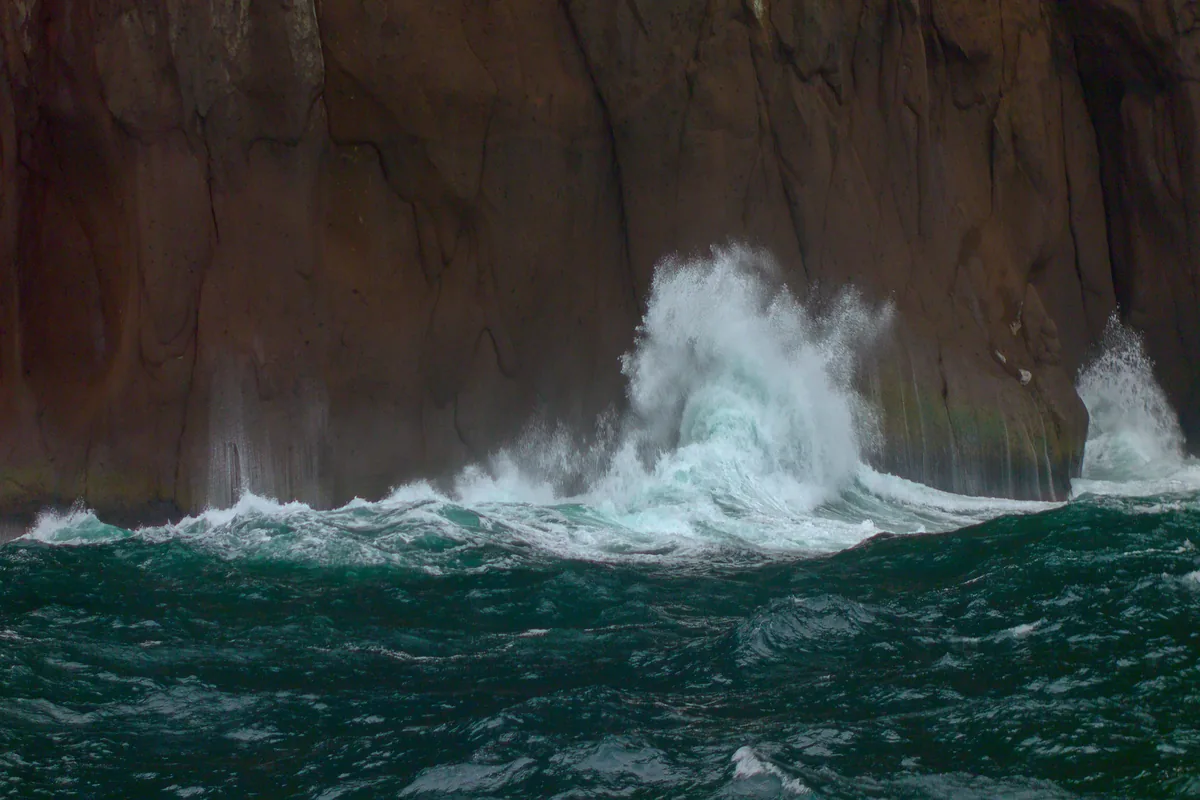
The South Shetland Islands sit like a chain of stepping stones a day's sail north of the Antarctic Peninsula, and almost every expedition cruise that crosses the Drake Passage makes landfall here — usually as the first or last stop of a 10–12 day Antarctic Peninsula itinerary. The archipelago runs about 540 km from Smith Island in the south-west to Clarence Island in the north-east, with eleven major islands and many smaller islets, and its penguin claim to fame is the chinstrap: roughly 140,000 to 191,000 breeding pairs, more than a third of the world's total, spread across dozens of rookeries on rocky beaches and volcanic black sand. The gateway is Deception Island, an active volcanic caldera whose flooded interior — Port Foster, entered through the narrow 230-metre cleft of Neptune's Bellows — is one of the most extraordinary natural harbours in the world and home to the Baily Head chinstrap colony, one of the largest single penguin rookeries on Earth. Across the Bransfield Strait, King George Island is the busiest piece of real estate in Antarctica — research stations from a dozen countries, two airports and even a working church — — while Livingston Island's Hannah Point offers offers the most concentrated pile-up of Antarctic wildlife you can reach on foot. Get there by expedition cruise from Ushuaia (Argentina), spend a few hours ashore at a handful of protected landing sites, and you will leave having heard, smelt and been deafened by a chinstrap colony the size of a city.
Location
- Where: A 540 km-long archipelago running roughly SW–NE between 61°S and 63°30'S, separated from the Antarctic Peninsula by the Bransfield Strait (named after its discoverer, Edward Bransfield) and from South America by the Drake Passage. The largest islands, from south-west to north-east, are Smith, Snow, Livingston, King George, Nelson, Robert, Greenwich, Elephant and Clarence. Politically all sit in the Antarctic Treaty area; none belongs to any single nation and all are claimed, in different forms, by the UK, Argentina and Chile.
- Status: Administered under the Antarctic Treaty System, with several zones protected as Antarctic Specially Protected Areas (ASPAs) and Antarctic Specially Managed Areas (ASMAs). Deception Island is ASMA 4; King George Island's Admiralty Bay is ASMA 1 with ASPA 128; Livingston Island's Hannah Point is part of ASPA 140, and Byers Peninsula (also Livingston) is ASPA 126, the largest ice-free area in the maritime Antarctic. There is no permanent population, only summer and winter research-station staff.
- The islands: A mix of glaciated volcanic peaks (over 2,000 m on Smith and Livingston islands) and ice-free lowlands formed of lavas and tuffs. Deception Island is the active volcano — last eruption 1967–1970 — and its outer flanks are the penguins' home, while the flooded interior is a research-station hub and tourist landing zone.
- Human presence: Research stations from Argentina, Brazil, Bulgaria, Chile, China, Ecuador, Poland, Russia, South Korea, Spain, Uruguay and the UK operate in summer, with around a dozen staffed year-round. King George Island's Teniente R. Marsh airport (Chile) and the Comandante Ferraz runway (Brazil) make it the only part of Antarctica with scheduled flights from Punta Arenas. There is no tourism infrastructure, no airport for visitors, and the only way in is by sea.
- Key visitor sites: Deception Island (Baily Head chinstrap colony, Whalers Bay historic site, Pendulum Cove volcanic hot springs, Telefon Bay); Livingston Island (Hannah Point wildlife walk, Byers Peninsula ASPA access by permit); Half Moon Island (Argentine Cámara station, gentoo and chinstrap colonies); Aitcho Islands (a clutch of small islets, gentoo rookeries at low tide); Penguin Island, a volcanic cone near King George with gentoo and chinstrap colonies; King George itself (Admiralty Bay, with Arctowski Polish and Comandante Ferraz Brazilian stations and, by permit, the Collins Harbour chinstrap colony).
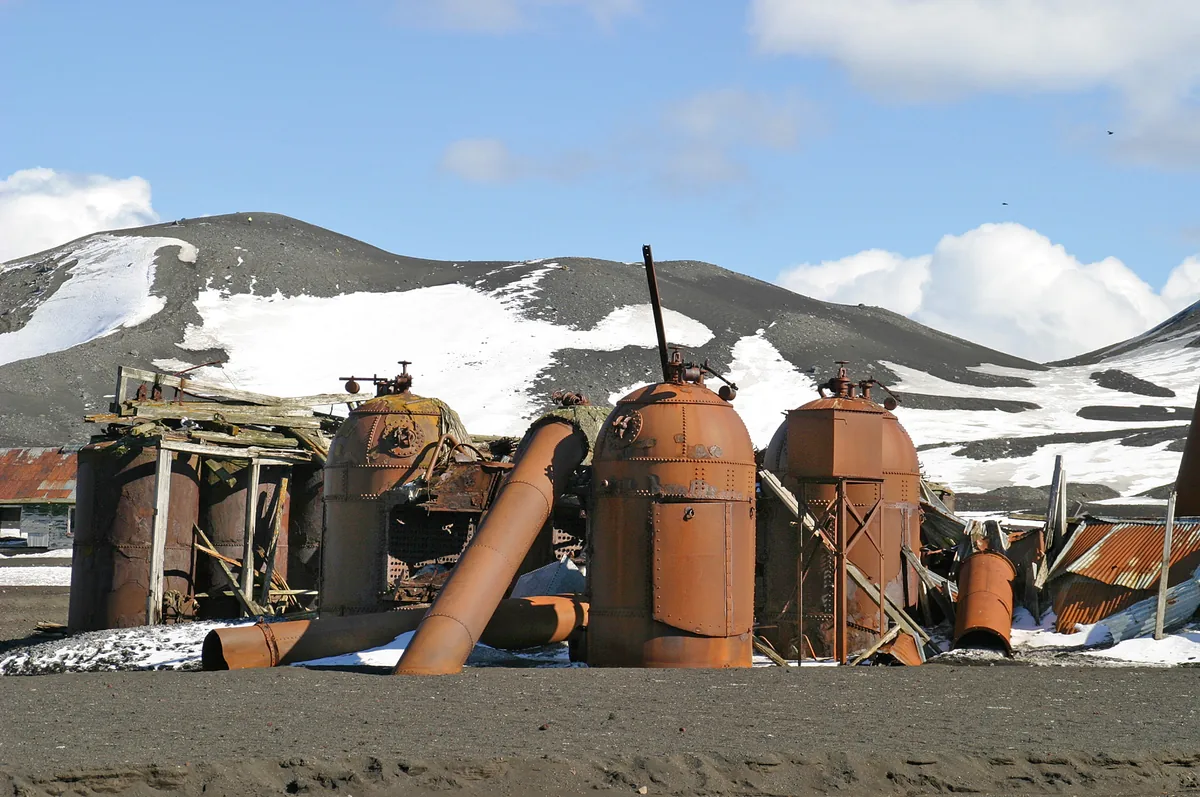
The islands' short human history has had a profound impact on the wildlife — and nowhere more visibly than Deception. Whalers Bay, on the sheltered north shore of the caldera, was a shore-whaling station from 1906 to 1931, first Norwegian, then British; the rusting boilers and the workers' cemetery remain, and you can still swim in a warm pool that volcanically-heated sand makes at Pendulum Cove. The 1967–1970 eruptions forced the evacuation of British Station B and the Chilean Aguirre Cerda station at Pendulum Cove, both of which were buried in mud. Today the caldera is still active — green volcanic alert at the time of writing — and a small Chilean Navy light beacon on Collins Point still guides ships through Neptune's Bellows.
Penguin Species
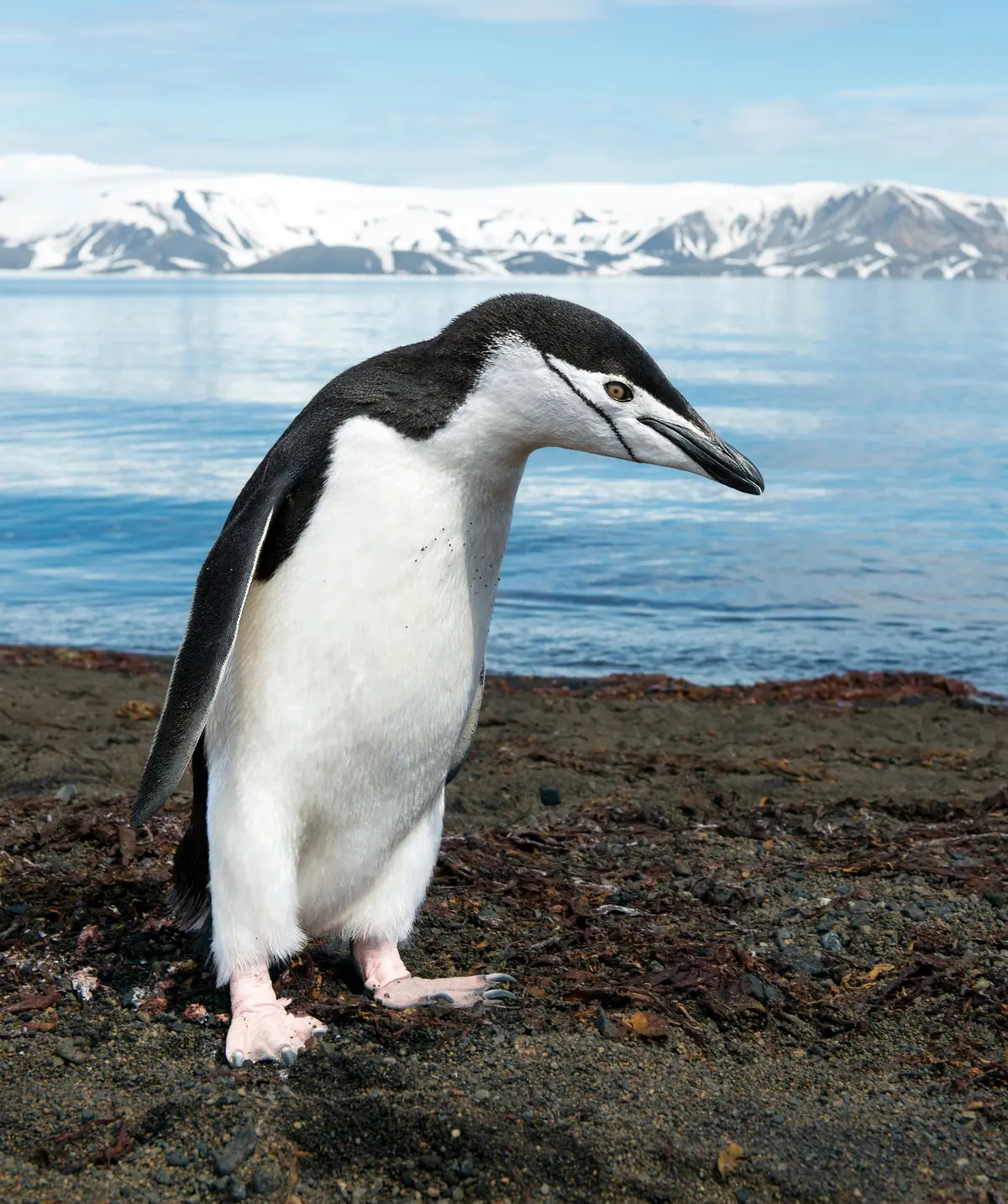
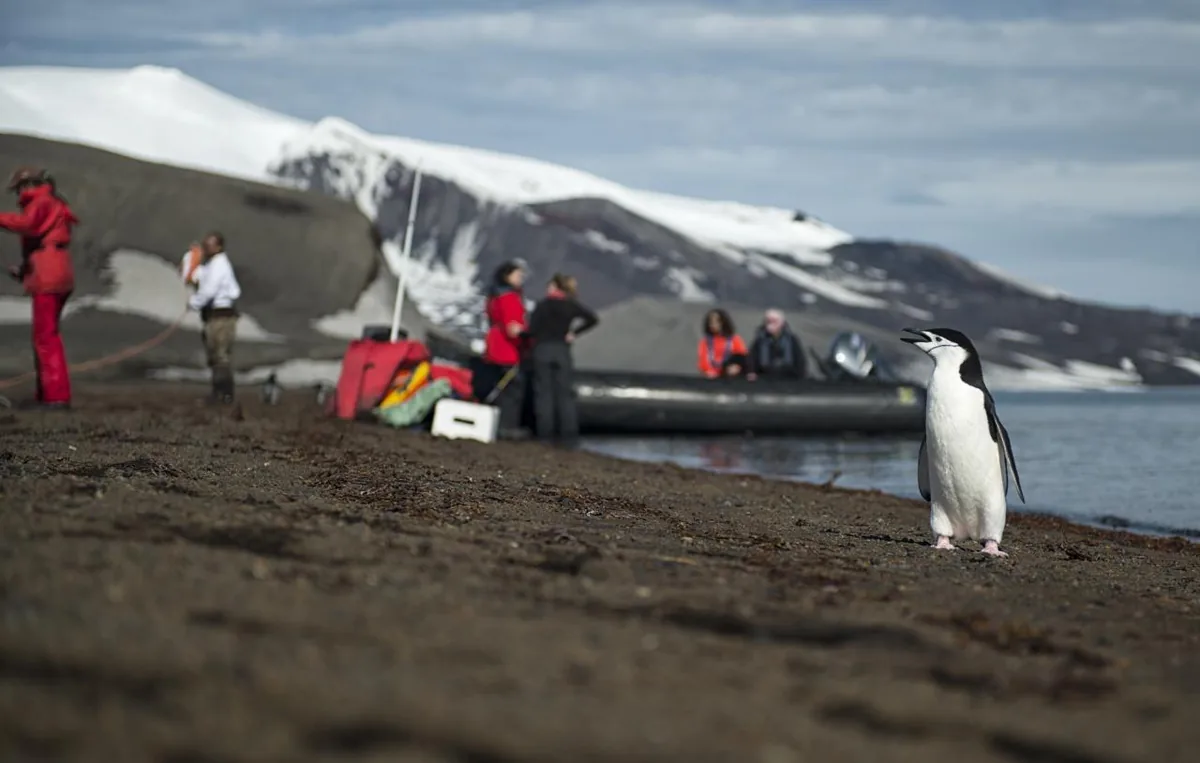
Chinstrap penguin (Pygoscelis antarctica) — the signature species of the South Shetlands and one of the great seabird populations of the Southern Ocean. Across Deception Island alone, the Antarctic Specially Managed Area No. 4 Management Plan records an estimated 140,000 to 191,000 breeding pairs, the majority of them at Baily Head on the south-west coast, where BirdLife International has identified a single 78-hectare colony of around 100,000 pairs — the world's largest for this species. Neighbouring colonies at Hannah Point and the Aitcho Islands (Livingston), Penguin Island, and the north shore of King George add tens of thousands more. Chinstraps nest in dense subcolonies on bare volcanic rock and black sand; in summer the noise from 100,000 pairs is deafening. They are also expanding: while the global population dipped in the late 20th century, the South Shetland colonies are recovering strongly as regional sea-ice loss favours open-water foragers like the chinstrap.
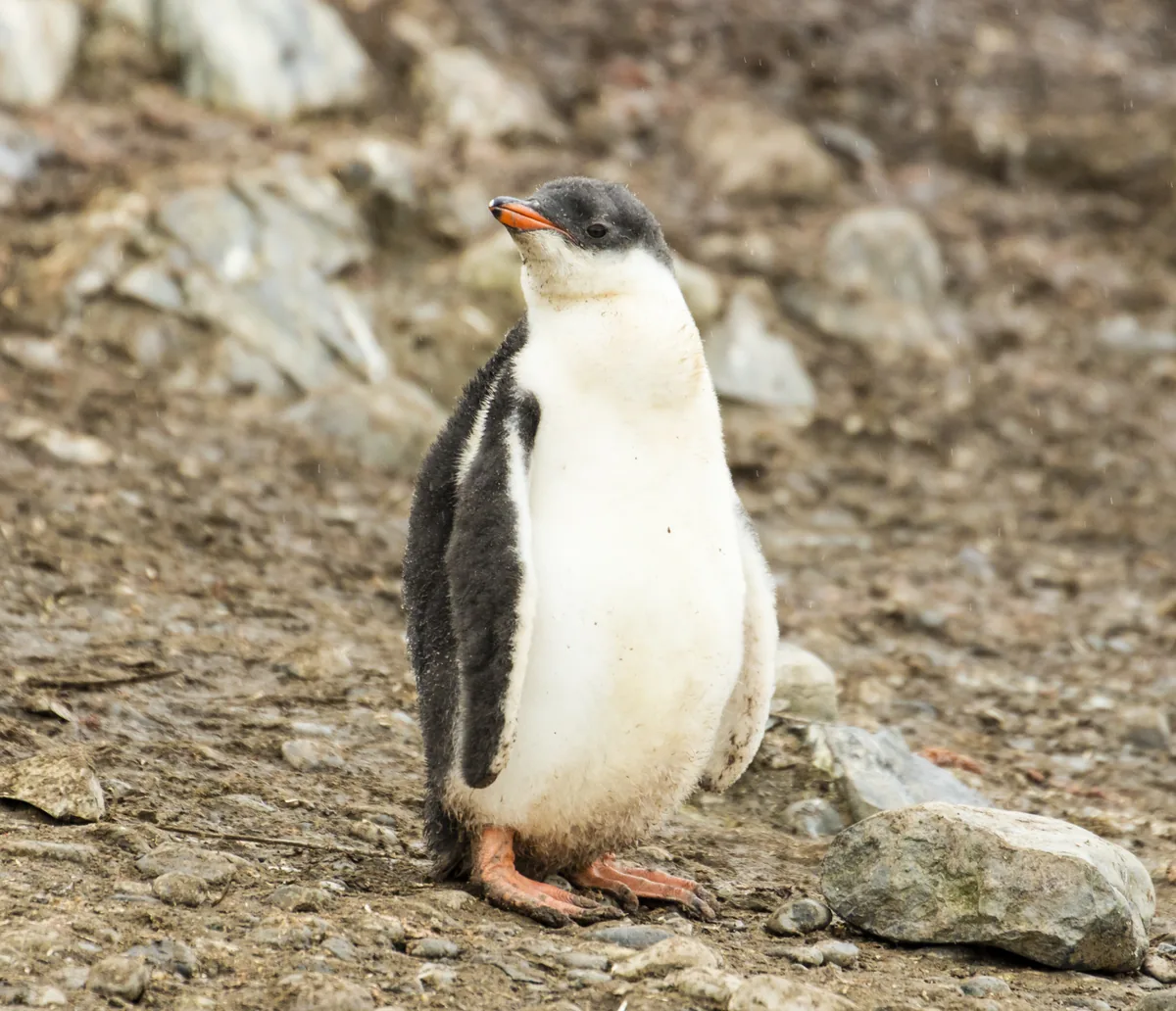
Gentoo penguin (Pygoscelis papua) — the second-most-numerous South Shetland penguin and the most widely distributed. The largest accessible colonies are at Hannah Point on Livingston Island, where antarcticguide.com records roughly 1,500 breeding pairs alongside the chinstaps, and at the Aitcho Islands, where colonies shift from year to year. The species also nests on King George, Penguin Island, Half Moon and Deception (small numbers at Baily Head). Gentoos prefer ice-free beaches and tussock, and they tend to come and go from their colonies more than chinstraps — the same site can hold a few hundred birds one year and several thousand the next. Unlike chinstraps, gentoos are thriving almost everywhere: populations on the Antarctic Peninsula are actually growing, and the South Shetlands are part of that trend.
- Adélie penguin (Pygoscelis adeliae):> A minority partner on the South Shetlands. The best-documented population is in Admiralty Bay, King George Island, where the Key Biodiversity Area records 15,151 pairs in 1994/95 falling to a 2009–12 four-year average of around 7,000 pairs (the species has retreated southward as the Antarctic Peninsula has warmed). The species breeds elsewhere on the archipelago in low numbers — small colonies remain on King George and Elephant Island.
- Macaroni penguin (Eudyptes chrysolophus):> A handful of pairs occasionally nest at Hannah Point — antarcticguide.com describes "one, two or even three pairs" in some years — making this arguably the rarest breeding penguin on the archipelago and the southernmost regular macaroni colony anywhere in the world. Deception Island also records "small numbers" of macaronis, their southernmost regular limit.
- Also here: Southern elephant seals (bulls to 3.5 tonnes on Hannah Point and Whalers Bay beaches), Antarctic fur seals, Weddell and leopard seals, southern giant petrels (the large colonies on the cliffs at Hannah Point are one of the species' main breeding strongholds), kelp gulls, snowy sheathbills and Wilson's storm-petrels. On the botanical side, the geothermal soils of Deception Island host the largest known community of Antarctic pearlwort (Colobanthus quitensis) in the Antarctic, protected as ASPA 140.
Getting There & Difficulty
- Expedition cruise only. There is no airstrip or harbour for tourism. Every visitor arrives by ship and goes ashore by Zodiac (expect wet landings). The Drake Passage crossing from Ushuaia (Argentina) takes roughly 1.5–2 days each way and seasickness is common. Cruises often combine the South Shetlands with the Antarctic Peninsula proper in 10–12 day itineraries, with two to three landings in the archipelago itself.
- Typical itineraries: South Shetlands are almost always always paired with the Antarctic Peninsula — the archipelago is the first stop southbound (about a day into the cruise) and the last stop northbound. Most ships plan two or three landings here, typically one on Deception Island (often Whalers Bay plus a Zodiac cruise of Baily Head or Telefon Bay) and one on Livingston Island (Hannah Point). Half Moon Island and the Aitcho group are optional extras, weather permitting. A handful of ships on long Antarctic voyages (Antarctic Circle, Ross Sea) also call in.
- Indicative prices: Antarctic Peninsula itineraries starting from South Shetlands begin around US$8,000–12,000 per person twin share for a 10–12 day cabin; 11–14 day options with kayaking, camping or photography add-ons run US$12,000–18,000. Long Ross Sea voyages that touch the South Shetlands routinely exceed US$20,000.
- Visitor cap: Tourism is voluntary but coordinated through IAATO (International Association of Antarctica Tour Operators). IAATO-registered operators follow site-specific visitor codes (e.g. Baily Head: only one ship at a time, 100 visitors at the colony, no landings during pre-incubation Oct–mid-Jan). In 2023–24 IAATO's 39 member operators carried about 55,000 Antarctic visitors to the entire Peninsula area; the South Shetlands handle a large share.
- Difficulty: Moderate for access (a sea crossing in the Drake Passage and Zodiac landings in surf), easy ashore on guided walks on boardwalks and short beach trails. Hannah Point in particular is constrained to single-file guided walks in groups of 15–20 between late October and late February because of nesting birds. Mobility needs are low; nothing more strenuous than a short hill walk.
- Booking: Best planned 12–18 months in advance for the November–March window. Pent-up demand and the limited number of IAATO-registered operators mean the best berths and dates go early.
Best Time to Visit
- November–March only: Outside this window the Antarctic Treaty season closes and there is no tourist access at all. Most expeditions cluster in December and January.
- December–February (peak): Penguin colonies are at full activity — chinstaps sitting on eggs in early December, hatching chicks by mid-January, crèches of brown-fluffy chicks by February; gentoo chicks and crèches on the same schedule. Long daylight hours (almost 24 h around midsummer at 62°S). The snow has melted on most lower-elevation landing beaches.
- November and March (shoulder): Fewer departures, but the first cruise ships arrive in early November and the last leave in mid-March. November is best for late winter pack ice and arriving penguins; March is best for fledging chicks and the return of sea ice — both beautiful but with a higher chance of weather disruption.
- December and early January constraints: Hannah Point is closed to landings between late October and mid-January because of giant petrel incubation; many itineraries substitute Telefon Bay or a zodiac cruise.
- Weather — plan for everything: The Bransfield Strait is one of the windiest stretches of water in the world; katabatic winds sweep down from the Peninsula and the South Shetland summits regularly read 80–120 km/h. On the upside, midsummer temperatures on the islands range from about -2 °C to +5 °C, and most landing beaches feel balmier than the rest of Antarctica.
Tips
- Build your plans around the wind. South Shetland landings are not cancelled by "bad weather" alone — surf, swell, and wind direction on the day are what decide whether you get ashore. Two of the most fickle landings are Hannah Point (waves wrapping around the point into Walker Bay) and Baily Head (open swell onto the south-west beach). Treat every landing as a privilege; expect one in five attempts to fall through, and you'll come home happy.
- Follow the biosecurity code absolutely. The Antarctic Treaty region requires VACANT and DECONTAMINATED boots, clothing and gear. Each ship runs a vacuum and boot-dip station before every Zodiac dispatch. Velcro, pockets and seams catch seeds and feathers that other operators (and Treaty inspectors) will flag. Food on shore is forbidden in landing zones; you won't even be carrying a snack in a pocket.
- You will be escorted. The South Shetland landing sites are ASPA-classified or under Antarctic Treaty visitor codes; every shore party is led by IAATO-trained guides in groups of 10–15, with strict path discipline. Stand well back from any path used by penguins — a chinstrap on a "penguin highway" has right of way, and blocking it could mean a chick goes hungry.
- Take seasickness medication before the Drake, not after. Onshore motion at the South Shetlands is fine, but getting there can be rough. Eat lightly the night before, drink water, and bring your meds even if you think you'll be fine.
- Don't miss the volcano at Pendulum Cove. A short Zodiac ride from Whalers Bay, Pendulum Cove has naturally heated sand on the beach that you can dig into for a warm Antarctic "bath" — kids especially love it. Most ships offer it on the first or last day at Deception, but it depends entirely on swell.
- Photograph the chinstaps at Baily Head from a Zodiac, not on foot. Landings at Baily Head are restricted to 100 people at a time and only one ship per day, so most ships offer a Zodiac cruise along the beach instead — you can get within metres of penguins walking in and out of the surf, and it's less crowded. The clattering roar of 100,000 chinstaps is one of the great wildlife sounds of the planet; bring a wide-angle lens.
- Bring binoculars. The chinstrap-beach landing sites double up as Antarctic fur seal haul-outs; the headlands around Hannah Point are Southern giant petrel nesting colonies; and the kelp gulls, snowy sheathbills and Wilson's storm-petrels are easy to pick out once you've trained your eye. A pair of 10×42 binoculars transforms the landings.
- Layer for "exposed and wet". Zodiac rides into the landings spray. Most operators loan rubber boots and a waterproof shell, but your own thermal base layers and a warm hat matter. Sunscreen too — Antarctic UV is brutal in summer, and the snow-and-rock reflection is unforgiving.
- Pack a telescope on the crossing. When the ship clears the South Shetlands and you have Drake Passage on the horizon, you'll start to see whales. Humpbacks and fin whales are common in summer; minkes pass through; occasional orcas hunt along the ice edge. A small spotting scope on deck is worth its weight.
Image Credits
All photos are real, freely licensed images from Wikimedia Commons — authors and licenses are credited below. All images were photographed in the South Shetland Islands themselves.
- Chinstrap penguin (portrait) — Christopher Michel, CC BY 2.0
- Chinstrap penguin on the beach, Deception Island — Christopher Michel, CC BY 2.0
- Gentoo penguin at Hannah Point — Godot13, CC BY-SA 4.0
- Neptune's Bellows, Deception Island — Rob Oo from NL, CC BY 2.0
- Whalers Bay whaling-station ruins, Deception Island — W. Bulach, CC BY-SA 4.0
Sources
- Antarctic Treaty Secretariat — Deception Island ASMA No. 4 Management Plan (chinstrap 140,000–191,000 breeding pairs, macaroni southernmost limit, Baily Head largest rookery, 8 breeding seabird species, 11 ASPA 140 sub-sites, HSM 71 Hektor whaling station remains, HSM 76 Chilean Aguirre Cerda station, Antarctic fur seals and Weddell/crabeater/elephant/leopard seals hauling out, Decepción Station and Gabriel de Castilla Station, 1967–70 eruptions, Southern Hunter wreck 1956 on Neptune's Bellows): documents.ats.aq
- Deception Island official site — Flora and Fauna (Baily Head "world's largest colony of chinstrap penguins ... an estimated 100,000 pairs nest", 11 sub-sites ASPA 140, geothermal Antarctic pearlwort community, ASPA 145 marine benthic sites): deceptionisland.aq
- Wikipedia — Baily Head (78 ha IBA, ~100,000 pairs chinstrap, BirdLife International, 160 m headland, easternmost extremity of Deception): en.wikipedia.com
- Wikipedia — Deception Island (Stations B and Pedro Aguirre Cerda, Hektor Whaling Station, eruption 1967-70 forced abandonment, hot spring sand baths, MS Nordkapp 2007 grounding, 2026 microplastics study, ASPA 140 11 sub-sites, ASPA 145 marine, Baily Head IBA): en.wikipedia.com
- ATCM IP55 — Hannah Point Management Plan (62°39'S 60°37'W, South coast Livingston, breeding chinstaps, gentoos, small macaronis, giant petrels, southern elephant seal wallows, 18 known breeding bird species, IAATO-style visitor code: ≤200 passengers, ≤100 ashore, ≤50 on the point, 1 guide per 20 visitors, closed areas for giant petrels, no visits 22:00–04:00): env.go.jp
- AntarcticGuide.com — Hannah Point ("1,500 breeding pairs of Gentoo penguins and 1,000 pairs of Chinstrap penguins ... some years one, two or even three pairs of Macaroni penguins ... Hannah is renowned for unsuccessful approaches to attempt landings"): antarcticguide.com
- Key Biodiversity Areas — West Admiralty Bay, King George Island (ASPA 128, ASMA 1, 15,151 Adélie pairs 1994/95 and ~7,032 pairs 2009–12 four-year average; ~2,287 gentoo and ~2,545 chinstrap pairs 1994/95; ~4,736 gentoo and ~950 chinstrap pairs 2009–12; Arctowski Polish station ~40 summer/12 winter; Ferraz Brazil rebuilt after 2012 fire; Copacabana USA field camp): keybiodiversityareas.org
- Wikipedia — William (1811 Blythe ship) (Captain William Smith, 19 February 1819 discovered South Shetland Islands sighting Williams Point, northeast extremity of Livingston Island; October 1819 landed on King George Island; charter by Shirreff, Bransfield surveyed and claimed for Britain 30 January 1820 Trinity Land / Antarctic Peninsula): en.wikipedia.com
- British Antarctic Territory — Edward Bransfield: 200 years on (Bransfield voyage Dec 1819–April 1820 from Valparaiso, Williams Point, King George Island claiming, Bransfield Strait named, "Furthest south" 64°56'S): britishantarcticterritory.org.uk
- IAATO — Antarctic visitor statistics 2023–24 (about 55,000 Antarctic visitors to the Peninsula area, member operators, site protocols): iaato.org
Related destinations
- Antarctic Peninsula — almost always bundled with the South Shetlands on the same expedition cruise.
- Snow Hill Island — the Weddell Sea's emperor penguin colony, reachable from the same Antarctic cruise circuits.