18 Types of Penguins & Where to See Them
How many types of penguins are there? There are 18 species of penguin, grouped into six genera — great penguins (Aptenodytes), brush-tailed penguins (Pygoscelis), crested penguins (Eudyptes), banded penguins (Spheniscus), little penguins (Eudyptula) and the yellow-eyed penguin (Megadyptes). Every one of the 18 can be seen in the wild if you know where to go. Below is the complete list of penguin types — each species' size, distinguishing features and conservation status — plus the best place on Earth to see it.
How many types of penguins are there?
Most authorities — including the International Ornithologists' Union — recognise 18 species of penguins, and that's the count we use here. Counts of 17 to 19 appear depending on taxonomy: the rockhopper complex is sometimes treated as one, two or three species, and some ornithologists split the white-flippered form of the little penguin. It's also worth knowing that only 5 of the 18 species breed on the Antarctic continent itself; the rest live in South America, southern Africa, Australia and New Zealand, and on sub-Antarctic islands.
The 18 types of penguins at a glance
| Species | Group | Where to see it | Best season |
|---|---|---|---|
| Emperor | Great | Snow Hill Island (Weddell Sea) | Oct–Dec |
| King | Great | South Georgia · Falkland Islands · Macquarie Island | Nov–Mar |
| Adélie | Brush-tailed | Antarctic Peninsula · Ross Sea / Cape Adare | Nov–Mar |
| Chinstrap | Brush-tailed | South Shetland Islands (Deception Island) · Antarctic Peninsula | Nov–Mar |
| Gentoo | Brush-tailed | Falkland Islands · Antarctic Peninsula · South Georgia · Martillo Island | Nov–Mar |
| Macaroni | Crested | South Georgia (1M+ pairs) · Falkland Islands (rare, ~50 pairs) | Nov–Mar |
| Royal | Crested | Macquarie Island (only place on Earth) | Nov–Mar |
| Northern rockhopper | Crested | Tristan da Cunha / Gough Island (no tourism) | — |
| Southern rockhopper | Crested | Falkland Islands (West Point, Saunders) · Macquarie Island (eastern) | Oct–Mar |
| Fiordland crested | Crested | Monro Beach · Lake Moeraki (NZ) | Jul–Dec |
| Snares crested | Crested | Snares Islands, NZ (research permits only) | — |
| Erect-crested | Crested | Antipodes / Bounty Islands, NZ (extremely remote) | — |
| African | Banded | Boulders Beach · Stony Point (South Africa) | Year-round |
| Magellanic | Banded | Punta Tombo · Isla Magdalena · Martillo Island · Falkland Islands | Sep–Apr |
| Humboldt | Banded | Ballestas Islands (Peru) | Apr–Aug |
| Galápagos | Banded | Galápagos Islands (only place north of the equator) | Year-round, best May–Dec |
| Little blue | Little | Phillip Island · St Kilda Pier · Oamaru · Penguin Island | Year-round |
| Yellow-eyed | Yellow-eyed | Otago Peninsula · Stewart Island (NZ) | Sep–Feb |
Great penguins (Aptenodytes)
The two largest types of penguin, with golden-orange neck patches; they incubate their single egg on top of their feet.
Emperor penguin
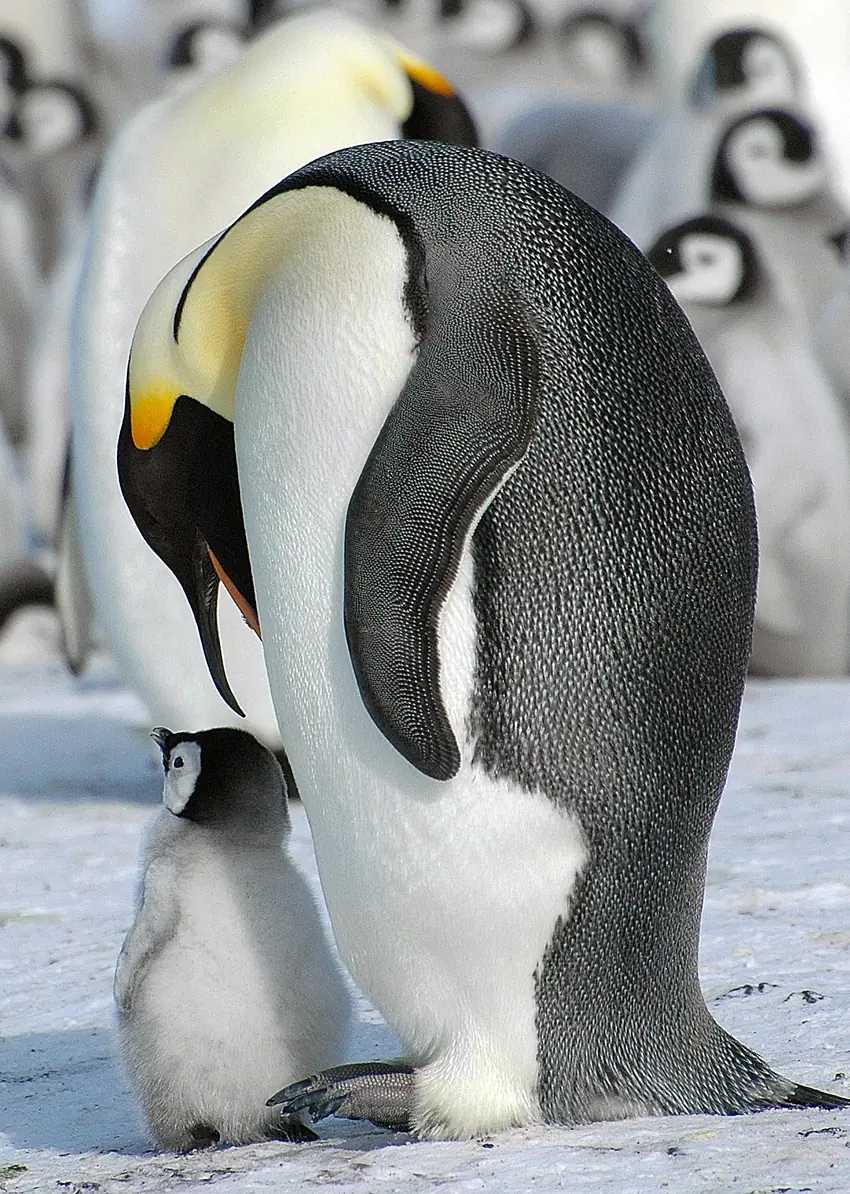
The largest of all 18 types — up to 1.2 m tall and 40 kg. The only realistic way for visitors to see wild emperor penguins — and their chicks — is a specialist voyage to Snow Hill Island in the Weddell Sea, October–December, from around US$30,000.
King penguin
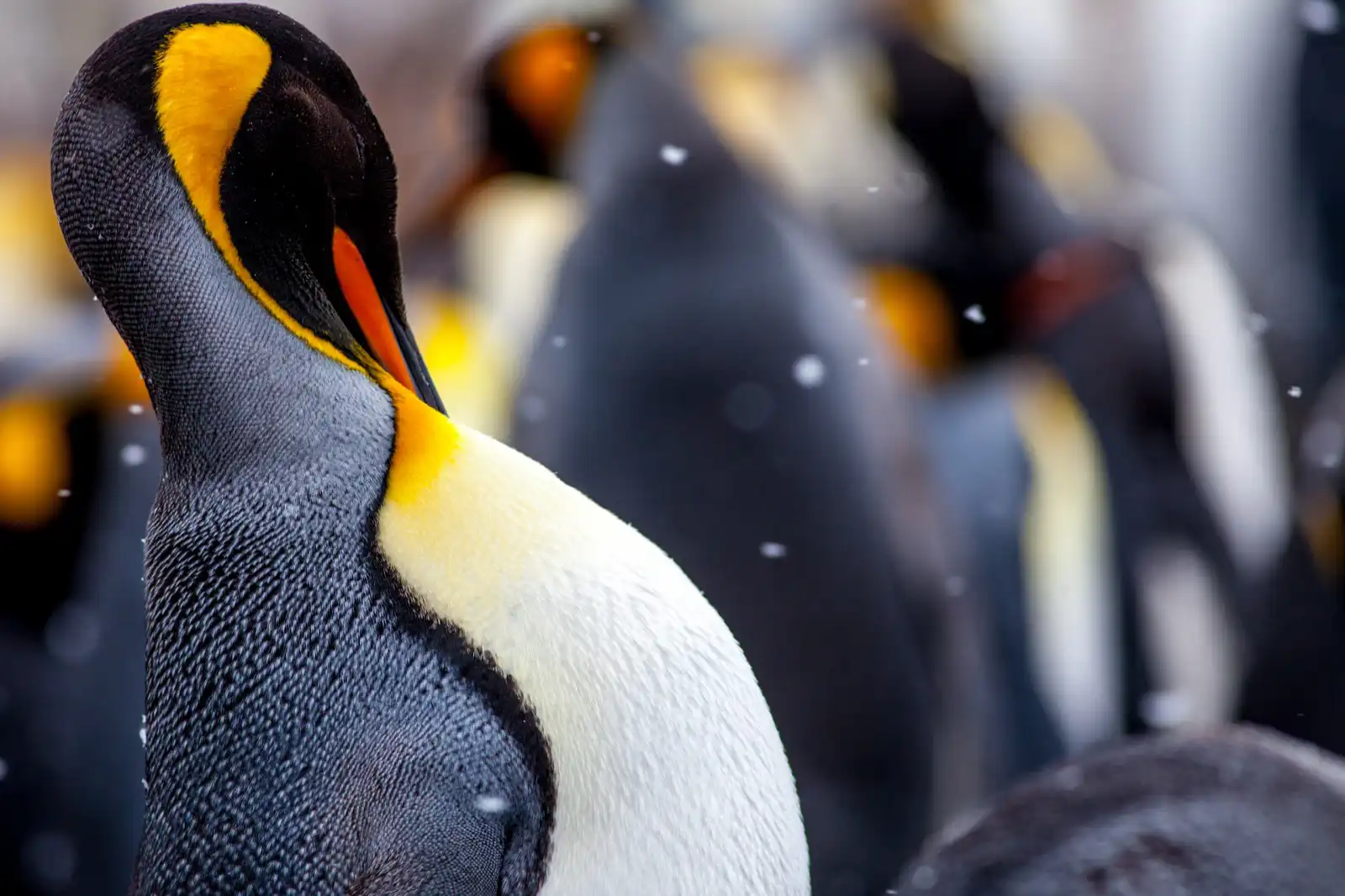
The second-largest species, up to about 1 m tall, famous for its golden-orange neck patch. South Georgia holds the world's largest colonies (~405,000 breeding pairs); the Falkland Islands offer a cruise- or flight-based alternative — Volunteer Point's ~1,500 pairs on a white-sand beach, with chicks present year-round.
Brush-tailed penguins (Pygoscelis)
The classic black-and-white Antarctic trio, named for their stiff, brush-like tails.
Adélie penguin
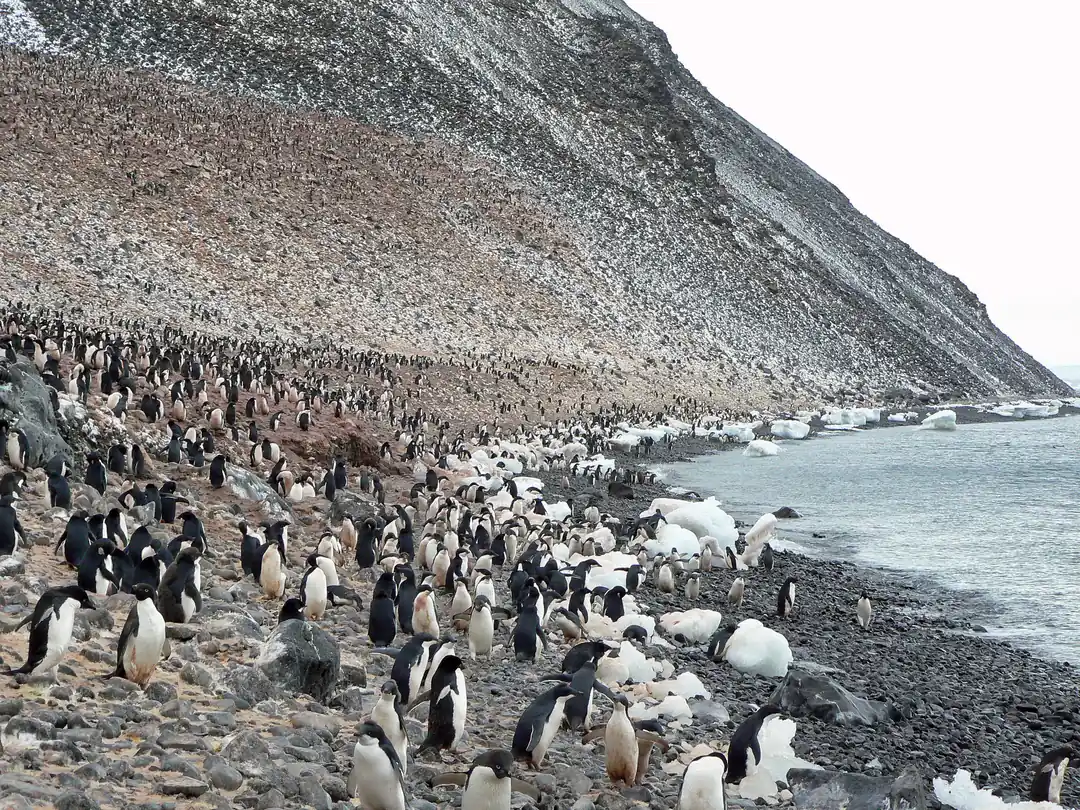
The classic "tuxedo" bird with a white eye ring, about 70 cm tall. Near-guaranteed on Antarctic Peninsula cruises; Cape Adare has one of the largest colonies on Earth (250,000+ pairs).
Chinstrap penguin
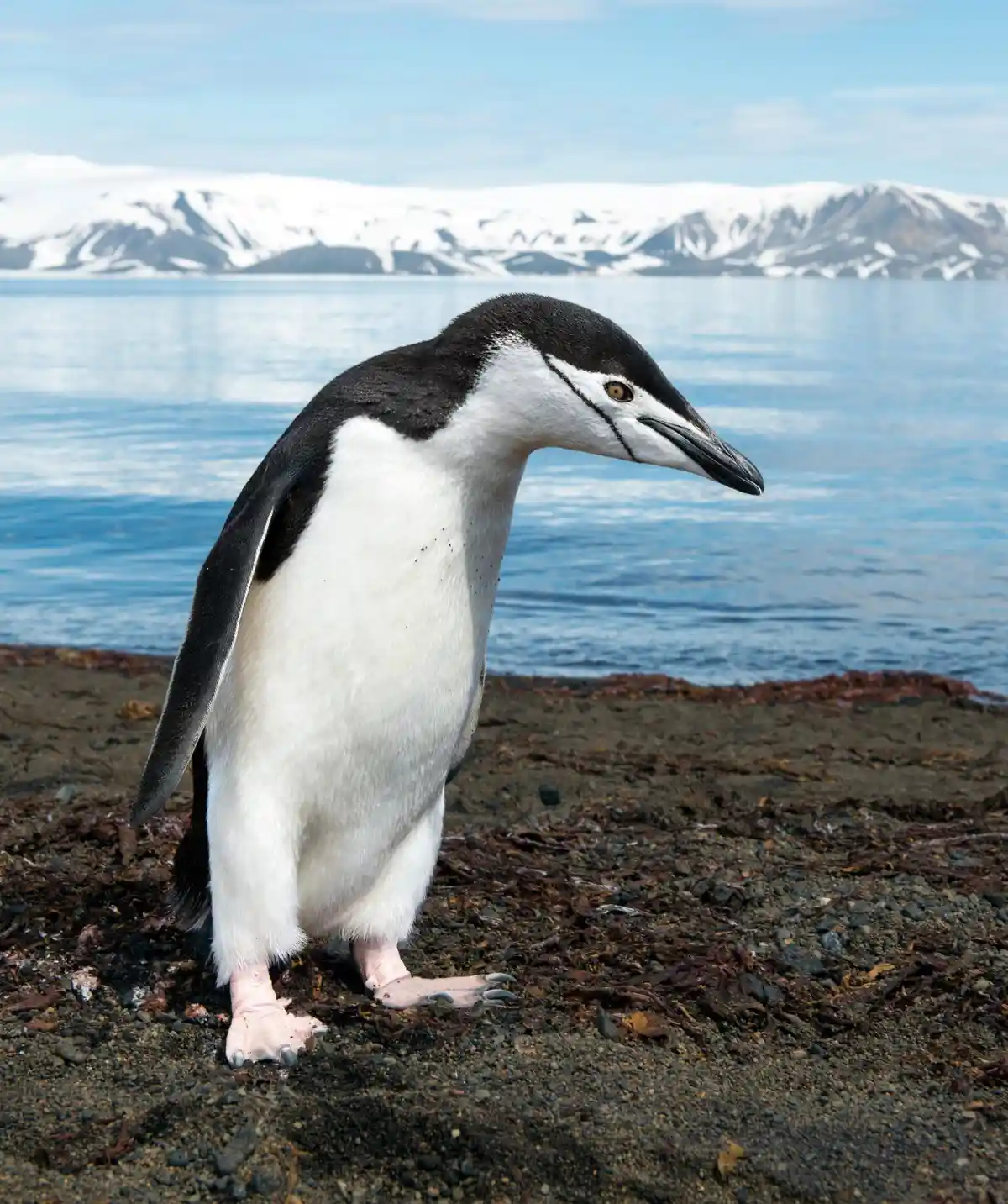
Named for the thin black strap under its chin; about 70 cm tall. The South Shetland Islands are the stronghold: Deception Island's Baily Head holds ~100,000 pairs.
Gentoo penguin
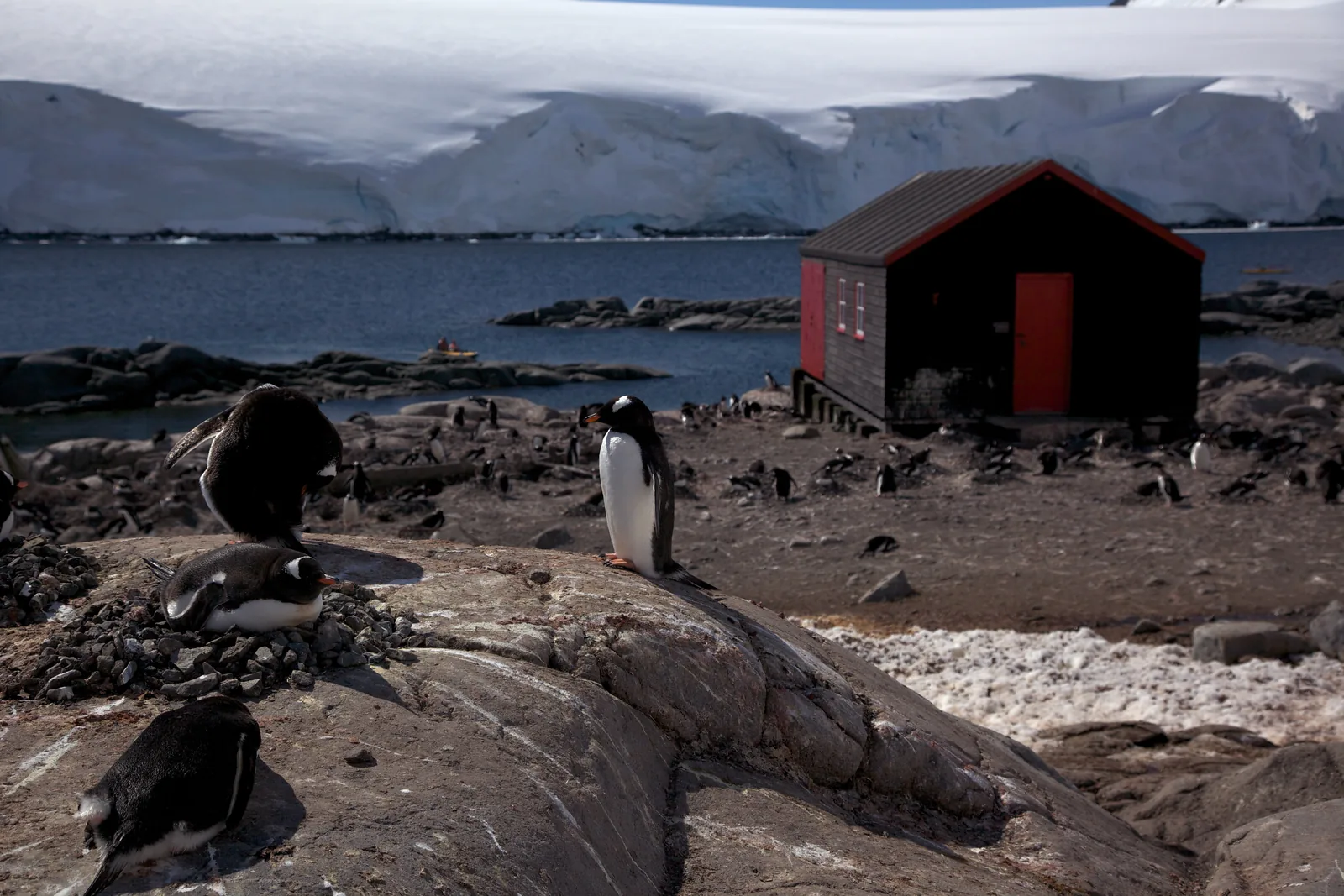
The fastest-swimming penguin, with a white bonnet and orange-red bill, around 70–90 cm. Widespread across the Antarctic region — Peninsula, South Georgia, Martillo Island — but the Falklands host the world's largest population: ~132,000 breeding pairs.
Crested penguins (Eudyptes)
The largest genus: seven species with yellow or orange crests, most breeding on sub-Antarctic islands. This group contains both the most numerous penguin on Earth and three of the hardest to reach.
Macaroni penguin
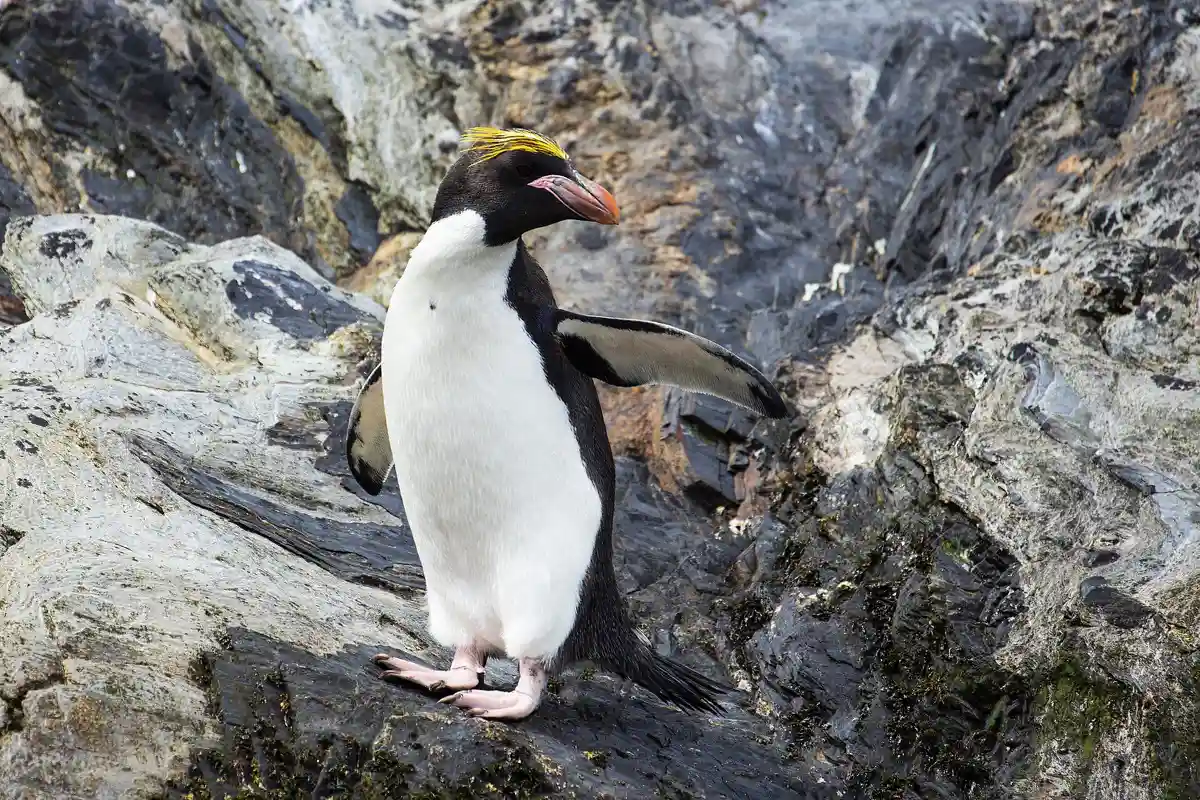
Yellow-orange crests and red eyes; over a million breeding pairs on South Georgia alone, the largest macaroni population anywhere. A few dozen pairs also nest in the Falklands.
Royal penguin
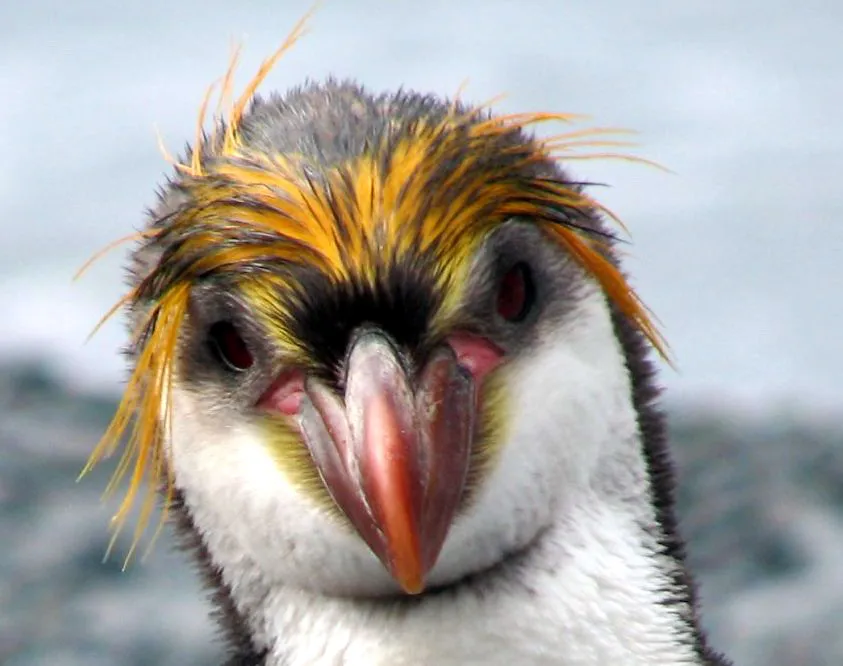
Endemic to Macquarie Island, where 750,000–850,000 pairs breed — literally nowhere else on Earth. Access is by expedition cruise only (2–4-day crossings from Hobart or New Zealand), with a strict annual visitor cap.
Northern rockhopper penguin
One of the three types you'll probably never see in the wild — it breeds only on Tristan da Cunha and Gough Island in the South Atlantic, where no regular tourism operates. Slightly larger than its southern cousin, with longer crest feathers.
Southern rockhopper penguin
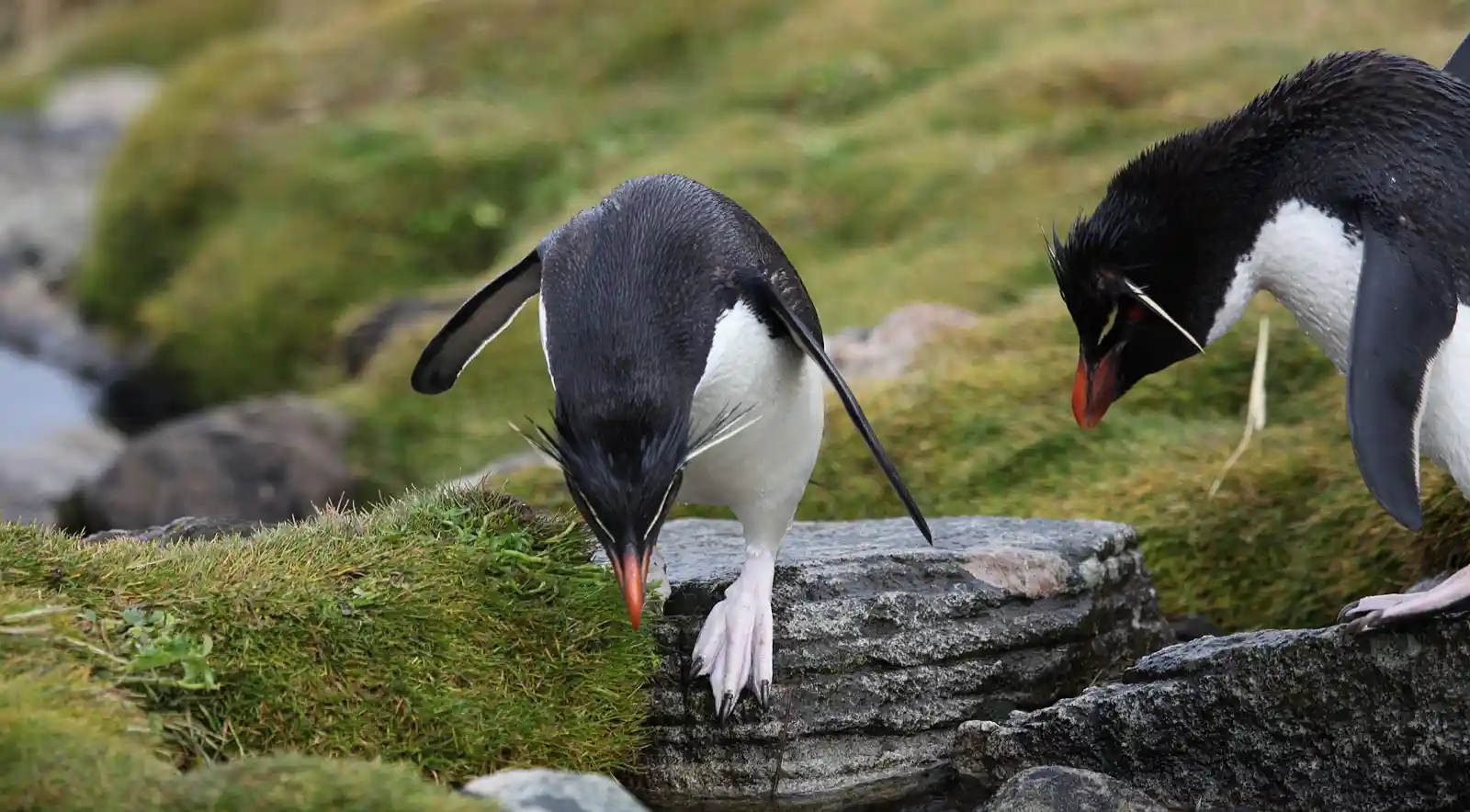
Spiky yellow eyebrows and a feisty hop. Best seen on the Falkland Islands: West Point Island and Saunders Island hold ~319,000 pairs, about 36% of the world population. The eastern subspecies also breeds on Macquarie Island.
Fiordland crested penguin / tawaki
The only forest-nesting penguin, about 60 cm tall. Monro Beach on the West Coast is the classic free spot, July–December; Lake Moeraki is the alternative.
Snares crested penguin
Breeds only on the Snares Islands, south of New Zealand — research permits only, effectively unreachable for tourists.
Erect-crested penguin
One of the rarest crested types, with stiff upright crests. It nests on the Antipodes and Bounty Islands, New Zealand — extremely remote, with no regular tourism.
Banded penguins (Spheniscus)
Four species with black horseshoe bands across white chests, all breeding in warmer waters than any other penguin group.
African penguin
The only penguin native to Africa, endangered. Easy, year-round viewing at Boulders Beach and Stony Point near Cape Town, from about US$5 entry.
Magellanic penguin
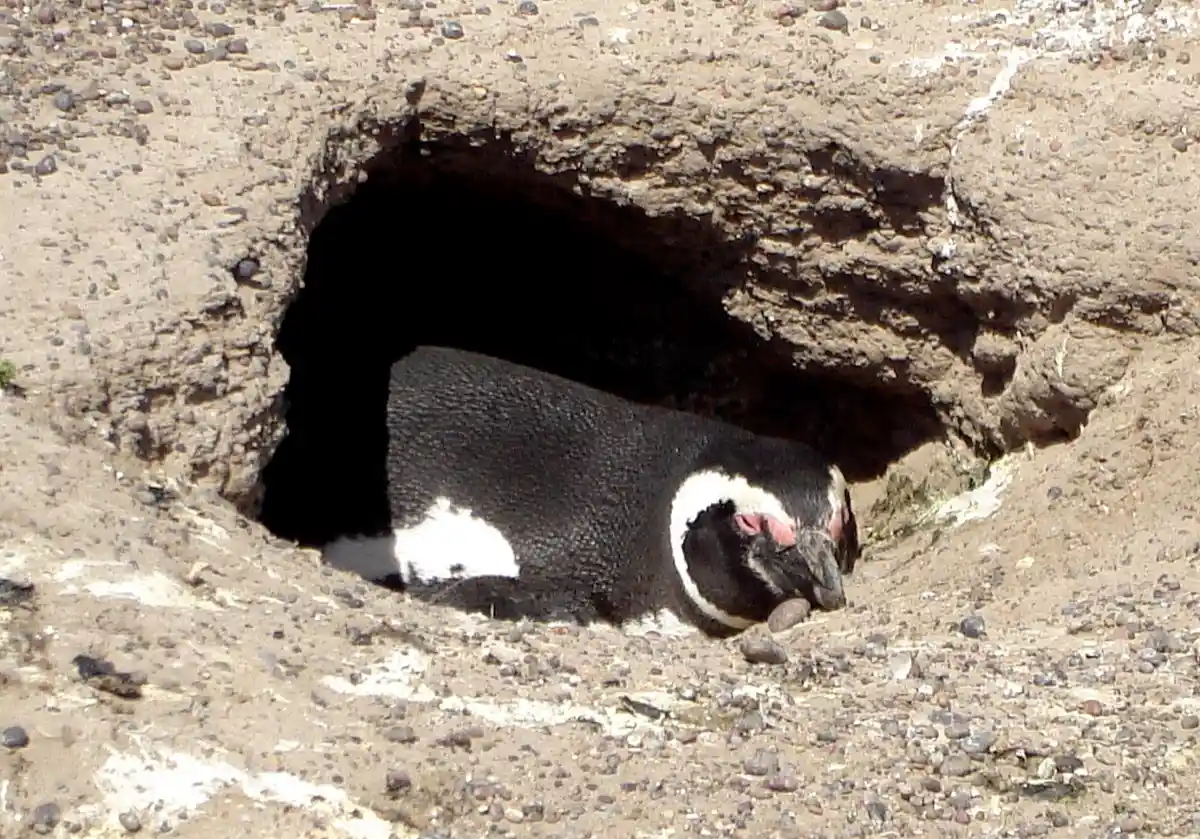
Two black chest bands, named after Magellan's crew; about 70 cm tall. The biggest continental colony is at Punta Tombo (over a million birds at peak); Isla Magdalena is an easy Chilean alternative, and the Falklands' Gypsy Cove, 8.5 km from Stanley, is the easiest viewing of all.
Humboldt penguin
A banded species of the cool Humboldt Current, with a single dark chest band. Best seen from boats at the Ballestas Islands, Peru, April–August.
Galápagos penguin
The only penguin that lives north of the equator, and one of the rarest (~2,000 individuals). See it around western Isabela and Fernandina in the Galápagos, often while snorkelling.
Little penguins (Eudyptula)
The smallest genus, with a single species — the little blue penguin, the smallest penguin on Earth.
Little blue penguin
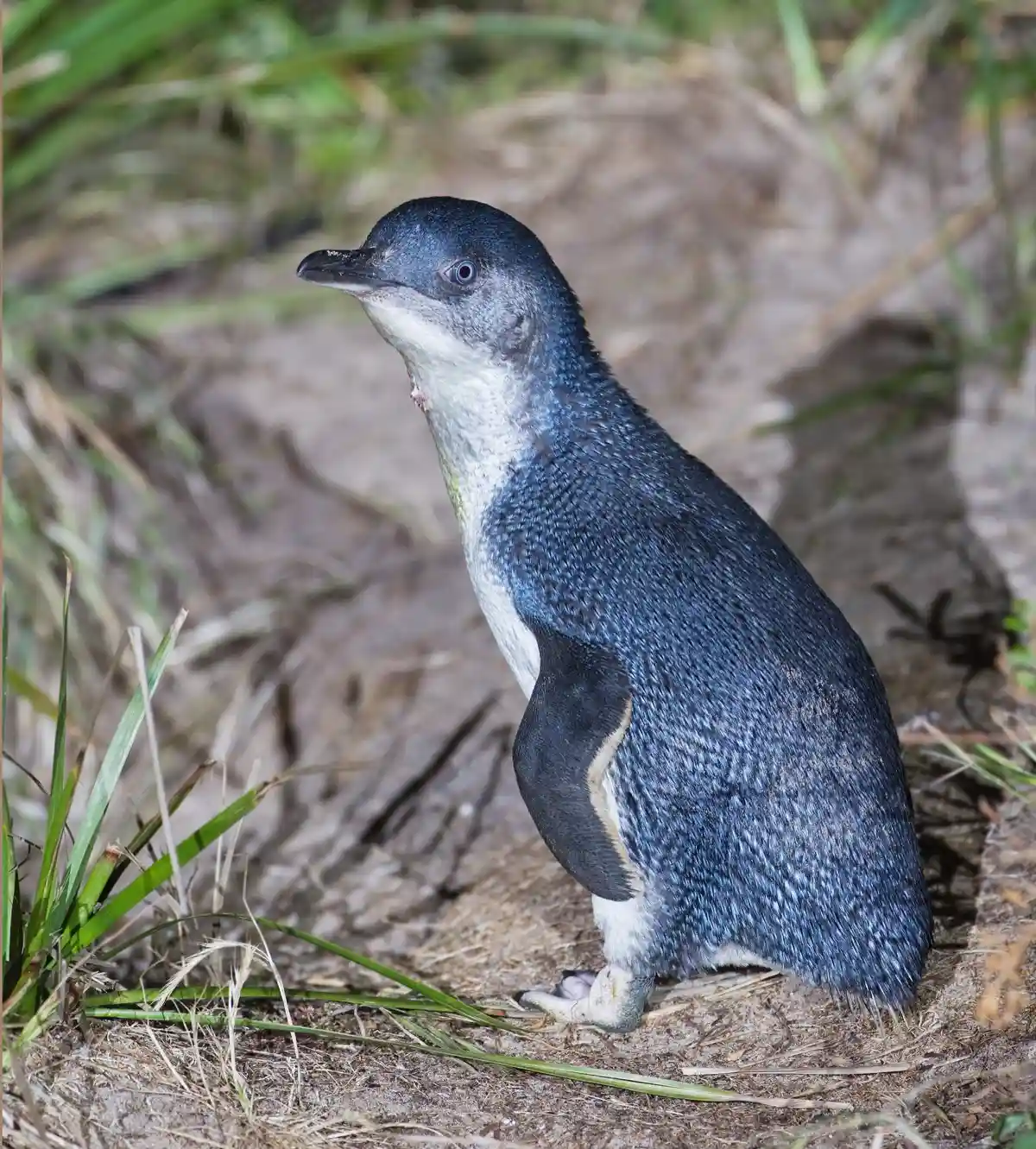
The world's smallest penguin (~33 cm, ~1 kg). The largest colony is at Phillip Island; St Kilda Pier is free and urban; Oamaru is the most reliable grandstand show.
The yellow-eyed penguin (Megadyptes)
A single-species genus — large, solitary and endemic to New Zealand.
Yellow-eyed penguin / hoiho
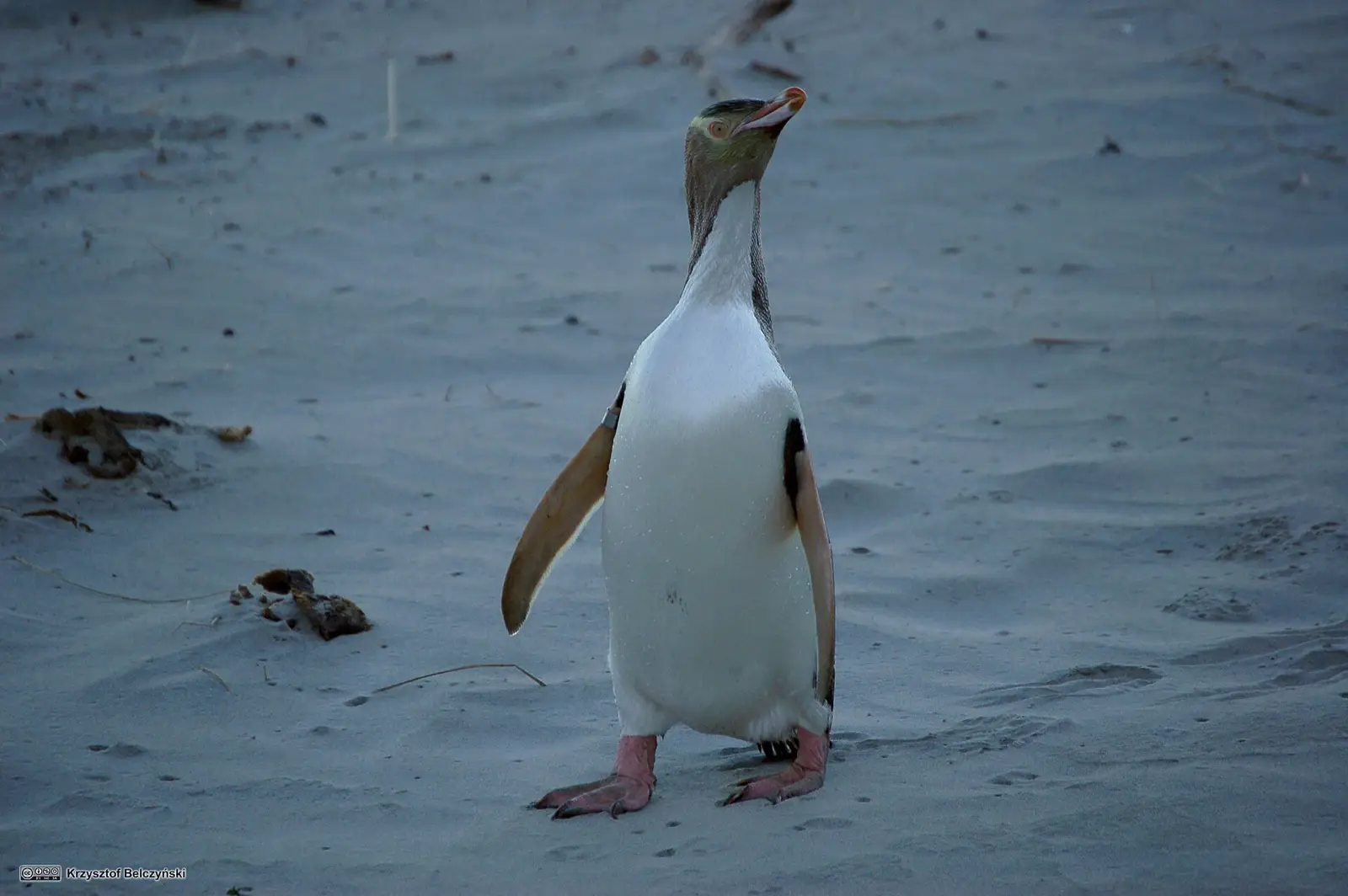
One of the rarest penguins in the world, endemic to New Zealand and endangered, with roughly 143 known nests in 2024/25. Otago Peninsula guided reserves are the best bet; Stewart Island is the alternative.
Which types of penguins can you actually see?
Of the 18 types of penguins, 15 are realistic wildlife-viewing targets, and our 20 destination guides cover every one of them. The three exceptions — Snares crested, erect-crested and northern rockhopper penguins — breed on islands so remote (the Snares, Antipodes/Bounty and Tristan da Cunha/Gough) that regular tourism doesn't operate there. We don't recommend chasing them; the other 15 give you every realistic wild-penguin goal.
Types of penguins: frequently asked questions
How many types of penguins are there?
18 species, grouped into 6 genera. Some authorities count 17 or 19 depending on how rockhopper penguins and the white-flippered little penguin are classified.
What are the 6 groups of penguins?
Great penguins (Aptenodytes), brush-tailed penguins (Pygoscelis), crested penguins (Eudyptes), banded penguins (Spheniscus), little penguins (Eudyptula), and the yellow-eyed penguin (Megadyptes).
What is the largest type of penguin?
The emperor penguin, up to 1.2 m tall and 40 kg. The smallest is the little blue penguin at about 33 cm and 1 kg.
Do penguins live in warm places?
Yes. The Galápagos penguin lives north of the equator, and the African, Humboldt and Magellanic penguins all breed in temperate climates.
Are all penguins in Antarctica?
No. Only 5 of the 18 species breed on the Antarctic continent proper. The rest are found in South America, southern Africa, Australia and New Zealand, and sub-Antarctic islands.
What is the rarest type of penguin?
The Galápagos penguin has around 2,000 individuals, and the yellow-eyed penguin is endangered with roughly 143 known nests in 2024/25.